
Lieferung heute & morgen

Qualitätsgarantie

Willkommens-Angebote freischalten: KOSTENLOSE Lieferung | Bis zu 80 % RABATT | Kostenlose 30-Tage-JoyPlus-Testphase
App herunterladen
An ergonomic office chair should do more than simply look modern. For long periods of sitting, the key factors are the right seat height, a sturdy construction and sensibly positioned adjustment options. Marketing terms such as “ergonomic” or “back-friendly” are not sufficient selection criteria on their own, however. What matters is which features are actually included and whether they suit your height, desk and intended duration of use.
A mesh office chair with a distinctive backrest may look breathable, but it can still be unsuitable if the seat height or armrests cannot be adjusted sufficiently. Always check the specific measurements rather than relying on general advertising claims. A seat height of, for example, 35 to 45 cm suits different heights from a model measuring 43 to 53 cm.
When choosing an office chair with lumbar support, it should be clearly stated whether the support is permanently integrated or can be adjusted in height and depth. Depending on your body shape, a fixed curve may feel different. Flexible models offer more scope for personal adjustment, but they usually require more fine-tuning as well.
The specification “office chair up to 150 kg” describes the maximum load stated by the supplier. It does not mean that every component will remain equally resilient over time in every usage situation. Use the chair for sitting only, place it on a level surface and do not exceed the stated load limit.
A height-adjustable office chair should be capable of being set so that both feet rest fully on the floor and your thighs are as close to horizontal as possible. The seat should not be so deep that it puts pressure on the backs of your knees. Pay attention to:
A swivel office chair with a 360-degree function makes it easier to move between your desk, shelving and nearby work surfaces. The swivel function does not replace a good sitting position, however.
A shaped backrest can provide structural support for the lower back. Even more important is whether the backrest or lumbar support can be adjusted. An office chair with a tilt function allows you to vary your sitting position. Check whether the tilt mechanism can be locked and whether it can be operated while seated.
A headrest can provide additional contact when you lean back. It is not required for every workplace. If you mainly work upright at a monitor, you should focus first on seat height, backrest and armrests.
An office chair with adjustable armrests can be better adapted to the height of your desk and your own height. Depending on the model, the armrests may be adjustable in height, forwards and backwards or sideways. Foldable armrests can be useful in smaller workspaces, as they make it easier to push the chair under the desk.
An office chair with a breathable mesh back can help promote air circulation. That does not automatically mean it will be more comfortable for everyone. The key factors are the tension of the mesh, the seat cushioning and the finish of the edges. For cleaning, a vacuum cleaner attachment and a lightly damp cloth are usually more suitable than harsh cleaning products.
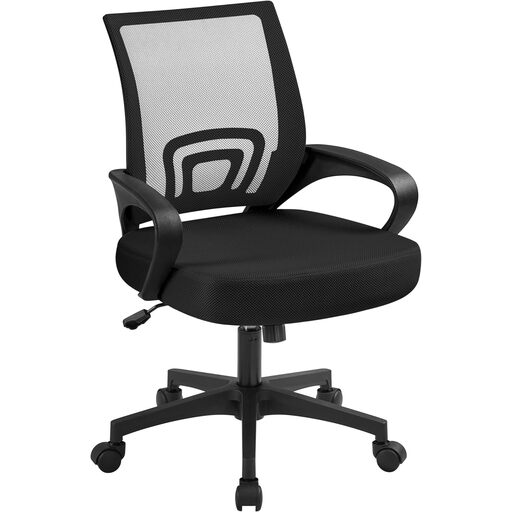
Why this product suits the profile: This model offers seat-height adjustment from 35 to 45 cm, a breathable mesh back, armrests and a 360-degree swivel function. This makes it suitable for home offices, study areas and occasional longer periods of sitting.
The product details specify clear adjustment ranges and a maximum load capacity of 136 kg, rather than relying on general comfort claims.
Mesh back, padded seat, five castors, plus the SGS and BIFMA certifications listed in the product description.
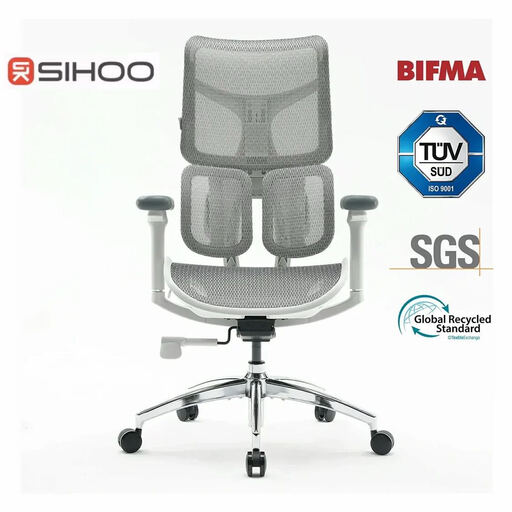
Why this product suits the profile: This model is designed for users who want plenty of adjustment options. It features 6D lumbar support, 4D armrests, an adjustable backrest and 5 cm of seat-depth adjustment.
Instead of making an unexplained claim of “ergonomics”, the product description specifies individual adjustment directions and a suitable height range of 150 to 190 cm.
Several separately adjustable elements, plus BIFMA and SGS specifications according to the manufacturer’s information.
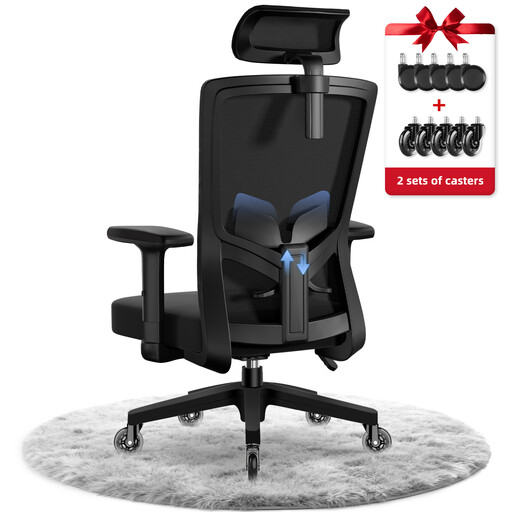
Why this product suits the profile: For long work, study or gaming sessions, it offers an adjustable headrest, 6 cm of lumbar-support adjustment, 10 cm of armrest adjustment and a rocking function.
The specifications list precise adjustment ranges, a maximum load capacity of 150 kg and a flat surface as a requirement for use.
Nylon mesh back, height- and angle-adjustable headrest, foldable armrests, plus SGS and BIFMA specifications according to the product description.
We have put together a complete, regularly updated list of products that fully meet these strict selection criteria and the safety regulations applicable in the EU.
Even a high-quality office chair cannot fully compensate for an unsuitable desk height or a poorly positioned monitor. Changing your sitting position and taking regular short breaks remain advisable.
Its lifespan depends on the construction, daily usage time, load and care. Check the screws, castors, base and gas lift regularly. For the models mentioned, the product details include information such as load limits, testing procedures or test cycles. These specifications should not be taken as a guaranteed service life.
A mesh back can support air circulation thanks to its open structure. Whether the chair is personally suitable also depends on the seat cushioning, backrest shape, seat width and adjustability. For intensive use, look for a combination of breathable back material and a sufficiently supportive seat.
The price depends on factors including the material, load capacity, number of adjustment options and the design of the mechanism. Do not compare only the purchase price; also consider the assembly required, availability of spare parts and the features that matter to you. A model with a headrest or extensive tilt function is not automatically suitable if the seat height and seat do not fit your workplace.