
Lieferung heute & morgen

Qualitätsgarantie

Willkommens-Angebote freischalten: KOSTENLOSE Lieferung | Bis zu 80 % RABATT | Kostenlose 30-Tage-JoyPlus-Testphase
App herunterladen
Long hours at a desk, whether in a home office or a corporate setting, take their toll. Neck tension and lower back pain are often the result of an improper sitting posture. An ergonomic office chair with a footrest promises relief, but the market is flooded with models whose marketing claims are often more style than substance. Before you make a purchasing decision, it's crucial to understand the common pitfalls that can lead to a bad investment.
Many users invest in a chair that loses its comfort and functionality after just a few months. The reasons are often the same:
To avoid these pitfalls, you should focus your attention on a few critical technical features. These determine whether a desk chair is truly ergonomic and suitable for prolonged sitting.
A truly ergonomic chair adapts to you, not the other way around. Look for the following adjustment options:
The longevity of a chair depends directly on the materials used.
The footrest should be considered an integral part of the chair. A stable, retractable footrest is typically mounted on a metal frame. Check the product description for details on the construction and material of the guide rails. Models where the support is made only of plastic are more prone to instability.
Based on these objective criteria, we have identified some models that are suitable for different user profiles and requirements.
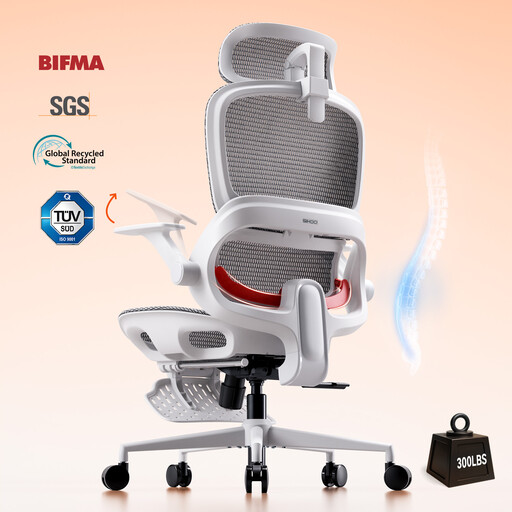
Why this model is a good fit: This chair is designed for long workdays. The combination of an adaptive lumbar support, a wide headrest, and an integrated footrest provides comprehensive support for the entire body, which is essential for a permanent home office chair.
The adaptive lumbar support adjusts to your movements, thus avoiding the rigid "one-size-fits-all" problem. The footrest is part of a well-engineered overall design built for durability.
The combination of dynamic back support and a stable footrest for relief breaks makes it a versatile solution for professional use.
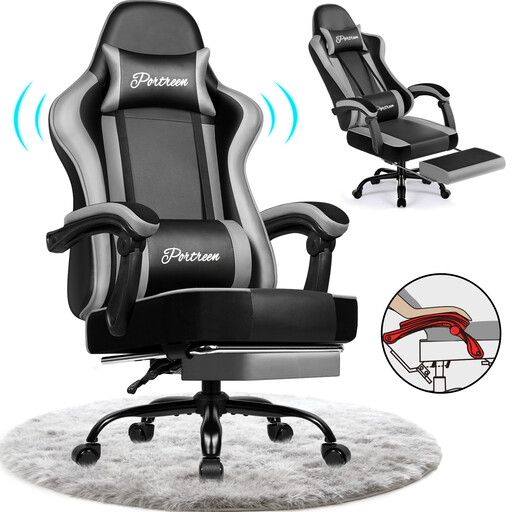
Why this model is a good fit: This gaming chair offers a deep recline of up to 170 degrees and a high load capacity of up to 150 kg. It is ideal for long gaming sessions interspersed with relaxation periods in a reclined position.
According to the manufacturer, the footrest is mounted on a rustproof metal frame, which avoids the trap of unstable construction. The use of high-density foam prevents the problem of the padding flattening out quickly.
The combination of a deep recline function and a stable, retractable footrest allows for complete body relaxation between intense gaming phases.
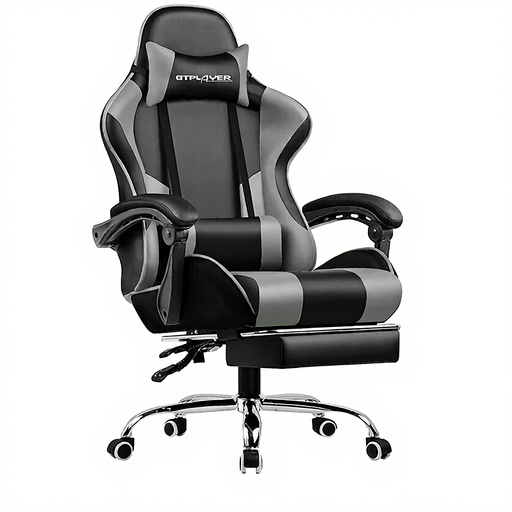
Why this model is a good fit: This model offers a comprehensive feature set for users who want to experience the benefits of an ergonomic chair with a footrest. The combination of a recline function, footrest, and an additional massage cushion provides significant comfort value.
With adjustable head and back cushions and a retractable footrest, the chair offers individual customisation options, going beyond the rigid "one-size-fits-all" solution of basic office chairs.
The integrated, USB-powered massage lumbar cushion is a clear differentiator in this category, offering an extra feature to alleviate back fatigue.
We have compiled a comprehensive, up-to-date list of products that meet these strict selection criteria and applicable safety regulations.
The lifespan heavily depends on material quality and usage. A model with a steel base, a Class 4 gas lift, and high-density cold-cure foam can last 5 to 10 years with daily use. More affordable models with plastic components and basic padding often show significant signs of wear after just 1 to 2 years, especially in the padding and the footrest mechanism.
Both can be suitable for prolonged sitting, but they cater to different needs. A high-quality ergonomic office chair (often referred to as an executive chair) promotes active, dynamic sitting through a synchronous mechanism. A gaming chair is often optimised for more static, reclined postures, offering pronounced side bolsters for support and a deep recline function. The choice depends on whether you prefer a dynamic working posture or stable support for focused, quiet periods.
For a desired load capacity of 150 kg, three components are crucial: