
Lieferung heute & morgen

Qualitätsgarantie

Willkommens-Angebote freischalten: KOSTENLOSE Lieferung | Bis zu 80 % RABATT | Kostenlose 30-Tage-JoyPlus-Testphase
App herunterladen
An ergonomic office chair with a footrest promises a significant upgrade in comfort for long workdays or intense gaming sessions. However, the market is flooded with models whose marketing claims often fail to deliver. Before you make a purchase, it's crucial to understand the common pitfalls that typically only become apparent after a few months of use, leading to disappointment.
Many buyers focus on aesthetics or a long list of features, overlooking critical construction details. The result is often a chair that quickly loses stability or has comfort features that become unusable. We'll highlight the three most common pitfalls and show you what to look for to make an informed decision.
To avoid these issues, you should focus your attention on a few core parameters. These determine the longevity and true ergonomic benefit of your chair far more than superficial design features.
The true stability of an office chair lies in the quality of its foundation. Pay attention to two components:
A high-quality executive chair with a recline function or an adjustable home office chair is distinguished by its sophisticated mechanism.
The desk chair with a footrest is the key comfort feature. Examine its construction carefully. The guide rails should be made of solid metal, and the padding on the support should be firm and sufficiently sized to comfortably hold your legs without sagging after a short time.
Based on these criteria, we have curated a selection of chairs suitable for different requirements and user profiles.
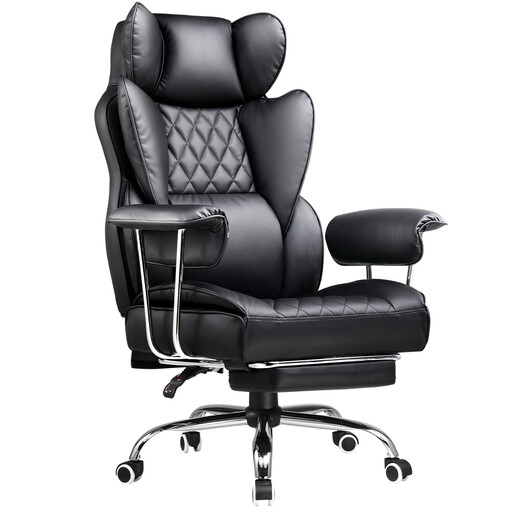
Why This Fits Their Persona: Ideal for users seeking a versatile chair for both gaming and occasional office work. It combines the typical aesthetics of a gaming chair with a footrest with fundamental ergonomic functions for extended sitting periods, all at an accessible price point.
The footrest's construction is designed for regular use, offering a more stable base than many entry-level models, which reduces the risk of wobbling or rapid wear.
A good balance of gaming aesthetics and basic ergonomic features like a recline function and lumbar cushion.
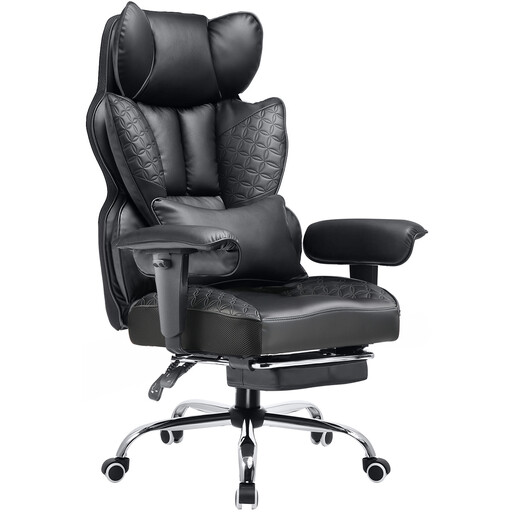
Why This Fits Their Persona: Specifically designed for users with a higher body weight or above-average height. This chair offers a wider seat, a taller backrest, and an overall more robust construction for lasting comfort and safety.
It directly addresses the pitfall of undersized components. A reinforced gas lift and a sturdy metal base ensure a reliable high weight capacity, preventing the typical sinking or creaking under load.
Generous dimensions and a design built for heavy-duty use. The PU leather is durable and easy to clean.
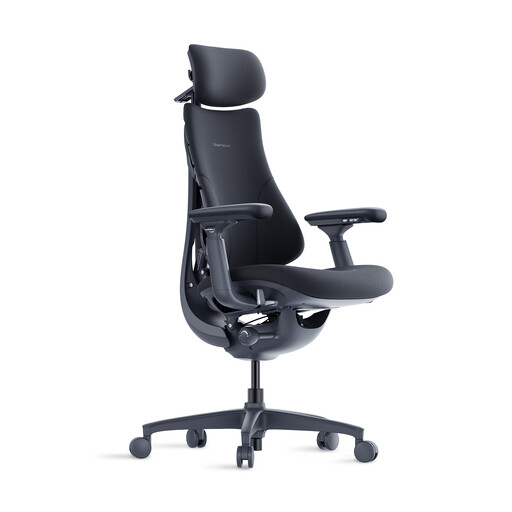
Why This Fits Their Persona: For home office professionals who place the highest value on dynamic and adaptive ergonomics. The focus here is less on gaming aesthetics and more on features that actively support a healthy posture during long hours at a desk.
Instead of a static lumbar cushion, this model offers adaptive lumbar support that moves with the user. This ensures constant support and avoids the drawback of fixed cushions, which often shift or are incorrectly positioned.
Adaptive lumbar support and an integrated spinal extension feature. The 160° recline angle also allows for a near-flat position for taking breaks.
We have compiled a complete, real-time list of products that fully satisfy these strict selection criteria and UK safety regulations.
Yes, many modern gaming chairs are ergonomically designed to be suitable for long workdays in the office. They often offer comprehensive adjustability, including a recline function and a footrest that can provide relaxation during breaks. However, look for a model with a good synchro mechanism and adjustable lumbar support to promote a healthy sitting posture.
The lifespan of a gas lift depends on its quality class and usage. A Class 3 or Class 4 gas lift, as found in higher-quality chairs, is designed for many years of daily use and should function for several years under normal conditions without any noticeable loss of pressure. On cheaper models with lower-class lifts, the lifespan can be significantly shorter.
During assembly, it is important to tighten all screws firmly to ensure the stability of the guide rails. Check the manufacturer's instructions carefully. After assembly, you should test its function by extending and retracting the support several times and gently resting your weight on it to ensure it is stable and does not wobble.