
Lieferung heute & morgen

Qualitätsgarantie

Willkommens-Angebote freischalten: KOSTENLOSE Lieferung | Bis zu 80 % RABATT | Kostenlose 30-Tage-JoyPlus-Testphase
App herunterladen
Long days at the desk, intense gaming sessions, or hours of studying—our lives are becoming increasingly sedentary. The right chair isn't a luxury; it's a fundamental requirement for focus and well-being. However, the market is flooded with tempting offers, and not every chair advertised as "ergonomic" actually lives up to the promise.
As your Joybuy Product Recommendation Officer, I'm here to help you identify common purchasing pitfalls and make an informed decision. We'll focus on the features that truly matter, so you can find a solution that makes a lasting improvement to your work or gaming routine.
Before we dive into the essential features, let's look at three common flaws that often only become apparent after a few weeks of use, leading to disappointment.
To avoid the issues mentioned above, it's essential to focus on objective, verifiable criteria. A good ergonomic office chair with a footrest is defined by its adjustability and high-quality components.
A truly adjustable office chair adapts to your body, not the other way around. Look for the following adjustment options:
The unseen components often determine a chair's lifespan.
Based on the criteria above, we have identified several models suited for different needs.
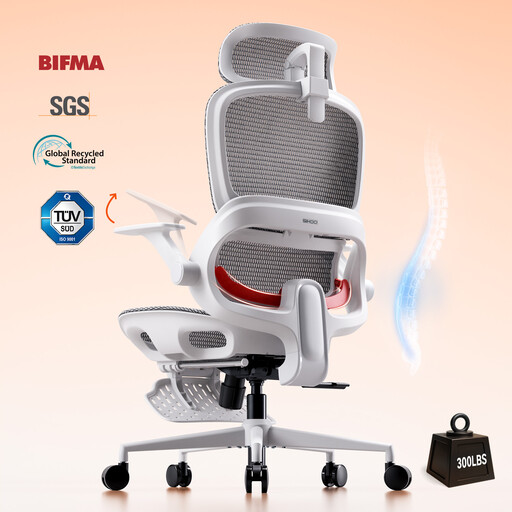
Why This Fits Their Persona: Ideal for users who need a versatile chair for both focused work and relaxing breaks. The flip-up armrests create space when not in use, and the mesh back ensures comfort during long days in the home office.
The adaptive lumbar support adjusts to your movements, avoiding the rigid pressure of a 'one-size-fits-all' solution. The footrest is stably integrated into the design.
Adaptive lumbar support and flip-up armrests offer a high degree of flexibility for various desk-based activities.
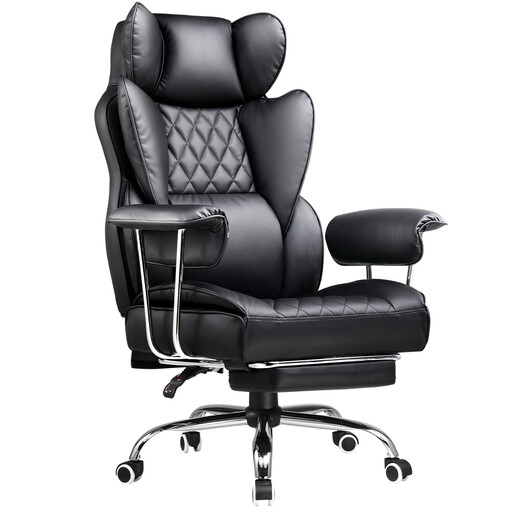
Why This Fits Their Persona: This chair is designed for long, intense sessions. The high backrest, deep recline function, and separate lumbar and neck pillows make it a fitting companion for gamers and anyone seeking a fully-featured, supportive chair.
Instead of a rigid, integrated support, this model uses adjustable pillows that allow for customized positioning. The padding is engineered for durability to resist flattening even after many hours of use.
A deep recline function (up to 150 degrees) for relaxation and a robust build designed for intensive use make it a top-tier ergonomic gaming chair.
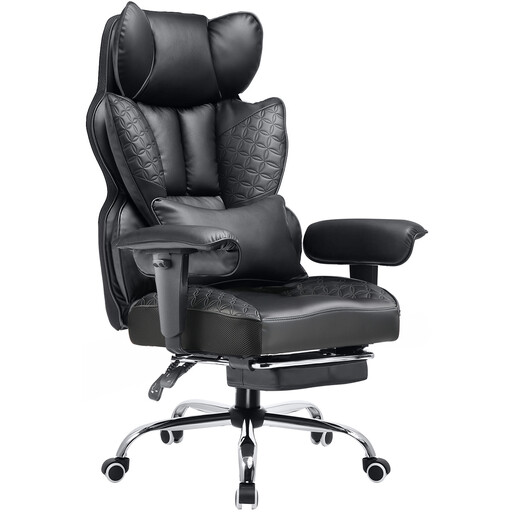
Why This Fits Their Persona: This chair is aimed at users who prioritize an exceptionally robust build and a high weight capacity. The wide seat and thick cushioning provide comfort for larger and heavier individuals, while the PU leather finish offers a professional, executive appearance.
The high-density foam padding effectively resists flattening. The entire construction, including the gas lift and base, is engineered for a higher weight class, preventing instability.
High weight capacity and a generously sized seat and backrest. The thick padding provides lasting comfort, making it a solid executive chair with a footrest.
We have compiled a complete, up-to-date list of products that fully meet these strict selection criteria and all applicable safety standards.
1. How long does an ergonomic office chair with a footrest last? The lifespan heavily depends on the quality of the components and the intensity of use. A chair with a Class 3 or 4 gas lift and a sturdy metal base can last 5 to 10 years with normal use. Pay attention to the manufacturer's maximum weight capacity and periodically tighten the screws to maintain stability.
2. Is a footrest really necessary? A footrest is particularly beneficial when using the chair's recline function. It allows for a relaxed, reclined position with your legs elevated, which can improve circulation and reduce pressure on the lower back. For an upright working posture, it is less critical but offers a welcome option for taking breaks.
3. What should I pay attention to during assembly? Take your time with the assembly process. Before you begin, check that all parts are present and undamaged. Follow the instructions step-by-step and only hand-tighten all screws at first. Once all components are correctly positioned, you should then tighten the screws securely. It is advisable to re-tighten the screws after the first week of use.