
Lieferung heute & morgen

Qualitätsgarantie

Willkommens-Angebote freischalten: KOSTENLOSE Lieferung | Bis zu 80 % RABATT | Kostenlose 30-Tage-JoyPlus-Testphase
App herunterladen
An ergonomic office chair with a footrest should do several things: provide a suitable seat height, support your back and neck, and let you relax your legs during breaks. In practice, however, unclear product information, unsuitable dimensions or overly soft padding can often lead to the wrong purchase.
This buying guide explains what to check before you buy and which chair might suit different uses.
A headrest or extendable footrest alone doesn’t make a chair ergonomic. What matters is whether you can adjust the features to suit your height and sitting position. That’s why an adjustable-height office chair should offer more than just seat-height adjustment. Ideally, you should also be able to adjust the armrests, backrest and lumbar support to suit your needs.
A fixed headrest may feel uncomfortable against the back of your head. A lumbar support that can’t be adjusted may also sit in the wrong place for some people.
The “up to 150 kg” figure initially describes the maximum weight recommended by the manufacturer. On its own, it says nothing about seat width, padding quality or whether the chair is suitable for particularly long periods of sitting. So also check the dimensions, the construction of the base and the information about the gas lift.
An extendable footrest can be useful for short breaks or when leaning back. However, it shouldn’t cause your pelvis to tilt backwards or your feet to lose firm contact with the floor when you’re working. A reclining office chair is especially useful when you can clearly switch between working and resting positions.
First, measure the height of your desk and make sure your feet can reach the floor when you’re sitting normally. Your knees should be at roughly a right angle, without the edge of the seat pressing into the backs of them. A seat-height adjustment range of, for example, 10 cm gives you more flexibility than a model with very little adjustment.
The seat itself matters too. A rounded or so-called waterfall seat edge can reduce pressure on your thighs. However, this isn’t a uniformly protected quality standard; the actual dimensions and how the chair feels to you are what count.
An office chair backrest should provide sufficient support for your back and allow for a stable, controlled recline. An adjustable recline can be useful if you switch between different tasks. Some models have a tilt function, while others have a lockable backrest.
With an office chair with lumbar support, adjustability matters more than the label itself. Check whether you can adjust the support’s height or depth. A headrest is particularly useful when you’re reclining. It shouldn’t push your head forwards, and ideally you should be able to adjust its height or angle.
A breathable mesh office chair can help air circulate around your back and upper body. However, mesh isn’t automatically more comfortable for everyone than fabric or PU leather. Padded seats can distribute pressure differently during long periods of sitting, while mesh backrests may be easier to clean and more breathable.
Also look for:
Certificates shouldn’t be taken as a blanket guarantee of quality. What matters is what the relevant test covers.
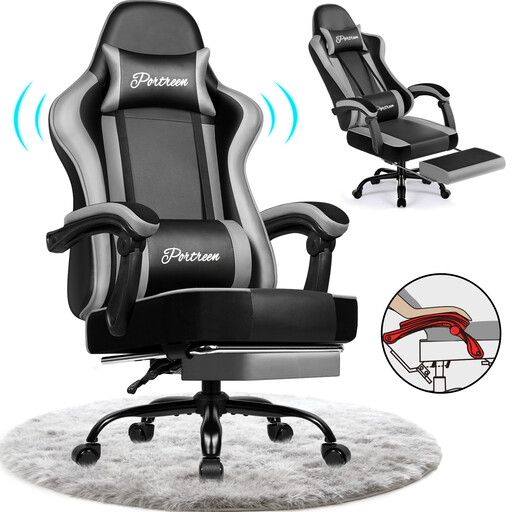
Why this product is a good fit: This chair combines basic adjustability with a headrest, lumbar support and an extendable footrest. It’s a good choice for working from home, studying and occasional gaming.
According to the product information, the backrest reclines between 90 and 170 degrees. The seat height adjusts by 10 cm, so you can adapt the chair in ways other than just using the footrest.
The recommended weight capacity is 150 kg, according to the product information. BIFMA and SGS testing are also listed, along with an extendable footrest with a metal frame.
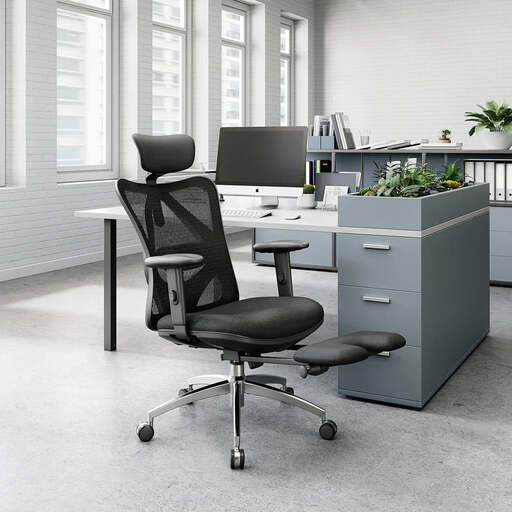
Why this product is a good fit: The combination of a mesh backrest, padded seat and several adjustment options makes this chair a good choice for anyone who spends long hours working at a desk in the office or at home.
The product information lists an adjustable headrest, lumbar support, seat height, backrest and armrests. This means your sitting position doesn’t depend on a single fixed support.
The backrest is made from breathable mesh, according to the product description. The recommended weight capacity is 150 kg, and the chair also has a footrest for relaxing during breaks.
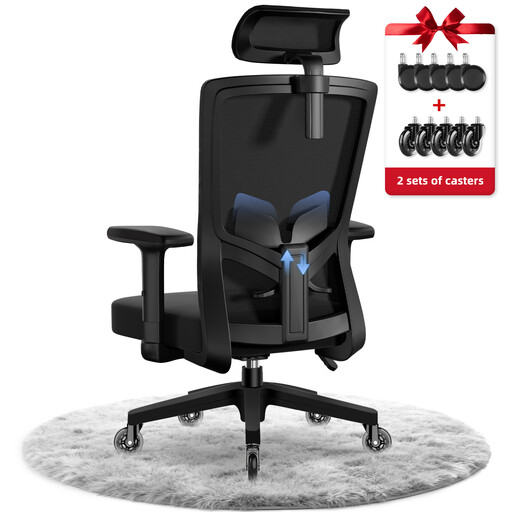
Why this product is a good fit: For long work or gaming sessions, this model has a mesh backrest, adjustable armrests and a tilt function. That makes it an interesting option for changing your sitting position in a home office.
The product information lists 10 cm of seat-height adjustment, 10 cm of armrest adjustment and lumbar support that can be adjusted by 6 cm. This means you can adjust several points of contact.
According to the product description, the chair has a headrest that swivels up to 120 degrees and adjusts by 11 cm. BIFMA and SGS testing are also listed, along with a weight capacity of 150 kg.
We’ve put together a complete, regularly updated list of products that meet these strict selection criteria and fully comply with the safety regulations in force in the EU.
First, adjust the seat height so both feet rest firmly on the floor. Then adjust the seat depth, backrest, lumbar support and armrests. Use the footrest for breaks or when leaning back. When you’re working, keep your posture active and upright.
An ergonomic gaming chair or gaming chair for long periods of sitting can be suitable if the seat height, backrest, armrests and lumbar support fit your body. Design alone isn’t a reliable guide. Also check the padding, seat width, weight capacity and the quality of the adjustment mechanisms.
Its lifespan depends on how long you use it each day, your body weight, the flooring, how well you care for it and how it’s assembled. Regularly check the screws, castors and gas lift. Don’t use the footrest as a step unless the manufacturer specifically says that you can. Following the assembly and care instructions can help prevent unnecessary strain.