
Lieferung heute & morgen

Qualitätsgarantie

Willkommens-Angebote freischalten: KOSTENLOSE Lieferung | Bis zu 80 % RABATT | Kostenlose 30-Tage-JoyPlus-Testphase
App herunterladen
Long days at a desk, whether in a traditional office or a home office, place significant demands on our bodies. Sitting for hours on end can lead to tension and discomfort. An ergonomic office chair with a footrest is a smart solution to enhance comfort and provide relief for your body, even during short breaks. This article serves as a guide, presenting a selection of models with specific features suited for various needs.
Choosing the right chair depends on your individual needs. Three key criteria will help you make an informed decision.
A truly ergonomic chair adapts to your body, not the other way around. Look for a wide range of adjustment options. A height- and depth-adjustable computer chair with lumbar support is fundamental for providing targeted support to the lower back. Equally important are adjustable armrests, which promote a relaxed shoulder posture, as well as customisable seat height and depth. An executive chair with a recline function offers the additional ability to change the backrest angle for relaxing breaks.
The chair's material affects both comfort and durability. Mesh fabric is particularly breathable and promotes air circulation, which is a key advantage in an office chair for long hours of sitting to prevent heat build-up. High-density foam padding provides a stable and comfortable seating surface that retains its shape even after many hours. The chair's foundation—the base and casters—should be robust and rated for the specified maximum weight.
The footrest is the chair's defining feature. It is typically a retractable support hidden beneath the seat. It should extend and retract smoothly and be sturdy enough to support your legs securely. Elevating your legs can improve circulation and relieve pressure on the lumbar spine—ideal for a short break or for reflecting in a reclined position.
Based on the criteria mentioned, we have compiled a selection of chairs that focus on different priorities.
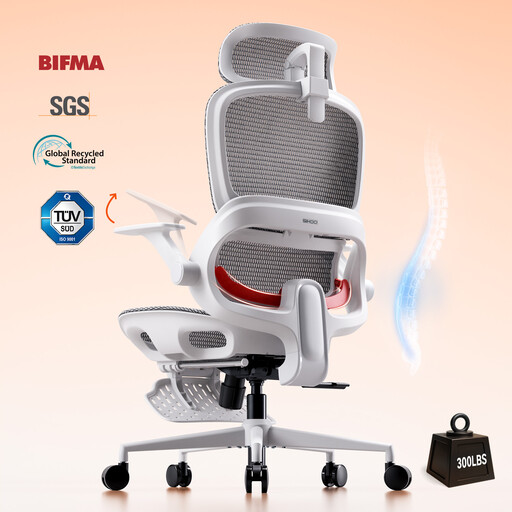
Why it stands out The SIHOO B100JT is distinguished by its adaptive lumbar support and flip-up armrests. This combination makes it a flexible ergonomic home office chair that can be pushed under the desk to save space when not in use. The wide headrest provides additional support for the neck area.
Advantages
Who is it for? This model is an excellent choice for home office users seeking a versatile and comfortable chair that blends discreetly into their living space while offering comprehensive ergonomic features.
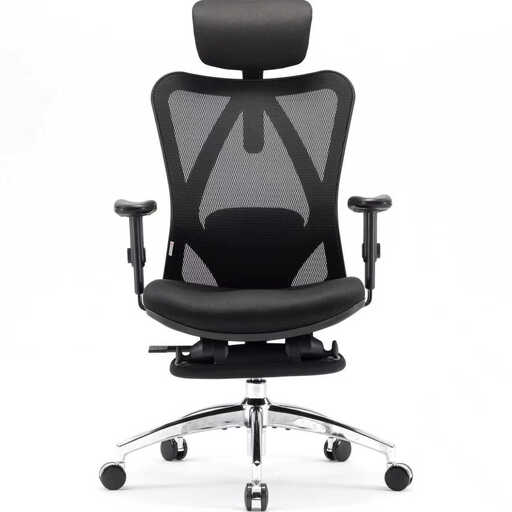
Why it stands out The Sihoo M18JT focuses on maximum adjustability and breathability. With five key adjustment points—backrest, headrest, seat height, tilt, and armrests—it can be precisely tailored to your body's dimensions. The mesh backrest ensures constant ventilation.
Advantages
Who is it for? This desk chair with a footrest is ideal for individuals who spend a great deal of time at their desk and value precise ergonomic adjustment and a cool seating experience.
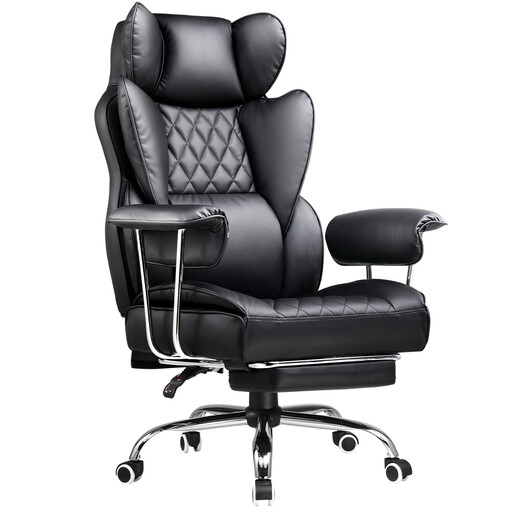
Why it stands out As a classic gaming chair with a footrest, the GTPLAYER combines a striking racing-seat aesthetic with features designed for long gaming sessions. The pronounced side bolsters, high backrest, and deep recline capability make it a piece of furniture designed for both focused gaming and extended relaxation breaks.
Advantages
Who is it for? This model is aimed primarily at gamers and users who prefer the design and enveloping seat shape of a gaming chair and are looking for a stable recline function for breaks between intense sessions.
The models presented already cover a broad spectrum. However, if you wish to explore other alternatives or filter specifically for different features, you can find more models in our comprehensive category.
? Discover more computer chairs with footrests here
1. Is an office chair with a footrest inherently ergonomic? A footrest contributes to ergonomics when used correctly. It is intended for breaks to elevate your legs, promote circulation, and relieve pressure on the lumbar spine. During active work at the computer, your feet should typically be flat on the floor to ensure a stable and upright posture.
2. What should I look for in lumbar support? Effective lumbar support should be height-adjustable so it can be positioned precisely in the natural curve of your lower back. Some models also offer depth adjustment to regulate the pressure. The goal is to provide noticeable yet comfortable support without creating pressure points.
3. Gaming Chair vs. Ergonomic Office Chair with Footrest: What are the main differences? The main difference often lies in the design and primary focus. Ergonomic office chairs focus on subtle, adaptive support mechanisms and a neutral aesthetic. Gaming chairs feature a more striking racing-seat aesthetic with pronounced side bolsters that create an "enveloping" feel. Both can offer good ergonomics, but the choice largely depends on personal preference and the intended use case.