
Lieferung heute & morgen

Qualitätsgarantie

Willkommens-Angebote freischalten: KOSTENLOSE Lieferung | Bis zu 80 % RABATT | Kostenlose 30-Tage-JoyPlus-Testphase
App herunterladen
Long days at the desk, whether in the office or at home, place significant demands on our bodies. Improper seating can lead to tension and discomfort. An ergonomic office chair is designed to support a healthy posture and enhance comfort during seated work.
As a Joybuy Product Recommendation Officer, my role is to provide you with clear and objective guidance. This article will introduce key features to consider when making your selection and present a curated list of models tailored to specific needs.
Selecting the right chair depends on your individual requirements. You should consider three key aspects in your decision.
An ergonomic desk chair is defined by its adaptability. Look for the following adjustment options:
An integrated office chair with lumbar support is a crucial feature for promoting a healthy spinal posture. This support is positioned in the lower part of the backrest and fills the natural curve of the lumbar spine. It helps reduce pressure on the intervertebral discs and prevents slouching. Models with height- and depth-adjustable lumbar support offer the advantage of being precisely customisable to your individual body shape.
The chair's material affects both comfort and durability.
Based on the criteria mentioned, we have compiled a selection of chairs that focus on different functional priorities.
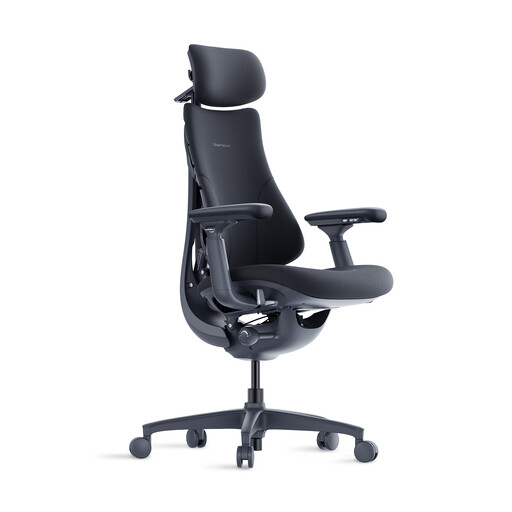
Why It Stands Out: This model is distinguished by its exceptional recline angle of up to 160 degrees and an integrated footrest. The adaptive lumbar support adjusts to the user's movements, providing continuous support. A special feature is the spinal decompression function, which offers relief during work breaks.
Pros:
Who It's For: This chair is an excellent choice for users looking for a home office swivel chair with extensive relaxation features, who value maximum flexibility to switch between focused work and restorative breaks.
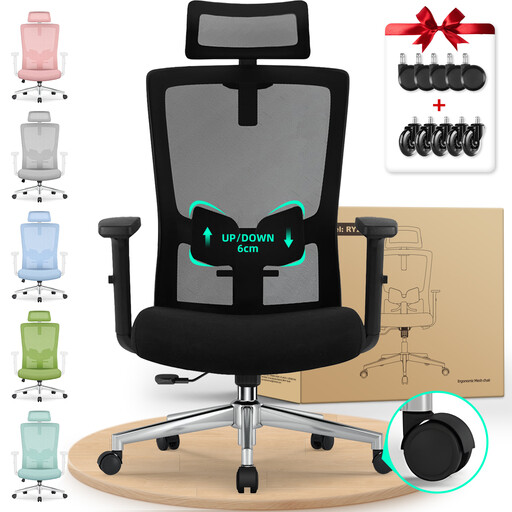
Why It Stands Out: The GTIMEX office chair focuses on solid ergonomic fundamentals. The S-shaped backrest is modelled after the human spine. According to the manufacturer, the gas lift and base are tested to BIFMA and SGS standards, indicating a reliable construction. The adjustable lumbar support and headrest allow for targeted customisation to your body.
Pros:
Who It's For: This chair is suitable for individuals between 155 cm and 185 cm in height who are looking for a robust and reliable office chair with armrests and a headrest for daily use and who value certified components.

Why It Stands Out: This model combines ergonomic features with a practical design for the home office. The flip-up armrests allow the chair to be pushed under the desk to save space. The wide seat with thick foam padding ensures comfort, while the mesh backrest provides ventilation.
Pros:
Who It's For: This chair is ideal for users in home offices or smaller office spaces who need a functional chair that can be easily stored when not in use, without sacrificing essential ergonomic adjustments.
An ergonomic office chair is designed for work. However, if you are looking for seating specifically for rest periods or reading, another category might be more suitable. Discover our selection of luxury recliner chairs with matching ottomans, designed for maximum comfort and relaxation.
Start with the seat height, so your feet are flat on the floor. Next, adjust the seat depth to keep your back fully against the backrest. Set the lumbar support to comfortably support your lower back curve. Finally, adjust the armrests so your shoulders are relaxed and your forearms rest at a 90-degree angle.
The term executive chair often describes a design characterized by a high backrest and plush upholstery, frequently made of leather. While some executive chairs may have ergonomic features, a model explicitly labelled as an ergonomic office chair focuses on maximum adjustability and targeted body support based on occupational health principles.
A headrest is particularly useful for people who often work or take breaks in a reclined position. It supports the neck and head and can help reduce tension in the shoulder and neck area. For users who primarily work in an upright posture, it is not essential but offers additional comfort.