Joybuy Insights

Ergonomic Office Chair Buying Guide for a Healthier Workspace

Long days at the desk, whether in the office or at home, have become the norm for many. This often leads to tension and discomfort caused by poor posture. A suitable ergonomic office chair isn't a luxury purchase, but a fundamental component for a healthy and productive workspace.

This article serves as a guide. We'll present objective criteria to consider when choosing a chair and showcase a selection of models with different features to help you make your decision.

What to Look for When Making Your Choice

The search for the right chair can be overwhelming. Focus on the following three key areas to make an informed decision.

1. Custom Adjustability is Crucial

An ergonomic desk chair adapts to your body—not the other way around. Look for a wide range of adjustment options:

  • Seat Height and Depth: Your feet should rest flat on the floor with your knees at an approximate 90-degree angle. There should be a gap of two to three fingers between the back of your knees and the front edge of the seat.
  • Armrests: Height-adjustable armrests relieve strain on your shoulder and neck muscles. Ideally, your forearms should rest comfortably at a 90-degree angle while your shoulders remain relaxed.
  • Backrest and Lumbar Support: An office chair with lumbar support is especially important for supporting the natural S-curve of the spine. A good support is adjustable in height and depth to fit your lower back precisely and prevent the need for a chair to combat back pain.

2. Material, Breathability, and Weight Capacity

The material affects both the comfort and the durability of the chair.

  • Breathability: A breathable office chair often features a mesh backrest. This material promotes air circulation and prevents heat build-up during long periods of sitting.
  • Weight Capacity: The maximum weight capacity is a critical safety and quality feature. Standard chairs are often designed for up to 120 kg. Those who need greater stability should look for an executive chair with a high weight capacity, certified for weights up to 150 kg, 200 kg, or more. Pay attention to details about the base material (e.g., aluminium alloy) and the load tests performed.

3. Certifications as a Quality Indicator

Seals of approval like BIFMA or SGS certifications provide information about the safety, durability, and stability of an office chair. These standards ensure that components such as the gas lift, castors, and the overall construction have undergone extensive testing.

Our Ergonomic Office Chair Recommendations

Based on the criteria above, we have compiled a selection of models that cater to different needs.
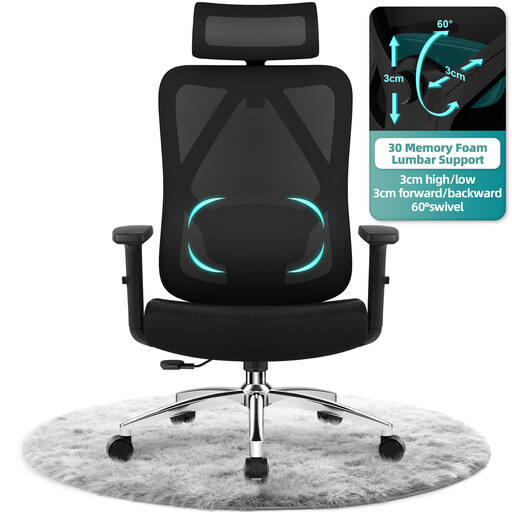
GTIMEX Ergonomic Executive Chair with 3D Memory Foam

GTIMEX Ergonomic Executive Chair with 3D Memory Foam

Why it stands out: This model is distinguished by its exceptionally high weight capacity of 200 kg and advanced lumbar support. According to the manufacturer, the aluminium alloy base has passed over 120,000 pressure tests. The 3D memory foam lumbar support is not only adjustable in height and depth but also swivels 60°, allowing for highly targeted customisation.

Pros:

  • Maximum Weight Capacity: Up to 200 kg, supported by a robust aluminium alloy base.
  • Precise Lumbar Support: 3D-adjustable memory foam support for a personalised fit for the lower back.
  • Extensive Adjustability: Backrest locks at 90°, 115°, and 135°; 10 cm height adjustment for the seat and armrests.
  • High Comfort: Seat cushion made from a combination of high-density foam and natural foam.

Who is it for? For individuals who need an extremely stable and durable chair with maximum weight capacity. It is also an excellent choice for users who place a high value on precise and customisable support for the lumbar region.
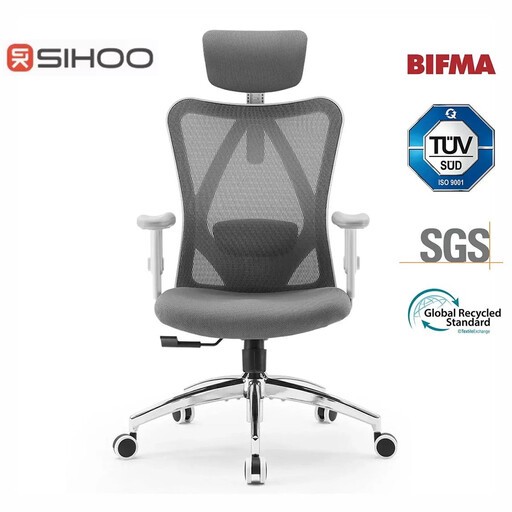
Sihoo M18 Ergonomic Office Chair

Sihoo M18 Ergonomic Office Chair

Why it stands out: The Sihoo M18 is a versatile swivel chair for the home office that offers five key ergonomic adjustments. The W-shaped seat design with a sloping "waterfall" edge is engineered to minimise pressure on the thighs. The high-elasticity mesh backrest ensures excellent ventilation.

Pros:

  • Five Adjustment Points: Customisable headrest, lumbar support, seat height, armrests, and tilt function.
  • Breathable Design: The mesh backrest promotes air circulation.
  • Thoughtful Seat Shape: The W-shaped design can reduce pressure on the legs during long periods of sitting.
  • Solid Weight Capacity: Supports a weight of up to 150 kg.

Who is it for? For users looking for an all-rounder with the most important ergonomic features for daily work in the office or at home. Its balanced features make it a solid choice for a wide range of users.
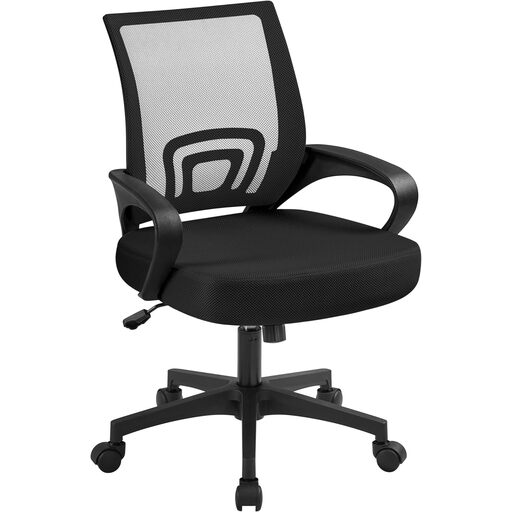
Yaheetech Ergonomic Office Chair with Mesh Back

Yaheetech Ergonomic Office Chair

Why it stands out: This model from Yaheetech offers fundamental ergonomic features and is certified to SGS and BIFMA standards, which is an indicator of tested safety and durability in this category. According to the manufacturer, the gas lift has been tested for over 100,000 cycles. The combination of a breathable mesh backrest and a padded seat offers a good compromise between ventilation and comfort.

Pros:

  • Certified Quality: SGS and BIFMA certified for safety and longevity.
  • Basic Ergonomics: Height-adjustable, with a rocking function and integrated lumbar support.
  • Breathable Backrest: The mesh fabric ensures comfort on warmer days.
  • Stable Construction: Designed for a weight capacity of up to 136 kg.

Who is it for? For budget-conscious buyers looking for a reliable and certified entry-level office chair for their workspace or study. It covers the basic ergonomic needs for occasional to regular work.


Looking for more options?

The models presented already cover a broad spectrum. However, if you haven't found the right model for your specific needs yet, there are many more alternatives to explore.

? Explore our entire collection of ergonomic swivel chairs and find the model that's right for you.


Frequently Asked Questions (FAQ)

What should you look for in an ergonomic office chair?

The most important features are comprehensive adjustment options (seat height, depth, armrests, backrest), customisable lumbar support, breathable materials, and a weight capacity sufficient for your body weight. Also, look for certifications like BIFMA or SGS as an indicator of tested quality.

How do you properly adjust an ergonomic office chair?

A basic adjustment is done in four steps:

  1. Seat Height: Adjust the height so your feet are flat on the floor and your knees form a 90-degree angle.
  2. Seat Depth: Sit all the way back. There should be a gap of 2–3 fingers' width between the back of your knee and the edge of the seat.
  3. Backrest: Adjust the lumbar support to follow the natural curve of your lower spine.
  4. Armrests: Set the height so that your shoulders are relaxed and your forearms rest at a right angle.

What is the difference between a standard and an ergonomic office chair?

A standard office chair often offers minimal or no adjustment options. An ergonomic office chair is designed to adapt to the user's individual body measurements through numerous adjustment options. The goal is to promote healthy posture, reduce strain on the spine, and maximise comfort during long periods of sitting.