
Lieferung heute & morgen

Qualitätsgarantie

Willkommens-Angebote freischalten: KOSTENLOSE Lieferung | Bis zu 80 % RABATT | Kostenlose 30-Tage-JoyPlus-Testphase
App herunterladen
An ergonomic office chair should make long working days more comfortable and suit your desk, height and room. In practice, though, striking designs and general promises of comfort don’t automatically mean you’ll find the right chair. What matters is clear product information, useful adjustment options and a design that suits how you’ll use it.
The term ergonomic desk chair doesn’t refer to a single technical standard. A chair may have a contoured backrest, but still be unsuitable if the seat height, seat depth or armrests don’t suit your height. Check which adjustments are actually available.
An office chair with lumbar support can make it easier to adjust the chair to your lower back. However, the support should be adjustable in height or depth and work well with the backrest. A fixed cushion with a prominent label is no substitute for a balanced seating position. If you already have discomfort, an office chair is no substitute for medical advice.
A swivel chair with castors needs a stable surface and enough room to move around. On delicate flooring, suitable castors or a floor protector may be a good idea. Folding armrests save space if you want to push the chair under your desk. At the same time, they should be sturdy when folded out and shouldn’t unnecessarily restrict the desk height.
When seated, your feet should be as flat on the floor as possible, with your knees not constantly pointing too far up or down. That’s why a height-adjustable office chair is more practical for multiple users or desks at different heights than a model with a fixed seat height.
Check the following:
The product details should suit your height. A chair with a large seat isn’t automatically more comfortable if the backrest or seat depth doesn’t allow you to sit in a suitable position.
A backrest should support your back when you’re sitting upright. Adjustable lumbar support can make it easier to find the right fit. For longer working hours, a clearly specified tilt function and sturdy mechanism are also worth considering. Details such as “tilts up to 125°” are more useful than general claims about relaxation.
A breathable mesh office chair can encourage airflow around your back and seat. However, mesh won’t feel comfortable for everyone; some people prefer a padded seat. For fabric or velvet finishes, check whether the cover can be wiped clean and whether the product description says it can’t be removed or washed.
For smaller rooms, armrests that fold away or a chair without armrests can be practical. If you regularly use a keyboard and mouse, though, you may benefit from office chairs with armrests that are wide enough and suit your needs.
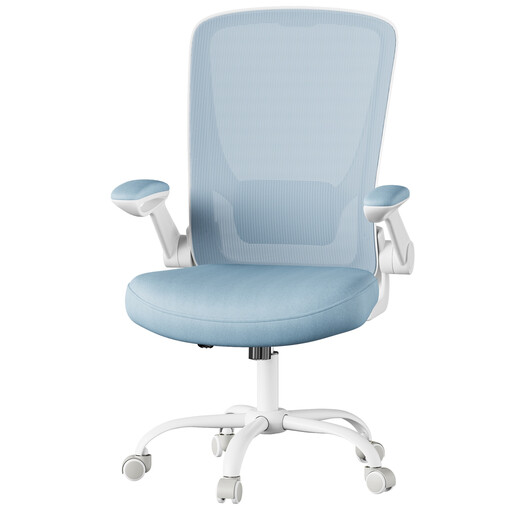
Why this product suits this user type: This chair combines an adjustable seat height, folding armrests and a stated load capacity of 120 kg. That makes it suitable for working from home, a study area or smaller rooms.
The technical details include the seat height range, dimensions, material and load limit. This makes it easier to check whether the chair is right for you before buying, rather than choosing based on the product image alone.
Mesh back, height-adjustable seat, folding armrests and castors for your workspace.
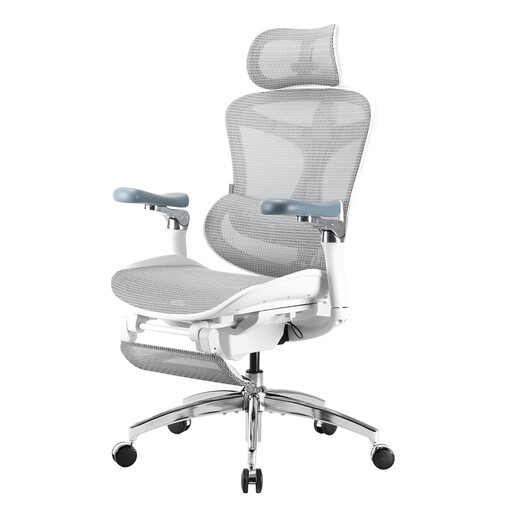
Why this product suits this user type: This model is for anyone looking for an office chair with several adjustment options and dynamic support for the working day.
Rather than simply advertising a fixed back support, the product name specifies dynamic lumbar support, an adjustable backrest and 3D armrests.
Adjustable backrest, dynamic lumbar support and 3D armrests, according to the product details.
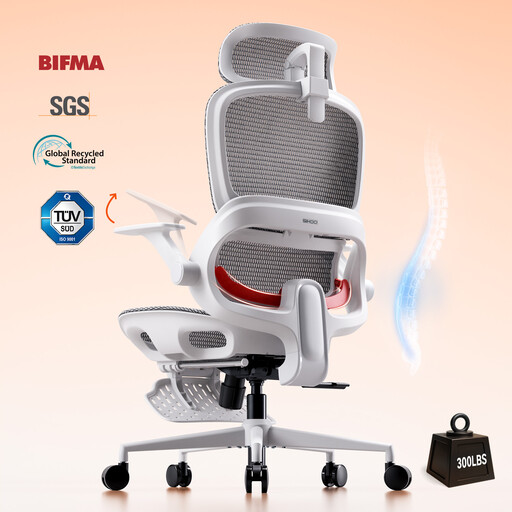
Why this product suits this user type: If you switch between focused work and short breaks, an office chair with a footrest and a high backrest may be worth considering.
The footrest is listed as a specific feature, so you can check in advance whether there’s enough space beneath your desk.
High backrest, adaptive lumbar support, folding armrests and integrated footrest, according to the product name.
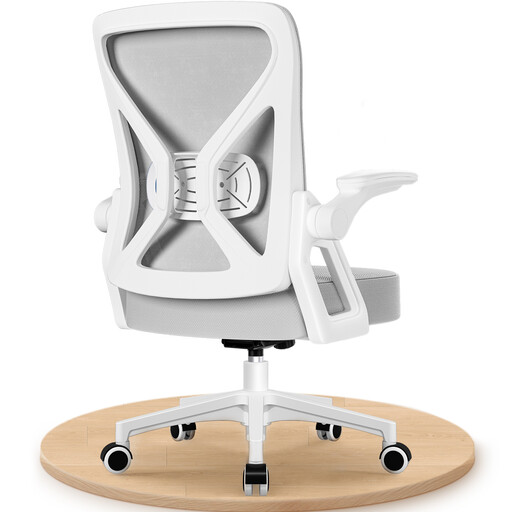
Why this product suits this user type: This model combines a stated tilt of up to 125°, adjustable lumbar support and folding armrests for both work and breaks.
The product details give specific figures for the seat height and tilt, as well as a recommended user height of 145 to 185 cm. This makes it easier to check whether the chair is the right fit.
Seat height of 43 to 53 cm, tilt of up to 125°, adjustable lumbar support and 360-degree castors, according to the supplier.
We’ve put together a complete, regularly updated list of products that meet these strict selection criteria and fully comply with the safety regulations in force in the EU.
Once assembled, first adjust the seat height to suit your desk. Your forearms should rest comfortably on the desk or armrests. Your back and pelvis should be in contact with the backrest. Adjust the lumbar support so that it doesn’t press uncomfortably into your back.
With a comfortable chair for working from home, it’s also a good idea to change position regularly. A reclining chair or a separate office chair with a footrest may be suitable for breaks, but neither is a substitute for a properly set up workstation. Before buying, check how much space the chair needs, especially if you’re considering a large reclining chair.
Adjust the seat height so that both feet rest firmly on the floor and your knees are in a relaxed position. The key isn’t a specific measurement in centimetres, but how your height, desk height and seat depth work together.
How long it lasts depends on the mechanism, material, load, care and how often you use it each day. Check the castors, screw connections and gas lift regularly. Never exceed the stated maximum load.
The price depends on factors such as the range of adjustments, padding, material, castors, armrests and tilt mechanism. Don’t just compare the purchase price; also consider spare part availability, maintenance and whether the chair suits the amount of time you spend sitting each day.