
Lieferung heute & morgen

Qualitätsgarantie

Willkommens-Angebote freischalten: KOSTENLOSE Lieferung | Bis zu 80 % RABATT | Kostenlose 30-Tage-JoyPlus-Testphase
App herunterladen
Published on August 29, 2026 by Joybuy Product Recommendation Officer
Long hours sitting in the office or at home have become the norm for many. However, an unsuitable chair can quickly lead to muscle tension and posture problems. The market for ergonomic office chairs is vast, but not every model advertised as "ergonomic" meets the necessary criteria. This guide will help you identify the crucial features and avoid common purchasing traps.
Many buyers are swayed by marketing terms that mean very little in practice. Pay attention to these three points to make an informed decision:
To find the right ergonomic desk chair, you should focus on specific, verifiable features. These three parameters are essential for a healthy sitting posture and long-lasting comfort.
A good ergonomic office chair must adapt to your body's dimensions. Check for the following adjustment options:
The quality of the components used determines the lifespan and safety of your chair.
Depending on your usage profile, additional features can significantly enhance comfort. An office chair with footrest allows for relaxing breaks right at your workspace. A classic executive chair often features a wider seat and a high backrest, while an ergonomic gaming chair is designed with pronounced side bolsters for extra support.
Here are some models tailored to different needs and work styles.
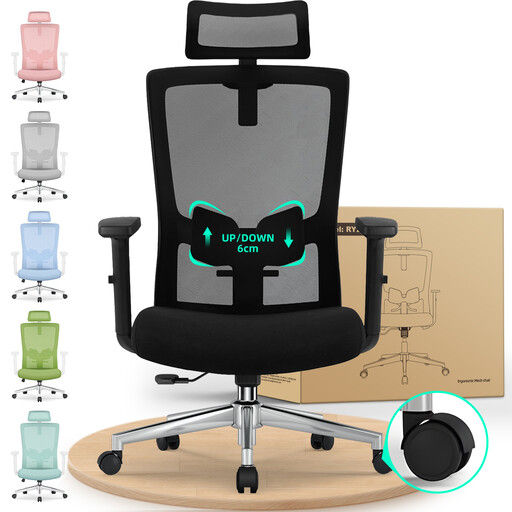
Why This Fits Their Persona: This model provides the essential ergonomic adjustments for a typical workday in an *office chair for home office*. It combines adjustable lumbar support, a customisable headrest, and a rocking function, making it a solid choice for users seeking a functional and affordable solution.
Instead of a vague ergonomics promise, this chair offers concrete, adjustable components. According to the manufacturer, the gas lift and base are BIFMA and SGS certified, which sidesteps the trap of inferior mechanics.
Good price-to-feature ratio with all basic adjustment options. The mesh backrest ensures good air circulation.
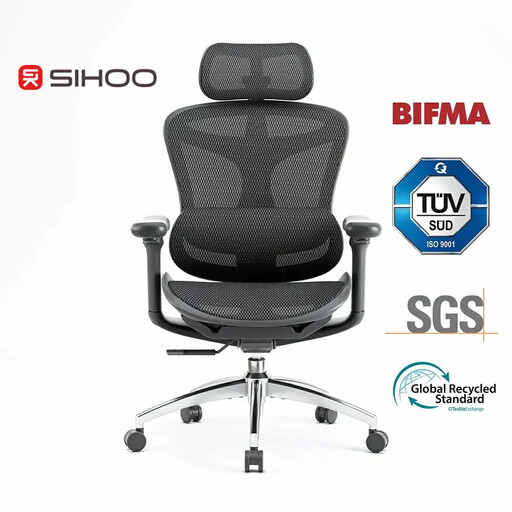
Why This Fits Their Persona: For individuals who spend more than eight hours a day at their desk, dynamic support is essential. This model continuously adapts to the user's movements with its self-adaptive lumbar support and 3D armrests that synchronise with the recline.
Instead of a rigid, manually adjusted support, the dynamic lumbar system provides active adaptation. This prevents an unhealthy, fixed posture—a common flaw in simpler models merely advertised as "ergonomic."
Smart, weight-sensing recline function and a self-adaptive lumbar support for continuous, dynamic support.
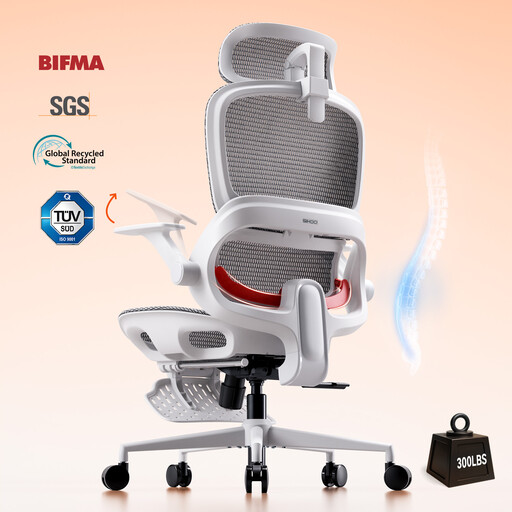
Why This Fits Their Persona: This chair is ideal for users who also use their workspace for breaks and relaxation. The combination of ergonomic adjustments for work and a retractable footrest for rest periods makes it a versatile companion for daily life.
This model offers a concrete, useful extra feature—the footrest—instead of just advertising with generic comfort terms. The flip-up armrests are another practical detail that goes beyond the standard and saves space.
Integrated, retractable footrest for maximum relaxation. Flip-up armrests allow the chair to be pushed completely under the desk.
We have compiled a complete, up-to-date list of products that fully meet these strict selection criteria and German safety regulations.
1. How do I know if my office chair is adjusted correctly? Your chair is well-adjusted when your feet are flat on the floor and your knees form an angle of about 90 degrees. The lumbar support should be positioned in the natural curve of your lower back. Your forearms should rest horizontally on the armrests or desk with your shoulders relaxed.
2. What is the average lifespan of an ergonomic office chair? The lifespan heavily depends on the quality of the materials and the frequency of use. Mid-range models with certified components (e.g., BIFMA/SGS) are typically designed to last five to ten years. Regular maintenance and adherence to the maximum weight capacity can extend the lifespan.
3. Is a gaming chair a good alternative for the home office? An ergonomic gaming chair can be an alternative, as it is designed for long periods of sitting. Gaming chairs often offer a high backrest and pronounced supports. However, the side bolsters (bucket seat design) are not comfortable for every body type, and the aesthetic may not fit every office environment. A classic ergonomic office chair often provides a more neutral sitting position and more subtle adjustments that may be better suited for office work.