
Lieferung heute & morgen

Qualitätsgarantie

Willkommens-Angebote freischalten: KOSTENLOSE Lieferung | Bis zu 80 % RABATT | Kostenlose 30-Tage-JoyPlus-Testphase
App herunterladen
An ergonomic office chair should make your working day more comfortable, without you paying for features you'll never use. Whether it's for a home office, a study space or a gaming setup, what really matters isn't just a modern design or lots of adjustment levers – it's the right dimensions, clear weight ratings and a suitable seat.
A height-adjustable office chair can only be set up properly if the seat height and seat dimensions match your body size. If the seat is too high, your feet won't rest fully on the floor. If the seat is too deep, it can restrict your legs' freedom of movement. So check the following before you buy:
The term doesn't automatically guarantee a specific set of features. An office chair with lumbar support isn't automatically suitable for everyone just because it has it. What matters is whether the support can actually be adjusted in height or depth, and whether the backrest gives you enough freedom of movement when sitting.
A reclining function is also no substitute for a proper working posture. A backrest that tilts far back can be useful for breaks, but it should also allow a stable, upright position.
The maximum weight capacity often refers to a static load. That doesn't necessarily mean the chair is designed for every dynamic movement or for leaning back for long periods. Look for a clear weight rating in kilograms, as well as usage guidelines.
There are also differences when it comes to materials:
A well-fitting seat allows for stable contact with the floor. Your knees shouldn't be bent sharply upwards or downwards. As a practical comparison: the GTIMEX office chair offers a seat height adjustment of 43 to 53 cm according to the product specs, and is designed for people between 145 and 185 cm tall. The Yaheetech chair, according to its product data, has a seat height of 35 to 45 cm, which can make it more interesting for different desk heights or for shorter people.
An office chair with lumbar support shouldn't just have a fixed curve. An adjustable position makes individual adjustment much easier. Also check whether the backrest can be locked in place or tilts freely.
For an ergonomic desk chair, these details are particularly important:
An office chair with armrests can help position your forearms comfortably at the desk. Folding armrests are practical if you want to push the chair fully under the desk. The castors should suit your floor type. On delicate hard floors, a suitable floor protector mat can be a good idea.
A swivel chair with a 360-degree function also needs enough room to move. Measure the area under and beside your desk before you buy.
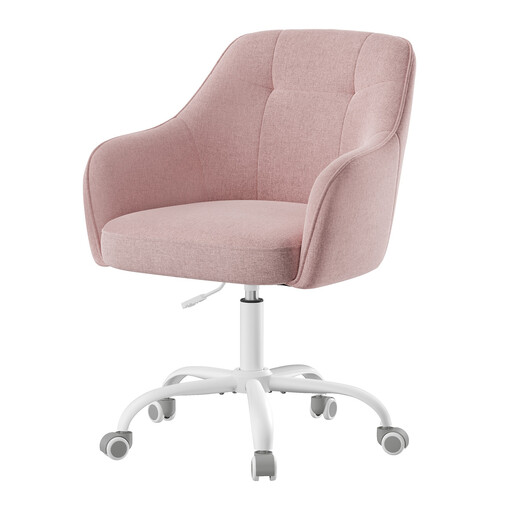
Why this product fits the profile: This compact swivel chair is ideal for a bedroom, study or occasional study space. According to the product specs, the seat height can be adjusted from 78 to 88 cm overall height.
The product description gives specific dimensions, material details and a maximum static load capacity of 110 kg, rather than just vague comfort promises.
Padded seat, armrests and PU castors; the velvet-like material is described by the supplier as non-removable and non-washable.
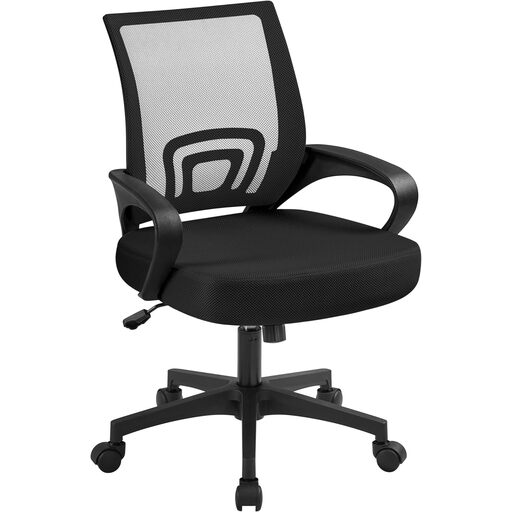
Why this product fits the profile: This breathable mesh office chair is aimed at users who want a ventilated backrest, adjustable seat height and clear technical specifications.
The product data lists a seat height adjustment of 35 to 45 cm, a weight capacity of up to 136 kg, and SGS and BIFMA certifications from the manufacturer.
Mesh back, padded seat, integrated lumbar support, plus rocking and tilting functions according to the product description.
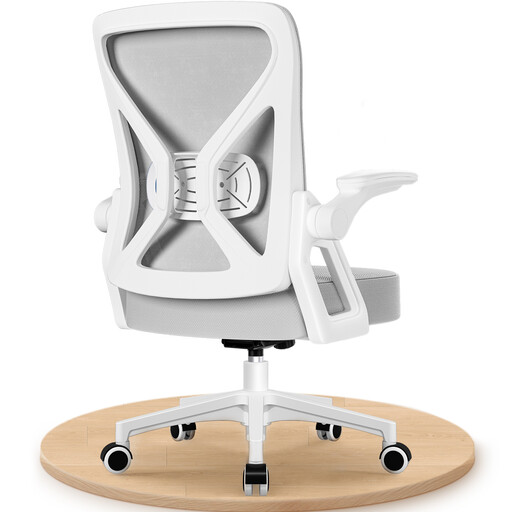
Why this product fits the profile: The combination of a height-adjustable seat, adjustable lumbar support and a backrest that tilts up to 125° makes it suitable for both work and short breaks.
The specifications state a seat height range of 43 to 53 cm, a recommended body height of 145 to 185 cm and a weight capacity of up to 150 kg.
Folding armrests, 360-degree castors and mesh fabric; the padding is described as having two layers of foam.
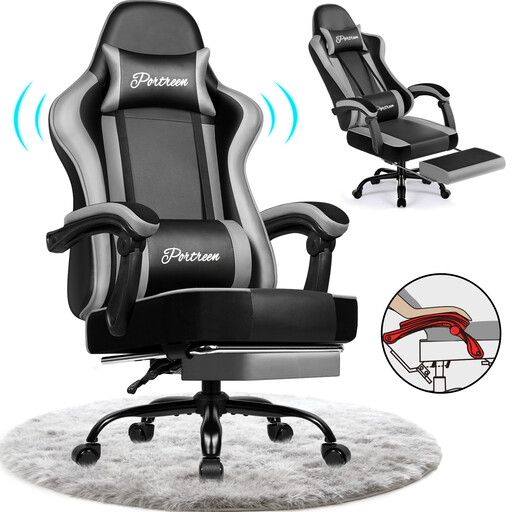
Why this product fits the profile: This gaming chair with a footrest is designed for users who want to switch between an upright working position and a fully reclined position.
The manufacturer states a backrest range of 90 to 170°, a height adjustment of 10 cm and a weight capacity of up to 150 kg.
Extendable footrest, headrest, lumbar support and PU surface; the product details also reference BIFMA and SGS standards.
We've put together a full, regularly updated list of products that fully meet these strict selection criteria and the safety regulations in force in the EU.
Even a well-equipped ergonomic office chair needs to be set up correctly. Start with the seat height, then adjust the backrest. The armrests should be positioned so that your shoulders aren't permanently raised. The position of your screen, keyboard and desk height also affect your sitting posture.
For long periods of sitting, we also recommend:
The seat height should be chosen so that your feet rest firmly on the floor and your legs are in a relaxed position. The exact height depends on your body height, desk height and seat depth. That's why a well-suited adjustment range is more important than a single ideal number.
The lifespan depends on the load, the mechanism, the floor, how well it's cared for and how many hours a day it's used. A general guarantee in years isn't reliable. Check the castors, gas lift, armrests and screw connections regularly. If there's any play, cracks or instability in the mechanism, stop using the chair until the cause has been identified.
A reclining function can be useful for breaks or relaxed activities. For focused work, however, the backrest should allow a stable, upright position. What matters most is a suitable seat height, a good desk position and lumbar support that fits your own body shape.