
Lieferung heute & morgen

Qualitätsgarantie

Willkommens-Angebote freischalten: KOSTENLOSE Lieferung | Bis zu 80 % RABATT | Kostenlose 30-Tage-JoyPlus-Testphase
App herunterladen
An ergonomic office chair needs to suit your desk, your height, and how long you'll be using it each day. People working from home, office employees, and students often focus on looks or an extra-soft cushion first. For longer periods of sitting, however, adjustable features, the right seat height, and a sturdy build are far more important.
An office chair with a headrest, lumbar support, armrests, and a tilt function sounds versatile. But these features are only useful if they can be adjusted to fit your height. A fixed or poorly positioned lumbar support, for example, can be impractical. So don't just check whether a feature exists — check its adjustment range.
A very soft cushion might feel comfortable at first. However, for daily use, shape retention, seat width, and thigh support are just as important. Pay attention to the materials and dimensions stated. A foam seat cushion can offer very different sitting properties depending on its density and construction.
The stated weight capacity isn't a figure you should push to its limit permanently. In addition to your body weight, extra forces come into play when sitting down, leaning back, and moving. If you're looking for a heavy-duty office chair up to 150 kg, you should consider the manufacturer's specification with a reasonable margin, and also take the base, gas lift, and castors into account.
A height-adjustable office chair should be set so that your feet rest firmly on the floor and your forearms are roughly horizontal on the desk. For the models considered here, seat heights range from about 42 to 54 cm, depending on the version.
Also check:
An office chair with lumbar support can make your sitting position more individually adjustable. The height, depth, or flexibility of the support are crucial. Models with an S-shaped backrest and adjustable support offer more customisation than simple padded chairs.
A headrest is mainly useful if you regularly lean back. When working intently, it shouldn't push too far forward. Adjustable armrests help keep your shoulders in a relaxed position. With an office chair with armrests, the height, width, and, where applicable, depth should match the edge of your desk.
A mesh office chair offers a breathable backrest and can be a good choice for warmer rooms. A padded seat, on the other hand, can provide a different sitting feel. Fabric, mesh, and velvet also differ in how easy they are to clean.
Pay attention to:
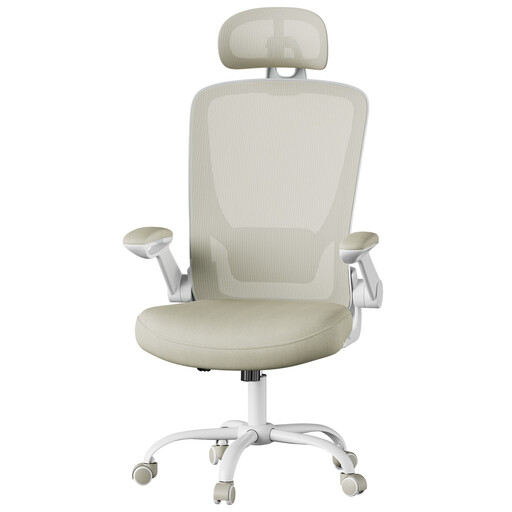
Why this product fits the profile: For home office workstations with limited space, this model offers basic adjustability in a compact size of 62 × 62.4 cm.
The seat height of 46–54 cm, adjustable lumbar and head support, and a tilt range of 90–105° are all clearly specified.
Mesh seat surface, 8 cm foam padding, foldable armrests, and a stated weight capacity of 120 kg.
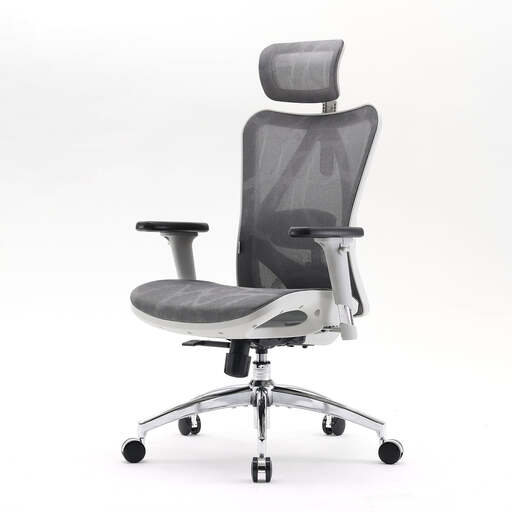
Why this product fits the profile: This model is designed for people who want to adjust multiple contact points such as armrests, headrest, and lumbar support.
The 3D armrests, the 90–126° adjustable backrest, and the eight centimetres of seat height adjustment are all specified.
Breathable polyester mesh, 3D armrests, and a stated maximum weight capacity of 150 kg.
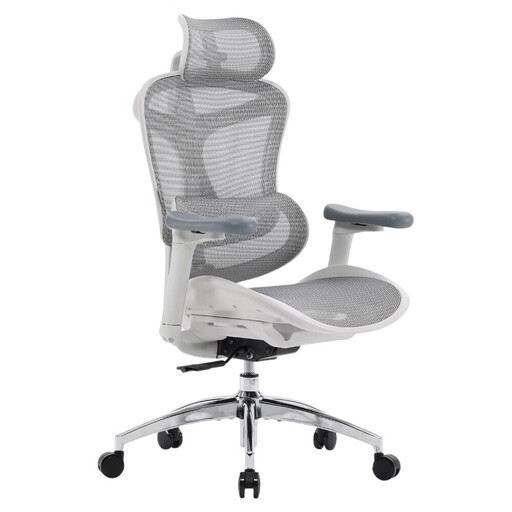
Why this product fits the profile: For long working hours and changing sitting positions, this model offers several defined tilt angles and a movement-responsive design according to the product description.
The backrest is adjustable to four positions with six centimetres of height range; additionally, 110°, 120°, and 130° are stated as tilt angles.
Self-adaptive lumbar support, 3D armrests, mesh backrest, and a stated weight capacity of 150 kg.
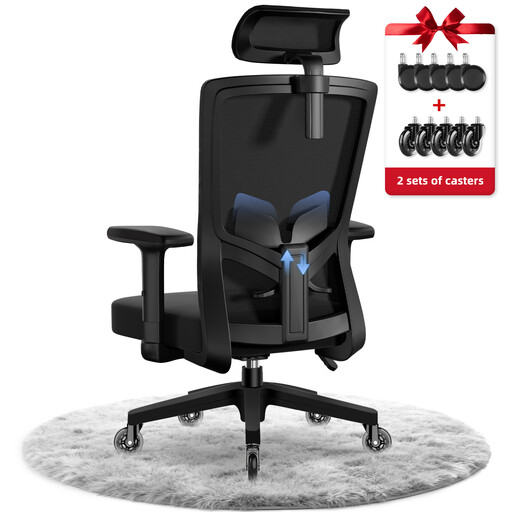
Why this product fits the profile: This model combines a tilt function with an adjustable headrest, lumbar support, and armrests, making it suitable for a versatile home office.
The product details specify concrete adjustment ranges: 11 cm for the headrest, six centimetres for the lumbar support, and ten centimetres for seat height and armrests.
Breathable nylon mesh, quiet castors, tilt function, and a stated weight capacity of 150 kg.
We've put together a complete, regularly updated list of products that fully meet these strict selection criteria and the safety regulations in force in the EU.
The right height depends on your height and desk height. In the basic position, your feet should be firmly on the floor while your knees form roughly a right angle. Individual adjustment is key, not a fixed number of centimetres.
The lifespan depends on usage intensity, body weight, material quality, assembly, and care. Check the castors, screws, gas lift, and mechanism regularly. If you notice play, cracks, or unstable parts, stop using the chair until the cause has been identified.
In addition to the purchase price, costs can arise for a floor mat, replacement castors, or spare parts. Mesh and plastic surfaces can usually be cleaned with a soft, slightly damp cloth. Padded and velvet upholstery require more careful cleaning depending on the material.