
Lieferung heute & morgen

Qualitätsgarantie

Willkommens-Angebote freischalten: KOSTENLOSE Lieferung | Bis zu 80 % RABATT | Kostenlose 30-Tage-JoyPlus-Testphase
App herunterladen
By the Joybuy Product Recommendation Officer, July 28, 2026
With many of us spending more time seated, whether in a home office or a corporate setting, the importance of the right chair has come into sharp focus. An ergonomic office chair is more than just a piece of furniture; it's a tool to support proper posture and promote concentration. However, the market is saturated with models whose labels often promise more than their design delivers. This guide will help you identify the crucial features and steer clear of common purchasing pitfalls.
Before diving into the positive attributes, it's wise to understand the typical flaws that often only become apparent after a few weeks of use.
To avoid buyer's remorse, you should focus your attention on verifiable, technical features. Three aspects are of central importance here.
The mechanism determines how the seat and backrest move. It is crucial for a chair for long sitting periods.
The lordosis is the natural S-shaped curve of the lower spine. A good office chair with lumbar support supports this exact area to prevent back muscle fatigue and an unhealthy slouched posture. Look for the following features:
The choice of material affects both the comfort and the durability of the chair.
Based on the criteria mentioned, we have identified a few models that are suitable for different requirements and work styles.
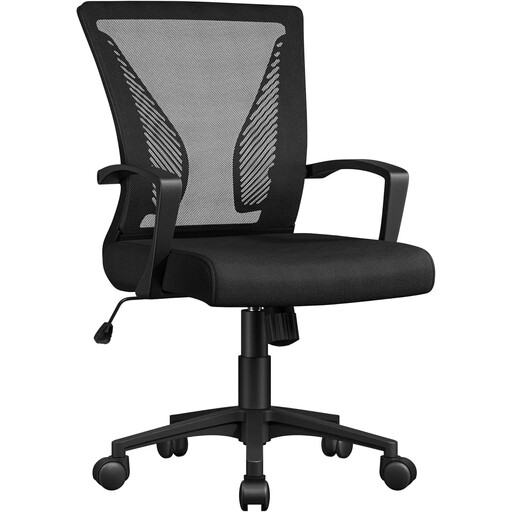
Why This Fits Their Persona: A solid choice for users looking for a functional swivel chair for the home office without a large budget. It covers the basic requirements for occasional to regular desk work.
This chair avoids exaggerated marketing terms and instead offers verifiable basic functions: adjustable seat height, a tilt function, and an ergonomically shaped backrest made of breathable mesh fabric.
The price-to-performance ratio is the key advantage here. It offers a breathable backrest and a solid maximum weight capacity of 136 kg for its price class.
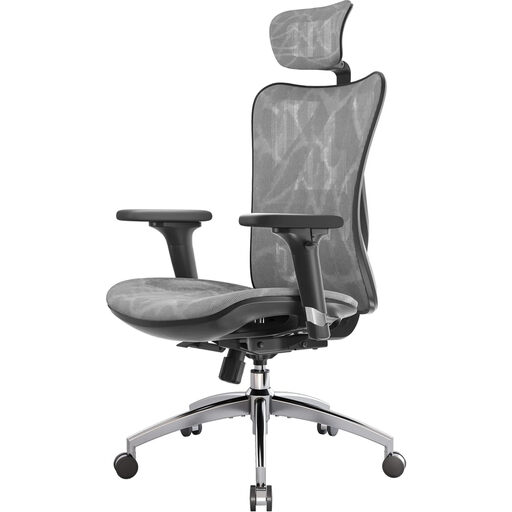
Why This Fits Their Persona: Ideal for professionals, gamers, or students who spend many hours at their desk each day. The comprehensive adjustment options allow for precise customisation to one's own body and actively prevent fatigue.
This chair escapes the "one-size-fits-all" trap through its multiple adjustment features. Instead of a rigid form, it offers an adjustable lumbar support, a customisable headrest, and 3D armrests that can be changed in height, position, and angle.
The combination of five adjustment modes and certifications from BIFMA and SGS signals a focus on tested quality and individual customisation. The weight capacity of up to 150 kg speaks to a robust construction.
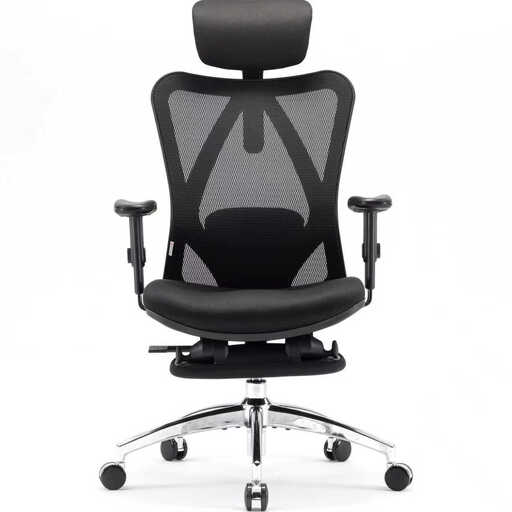
Why This Fits Their Persona: Perfect for anyone who sees their workspace as a place for short breaks and relaxation. The integrated footrest allows for switching between a focused work posture and a relaxed reclining position.
This model delivers a concrete, usable comfort feature—the retractable footrest—instead of just vaguely talking about comfort. At the same time, it doesn't neglect ergonomic fundamentals like an adjustable lumbar support and headrest.
The combination of ergonomic adjustments for work and an integrated footrest for breaks makes this chair a versatile all-in-one solution. The W-shaped seat with a waterfall edge can also reduce pressure on the thighs.
We've compiled a complete, up-to-date list of products that fully meet these strict selection criteria and applicable safety regulations.
1. How do I correctly adjust my ergonomic desk chair? Start with the seat height: your feet should be flat on the floor with your knees at an approximately 90-degree angle. Next, adjust the lumbar support to buttress the natural curve of your lower back. The armrests should be set so that your shoulders are relaxed and your forearms can rest horizontally on the desk.
2. What is the difference between a synchronous and a tilt mechanism? With a tilt mechanism, the backrest and seat are rigidly connected; when you lean back, the entire chair tilts. A synchronous mechanism moves the backrest and seat in a coordinated ratio to each other. This promotes "dynamic sitting"—the constant changing of posture—which relieves pressure on the intervertebral discs and improves circulation.
3. How do I care for a mesh office chair? A mesh office chair is relatively low-maintenance. Dust and loose particles can be regularly removed with a vacuum cleaner using a brush attachment. For light stains, a damp cloth with a little mild soap solution is often sufficient. Avoid aggressive cleaning agents, as they can damage the fabric. Also, periodically check that all screws are still tight to ensure stability.