
Lieferung heute & morgen

Qualitätsgarantie

Willkommens-Angebote freischalten: KOSTENLOSE Lieferung | Bis zu 80 % RABATT | Kostenlose 30-Tage-JoyPlus-Testphase
App herunterladen
An ergonomic office chair is designed to make long periods of sitting at a desk more comfortable and to allow you to find a seating position that suits you individually. In practice, however, it's not the label on the box that matters, but the interplay of seat height, backrest, lumbar support, armrests and weight capacity.
When shopping online, three typical pitfalls can lead to a bad purchase:
A height-adjustable office chair should be adjustable so that your feet rest flat on the floor and your knees form roughly a right angle. The seat height stated in the product specifications is therefore more important than a general claim like "suitable for long working days".
Also pay attention to:
Some models state a recommended height range. The GTIMEX office chair with 125-degree recline function, for example, is described as suitable for people between 145 and 185 cm. You should compare such details with your own height before buying.
An adjustable lumbar support can make it easier to adapt to the natural curve of your lower back. However, it doesn't replace regular movement breaks and is not a medical device. Check whether the support can actually be adjusted in height or depth, or whether it is simply fixed into the backrest.
For an office chair with lumbar support, the following points are also relevant:
A breathable mesh office chair can improve air circulation in warm rooms. The mesh should be tautly stretched and the frame should not create any uncomfortable pressure points.
An office chair with armrests should have height-adjustable pads so that your shoulders aren't constantly raised. If you frequently switch between typing and leaning back, movable or foldable armrests can be helpful.
An office chair with a headrest is mainly relevant for reclined seating positions. When sitting upright, the headrest should not push your head forward.
For people with a higher body weight, an office chair up to 150 kg is worth considering. This figure must refer to the maximum load and should not be confused with a general stability claim. The SIHOO M18JT is listed with a maximum load of 150 kg according to the product data. The GTIMEX gaming chair also states a weight capacity of 150 kg.
The following models differ in features, materials and intended use. The information is based on the respective product descriptions.
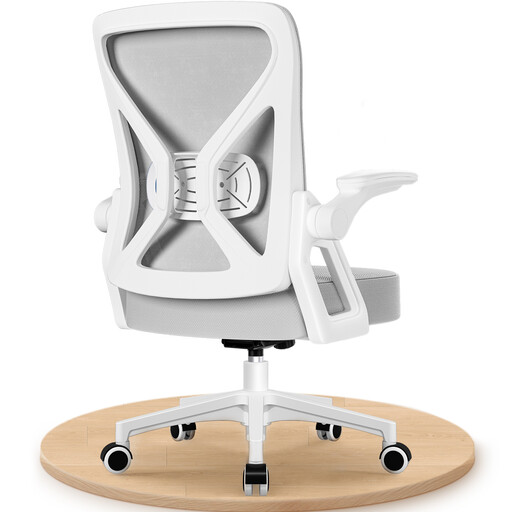
Why this product fits the profile: The height-adjustable seat height of 43 to 53 cm, foldable armrests and recline up to 125° cover the essential basic functions for home office and office use.
The product description provides specific seat height measurements, an adjustable lumbar support and a maximum weight capacity of 150 kg, rather than just general comfort promises.
125-degree recline function, foldable armrests and 360-degree castors.
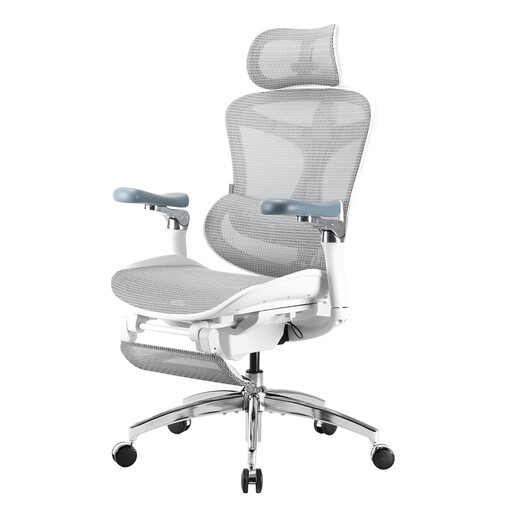
Why this product fits the profile: This model is aimed at users looking for dynamic lumbar support, 3D armrests and an adjustable backrest in a home office chair.
The design doesn't just rely on fixed padding; it specifies adjustable elements for the backrest, lumbar area and arm supports.
3D armrests and dynamic lumbar support according to the product description.
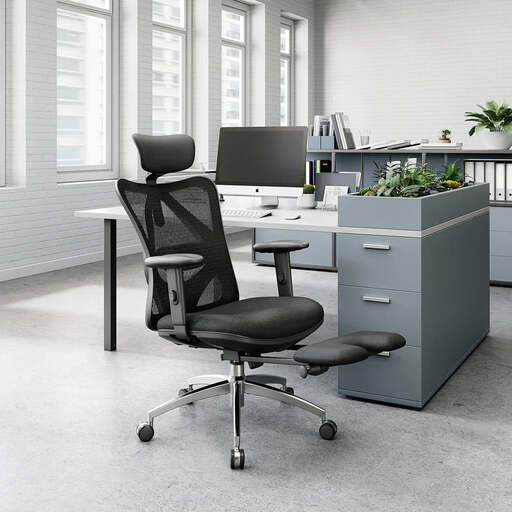
Why this product fits the profile: The mesh back, adjustable headrest and pull-out footrest suit people who switch between focused work and short rest periods.
The footrest is described as a separate, pull-out element. This means it can be tucked away when you're sitting upright at your desk, rather than permanently taking up space under the table.
Breathable mesh back, headrest, lumbar support and footrest; maximum load according to product data 150 kg.
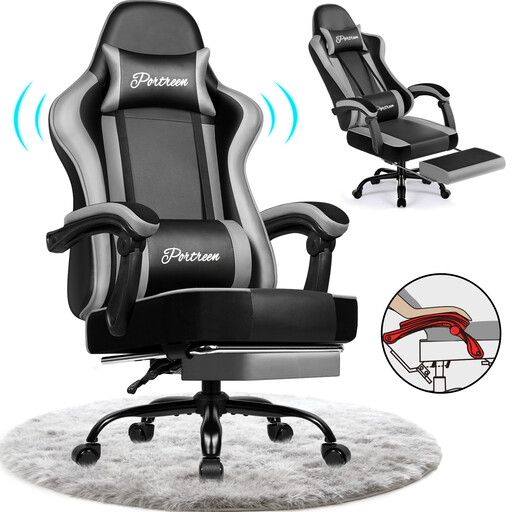
Why this product fits the profile: This gaming chair offers a backrest with a stated range of 90 to 170°, a height-adjustable seat position, plus head and lumbar support.
The footrest can be pulled out when needed. Details on seat height, recline range and weight capacity are clearly stated in the product description.
Recline range from 90 to 170°, telescopic footrest and stated weight capacity of 150 kg.
Adjust the chair fully after assembly. Start with the seat height, then adjust the lumbar support, and finally position the armrests. The backrest should not be tilted too far back when you're working. Also check that the seat pan works well with your desk and that the armrests fit under the desk surface.
An ergonomically selected desk chair can only deliver its benefits if the desk height, monitor position and sitting distance are also right. Varying your sitting position and taking short movement breaks remain sensible regardless of the model.
We've put together a complete, regularly updated list of products that fully meet these strict selection criteria and the safety regulations in force in the EU.
Your feet should rest flat on the floor. Ideally, your knees should be at roughly a right angle, while your thighs should not slope sharply up or down. The exact setting depends on your height, desk height and the shape of the seat pan.
The lifespan depends on the load, materials, intensity of use and maintenance. Regularly check the screws, castors, gas lift and armrests. Without a binding manufacturer's statement, it's not possible to give a general figure for specific durability.
When retracted, usually not significantly, provided the footrest sits under the seat pan. However, for a reclined position, it does need extra space in front of the chair. So before you buy, you should check the distance between your desk and the wall.