
Lieferung heute & morgen

Qualitätsgarantie

Willkommens-Angebote freischalten: KOSTENLOSE Lieferung | Bis zu 80 % RABATT | Kostenlose 30-Tage-JoyPlus-Testphase
App herunterladen
Long days at a desk, whether in the office or at home, often lead to neck and back tension. An ill-fitting chair can negatively affect your posture and reduce concentration. Selecting a suitable model is therefore a crucial decision for your health and productivity.
This article serves as a guide. It highlights the objective criteria relevant to selecting an ergonomic office chair. As a Joybuy Product Recommendation Officer, I have filtered and compiled market information to provide you with a factual basis for your decision.
An ergonomically designed desk chair adapts to your body, not the other way around. When making your choice, pay attention to the following features.
Customisation is the core feature of an ergonomic chair. This includes:
The materials and construction determine durability and comfort.
A back-friendly office chair encourages movement. Sitting rigidly for hours puts stress on the intervertebral discs. Mechanisms like synchronous or tilt functions support dynamic sitting. The backrest and seat move in a coordinated ratio, encouraging changes in posture. This makes the chair a great choice as an office chair for long hours of sitting.
Based on the criteria mentioned, we have compiled a selection of models that cater to different needs.
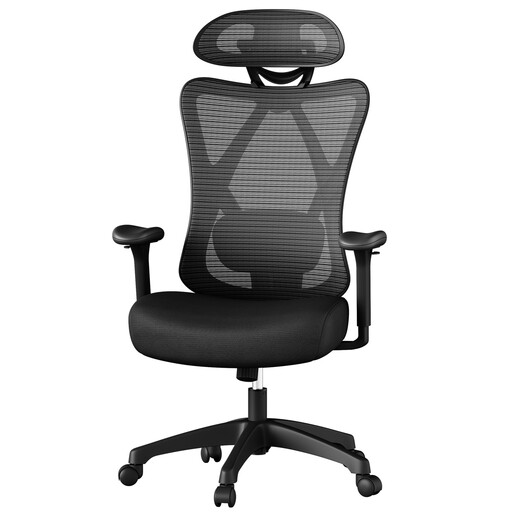
Why it stands out: This model combines a high weight capacity of up to 150 kg with comprehensive adjustment options, including an adaptable lumbar support and headrest, making it a versatile solution for the daily workday.
Pros:
Who it's for: Suitable for individuals looking for a robust and highly adjustable chair for long workdays who require a high weight capacity.
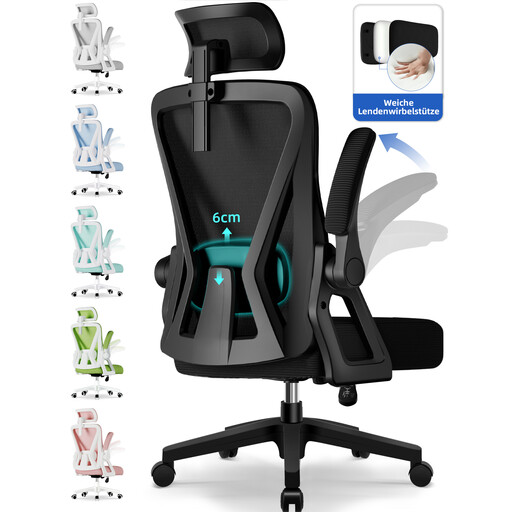
Why it stands out: This chair is distinguished by its S-shaped backrest and a tilt function up to 135°. The flip-up armrests also allow for space-saving storage under the desk.
Pros:
Who it's for: Ideal for users who value pronounced back support and a flexible recline function for relaxation. The flip-up armrests also make it an attractive option for workspaces with limited room.
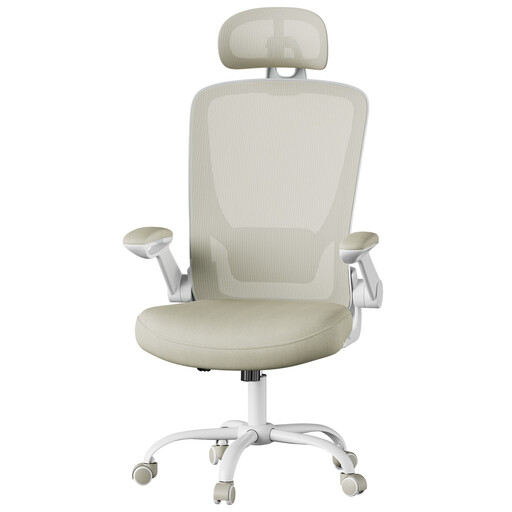
Why it stands out: This light beige model offers ergonomic features like adjustable lumbar support and flip-up armrests, while its light colour scheme blends well into modern living and working environments.
Pros:
Who it's for: A great choice for the home office or study where both functionality and a bright, space-saving aesthetic are desired.
Do the models presented here not quite match your preferences for colour or design? In our collection, you'll find other options that can blend harmoniously into your workspace. Discover our selection of grey and white furniture.
An office chair is considered ergonomic if it has multiple adjustment options to adapt to the user's individual body measurements and needs. Key features include adjustable seat height, seat depth, customisable armrests, and a backrest with integrated lumbar support. Additionally, it should promote dynamic sitting through a synchronous or tilt mechanism.
Follow these steps for a basic setup:
A headrest is not essential for every user. It is particularly beneficial if you frequently lean back during work to think or take short breaks. In these moments, a swivel chair with a headrest can effectively relieve tension in the neck and shoulder area. For individuals who predominantly work in an upright and forward-leaning position, its function is less critical.