
Lieferung heute & morgen

Qualitätsgarantie

Willkommens-Angebote freischalten: KOSTENLOSE Lieferung | Bis zu 80 % RABATT | Kostenlose 30-Tage-JoyPlus-Testphase
App herunterladen
An ergonomic office chair should do more than look good. What matters is whether the seat height, backrest, armrests and lumbar support suit your workspace and body size. Anyone who spends several hours a day in a home office, workplace or at a desk should therefore look beyond cushioning thickness or design alone.
Many product pages prominently showcase individual features while omitting important specifications. The following advice will help you avoid common purchasing mistakes and assess a suitable ergonomic desk chair more objectively.
A chair can have plenty of levers and features and still be incompatible with your desk. Before buying, check the following:
A height-adjustable office chair is especially practical when several people use it or when the desk itself is not height-adjustable. When seated, your feet should rest firmly on the floor while your knees can form an approximately right angle. This is general setup guidance and does not replace individual advice.
A description such as office chair with lumbar support says little on its own about how adjustable the support actually is. Check whether the support is permanently integrated or can be adjusted in height, depth or direction. For an office chair with an adjustable backrest, it should also be clear whether only the recline angle can be changed or whether the backrest height is adjustable as well.
Pronounced lumbar support is not automatically comfortable for everyone. Its shape should suit your sitting posture and must not create uncomfortable pressure.
Breathable mesh fabric can improve air circulation, but it does not replace a stable seat base or suitable cushioning. You should also check:
With fabric or Sherpa surfaces, heat, dust and dirt may behave differently than with mesh. Mesh can be appealing in warm rooms and during long periods of sitting, while padded models may be preferable if you want a softer seating feel.
The seat height must suit your body size and the underside of your desk. Choose a seat depth that leaves a small gap between the back of your knees and the front edge of the seat. If the seat is too deep, standing up may be more difficult. If it is too short, you may not receive the desired thigh support.
Look for specific measurements instead of general terms such as “spacious” or “comfortable”. The JOYFURNOS Mesh Office Desk Chair, for example, is listed with product dimensions of 64 × 60 × 103–110 cm. According to the product specifications, the HaluPeit model has a seat height of 47.5–57.5 cm.
A backrest should provide sufficient support for your back and allow you to adopt a comfortable sitting position. A rocking function can be useful during short breaks or when changing your posture. However, it should be possible to lock it securely when you want to work with full concentration.
The ochama×J.ZAO Z5 Soft Chair is listed with an adjustable recline range of 105° to 140°. According to the product description, the model also features a height-adjustable backrest with 40 mm of adjustment, an adjustable headrest and 4D lumbar support. After assembly, each feature should be adjusted individually and secured firmly.
An office chair with armrests can support your forearms while typing or during conversations at your desk. It is important that the armrests fit beneath the desk or can be folded away. The JOYFURNOS chair is listed with foldable armrests, allowing it to be stored more compactly beneath the desk.
For users who switch between office work and gaming, a gaming and office chair with an adjustable backrest and a wider recline range may be worth considering. However, the design alone says nothing about whether a chair is suitable for long periods of sitting.
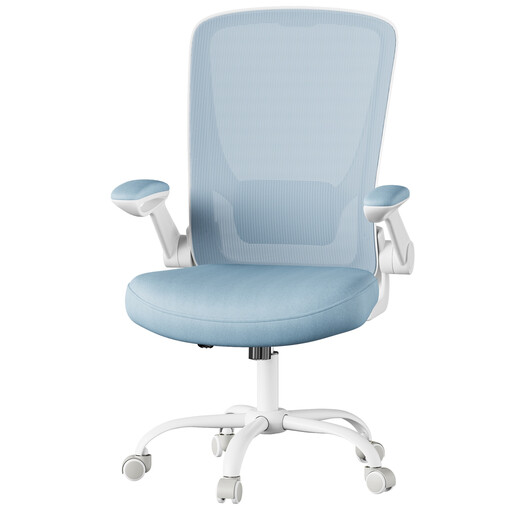
Why does it suit this profile? A practical option for a study or home office when adjustable seat height, lumbar support and space-saving armrests are priorities.
The product specifications provide precise measurements, including a height of 103–110 cm and a maximum static load of 120 kg. They also list foldable armrests and adjustable lumbar support.
Breathable upholstery, rocking function, foldable armrests and smooth-rolling casters according to the product description.
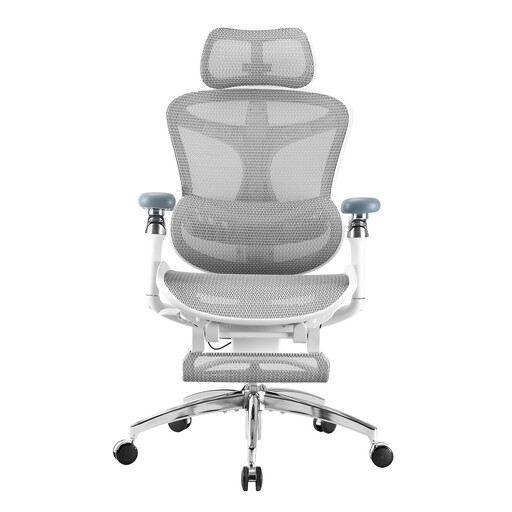
Why does it suit this profile? Designed for home-office users who want to customise their sitting position, backrest and arm support as precisely as possible.
The product name specifies dynamic lumbar support, seat-depth adjustment, an adjustable backrest and 6D armrests. This puts several concrete adjustment points front and centre rather than relying on a vague promise of comfort.
Dynamic lumbar support, seat-depth adjustment, 6D armrests and a footrest according to the product description.
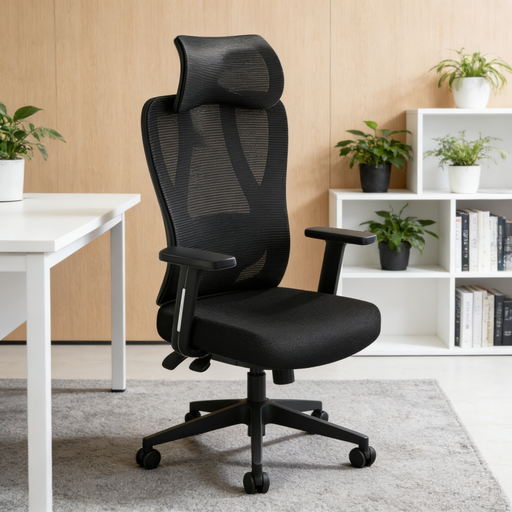
Why does it suit this profile? This model is aimed at users who want to combine an office chair and gaming chair with a wider recline range and multiple support features.
The product description provides precise figures: a 105°–140° recline range, 40 mm of backrest adjustment and a seat cushion thickness of 10.5 cm. These details make it easier to compare the chair with your own workspace.
Two-layer mesh fabric, 4D lumbar support, adjustable headrest and a package weight of 19 kg according to the product specifications.
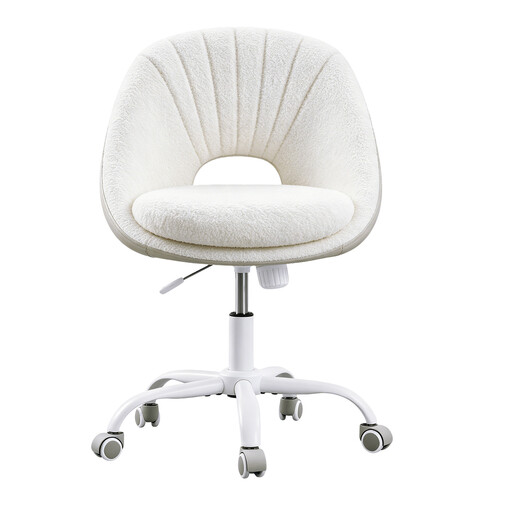
Why does it suit this profile? Suitable for a dressing table, bedroom, living area or an occasionally used workspace where design and mobility are important.
The specifications clearly define its intended use: the model combines a rocking function and 360° swivel with a seat-height adjustment range of 47.5–57.5 cm. For daily, extended work sessions, users should check the dimensions particularly carefully.
10 cm-thick seat cushion, removable seat cover, PU leather on the exterior and a stated load capacity of 136 kg.
The full category includes additional models for different rooms, sitting habits and budgets. Compare dimensions, features and product specifications side by side.
After assembly, your ergonomic office chair should not simply remain in its default position. Adjust it step by step:
After a few weeks, check the screws, casters and connections. Always follow the assembly instructions and observe the stated maximum load capacity. An office chair is not designed to be used as a step or ladder.
The height should suit the desk surface and your individual sitting position. Your feet should rest firmly on the floor, with your knees slightly bent. With a height-adjustable desk, you can also adapt the seat height to changes in working height.
Service life depends on frequency of use, body weight, materials, care and the quality of the moving components. A universal number of years is therefore not a reliable guide. Check the materials used, availability of replacement parts, assembly instructions and regularly inspect the casters, screws and gas lift.
A conventional swivel chair does not require electricity during normal use. Height adjustment, the rocking function and casters operate mechanically or via a gas lift. Electricity costs arise only if a model explicitly includes powered features, such as motorised adjustment.