
Lieferung heute & morgen

Qualitätsgarantie

Willkommens-Angebote freischalten: KOSTENLOSE Lieferung | Bis zu 80 % RABATT | Kostenlose 30-Tage-JoyPlus-Testphase
App herunterladen
An ergonomic office chair should help you maintain a suitable sitting position for hours at a time, whether you’re working from home, in the office, studying or gaming. But choosing one can be confusing: terms such as “ergonomic”, “back-friendly” and “premium comfort” don’t automatically describe specific features or verified quality.
If you’re looking to buy an ergonomic desk chair, focus on measurable features instead. These include seat height, weight capacity, lumbar support, armrests, backrest, material and the available adjustment options.
An office chair with a headrest, footrest and tilt function can be versatile. What matters, though, is whether you can adjust the seat height, backrest and armrests to suit your height and desk. An extra feature is of little use if the seat is too high or the armrests can’t be positioned properly.
The term “office chair with lumbar support” only tells you that there’s support for the lower back. Check whether you can adjust its height, depth or tension. Fixed padding may suit some people, but it offers fewer adjustment options than a movable or height-adjustable lumbar support.
A mesh office chair helps air circulate around the backrest. This can be especially useful in warm rooms. However, mesh can’t make up for an unsuitable seat. Also check the seat width, seat depth, padding and base stability. For an upholstered model, material quality and care instructions are important, as heat and moisture can build up more readily.
With a height-adjustable office chair, both feet should rest firmly on the floor, with your knees at roughly a right angle. The seat height should also work with your desk height. Armrests that are too low or too high can affect your shoulder position.
So compare:
According to the product description, the GTIMEX Ergonomic Office Chair is designed for people around 145 to 185 cm tall and has an adjustable seat height of 43 to 53 cm. Details like these make it easier to narrow down your options, but you’ll still need to compare them with your own measurements.
For long periods of sitting, an office chair designed for extended use should offer more than a fixed backrest. A tilt or rocking function and lumbar support that can be repositioned are useful features.
A backrest that reclines to between 120 and 125 degrees can offer a different sitting position for short breaks. A greater recline isn’t automatically better: check whether you can lock the mechanism in several positions and whether the seat remains stable when you lean back.
The stated maximum weight capacity generally applies to the product and should not be exceeded. Also consider:
You should be able to verify any stated certification in the product documentation. Terms such as BIFMA or SGS are only meaningful when it’s clear which test or component they refer to.
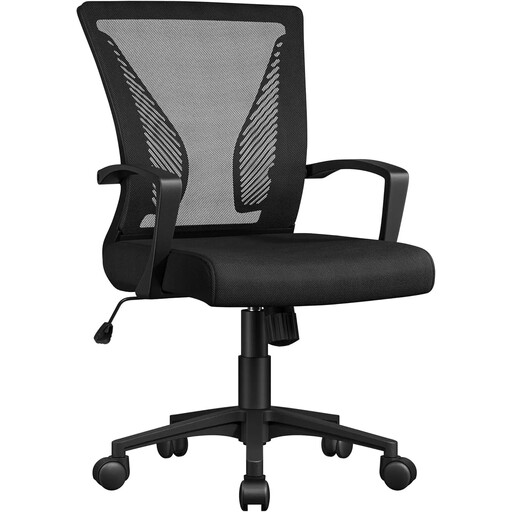
Why this product suits this profile: This model combines a height-adjustable seat, armrests and a breathable mesh backrest. The product details list a seat height of 35 to 45 cm and a maximum weight capacity of 136 kg.
The seat height and weight capacity figures help you choose based on practical specifications, not just marketing terms.
Mesh backrest, 360-degree swivel, five castors and a stated weight capacity of 136 kg.
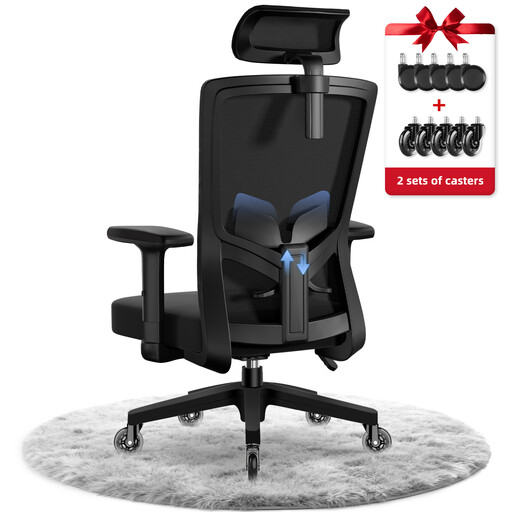
Why this product suits this profile: According to the product description, this model has an adjustable headrest, lumbar support, armrests and seat height. The backrest reclines by up to 120 degrees, and the stated weight capacity is 150 kg.
Several adjustable contact points mean you’re less reliant on a single, fixed padded support for your back.
According to the product details, the headrest adjusts by 11 cm, the lumbar support by 6 cm and the armrests by 10 cm.
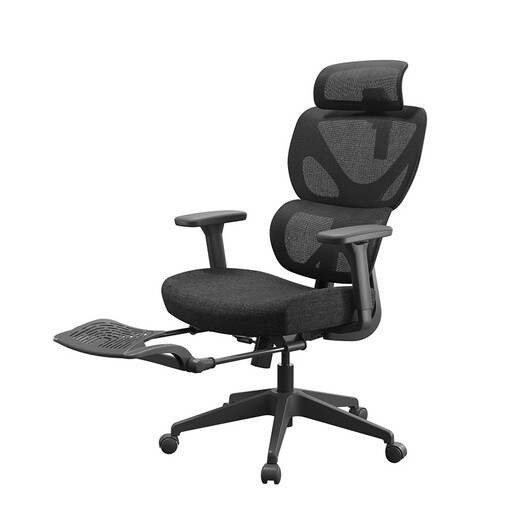
Why this product suits this profile: This gaming office chair combines a footrest with a headrest, elastic lumbar support, swivel armrests and recline of up to 132 degrees. It’s suitable for workstations, gaming set-ups and seated breaks.
The features are clearly specified, so you can check the recline angle, footrest, armrests and lumbar support against your needs before buying.
According to the product description, it has a 132-degree recline, an integrated footrest and a 10 cm-thick seat.
We’ve put together a complete, regularly updated list of products that fully meet these strict selection criteria and the safety regulations in force in the EU.
Once you’ve assembled the chair, don’t leave it in the default position. Adjust it step by step:
Even the best chair can’t make up for an unsuitable desk height or sitting in the same position all day. Changing position regularly and getting up for short breaks are also part of a functional workspace.
Adjust the seat height so that both feet rest securely on the floor and your knees are bent at roughly a right angle. Your height, desk height and seat depth all matter. A height range in centimetres is more useful than the general term “ergonomic”.
Its lifespan depends on how it’s used, as well as its mechanism, materials and care. Check the screws, castors and gas lift regularly. Don’t exceed the stated maximum weight capacity, and follow the assembly and care instructions provided by the manufacturer.
A footrest can be useful when you’re leaning back or taking a short break. For regular desk work, though, your feet should rest firmly on the floor or on a separate footrest. An integrated footrest isn’t designed to be stood on and shouldn’t be used to help you get up or climb onto the chair.