
Lieferung heute & morgen

Qualitätsgarantie

Willkommens-Angebote freischalten: KOSTENLOSE Lieferung | Bis zu 80 % RABATT | Kostenlose 30-Tage-JoyPlus-Testphase
App herunterladen
If you spend many hours working from home, in the office, studying or gaming, you’ll expect more from an ergonomic office chair than you would from a basic desk chair. However, a high backrest alone doesn’t guarantee a suitable sitting position. What really counts are adjustable components, durable materials and dimensions that match your height and desk.
Labels like “ergonomic”, “high back” or “executive” don’t tell you much about how adjustable a chair actually is. An office chair might come with a headrest, lumbar cushion and recline function, while the seat height or armrests can only be adjusted to a limited extent.
So, check the following before you buy:
A specification like “office chair up to 150 kg” primarily describes the intended maximum load. It doesn’t replace checking the base, castors, gas lift and mechanism. Assembly also affects stability.
Look for a clear weight capacity rating, a sturdy base and the supplier’s safety information. Certifications such as BIFMA, EN1335, TÜV or SGS should only be assessed as they are stated for each product. A certification is not a blanket guarantee of comfort.
An ergonomic office chair with a footrest can be handy for breaks or short periods of relief. However, for a consistently good sitting position, a footrest doesn’t replace a suitable desk or correctly adjusted seat height. With a recline function, you should also check whether the backrest can lock in several positions and whether the mechanism is suitable for its intended use.
A height-adjustable desk chair should be adjustable so that both feet rest firmly on the floor. Your knees should remain at roughly a right angle. As a concrete guide, a product might specify a seat height adjustment of 43 to 53 cm and suitability for heights from around 145 to 185 cm. Such details are more helpful than general claims about ergonomics.
An office chair with lumbar support should offer support that can be adapted to your own sitting posture. With dynamic systems, the support sometimes moves with the backrest or your body. That doesn’t automatically mean it will suit everyone equally.
An office chair with a headrest is mainly suitable for users who want extra neck support when leaning back. The direction of adjustment and the available height range are important. One model, for example, specifies a headrest that rotates 120 degrees and has a height adjustment of 11 cm.
A mesh office chair allows air to circulate around your back and seat, which can be pleasant in warm rooms. Upholstery made from foam or faux leather is easier to wipe clean and can offer a different seat firmness. Your choice of material should suit the room temperature, your cleaning routine and how long you’ll be using the chair.
For a combined work and gaming setup, models described as ergonomic gaming chairs may also be suitable. Here, pay particular attention to the armrests, back support and the actual adjustment ranges, rather than just the design.
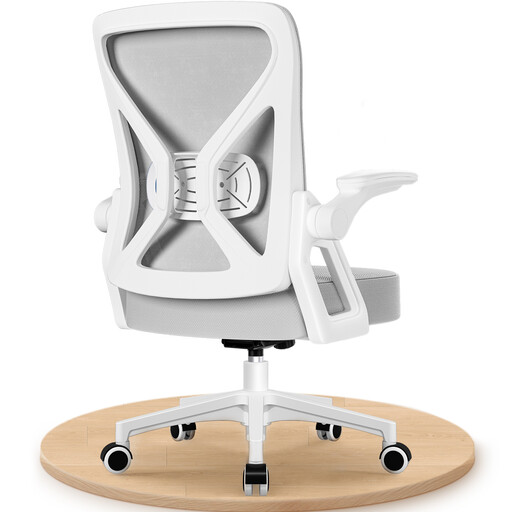
Why this product fits the profile: This model combines basic adjustment options with a compact feature set, ideal for home office, study or your first workspace.
The specifications state a seat height adjustment of 43 to 53 cm, an adjustable lumbar support and a backrest tilt of up to 125°.
Height-adjustable seat, flip-up armrests, breathable mesh material and a stated weight capacity of up to 150 kg.
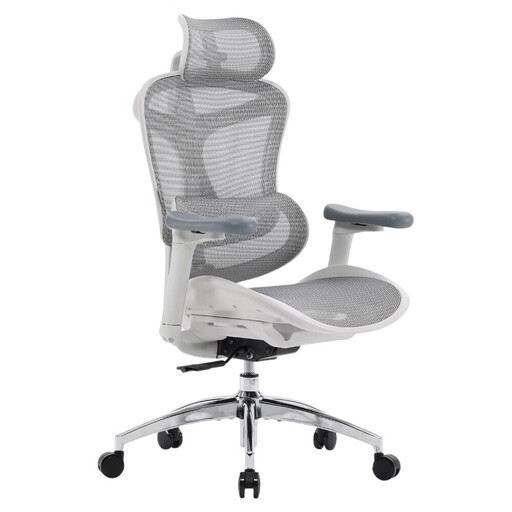
Why this product fits the profile: The combination of a dynamic backrest, self-adaptive lumbar support and 3D armrests is aimed at users with high demands for adjustability.
The product details mention four backrest positions, 6 cm vertical adjustment and defined tilt angles of 110°, 120° and 130°.
Breathable polyester mesh, steel frame, 3D armrests and a stated maximum load of 150 kg. The offer also lists REACH, EN1335, TÜV and SGS BIFMA.
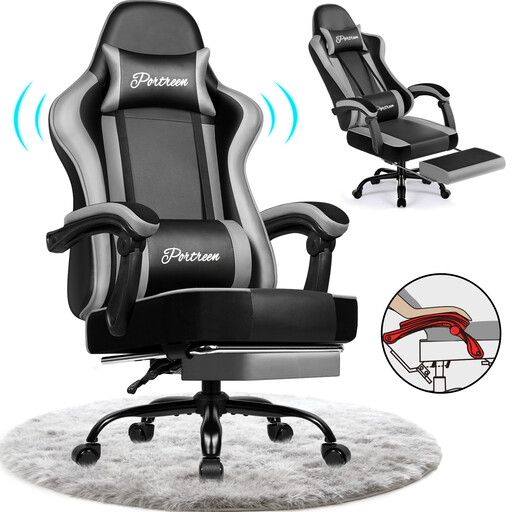
Why this product fits the profile: This model is ideal for users who want to combine work, gaming and short rest periods in one chair.
The specifications state a tilt range of 90° to 170°, a height adjustment of 10 cm and an extendable footrest with a metal frame.
Headrest and lumbar support are included; the offer lists BIFMA and SGS standards, as well as a weight capacity of 150 kg.
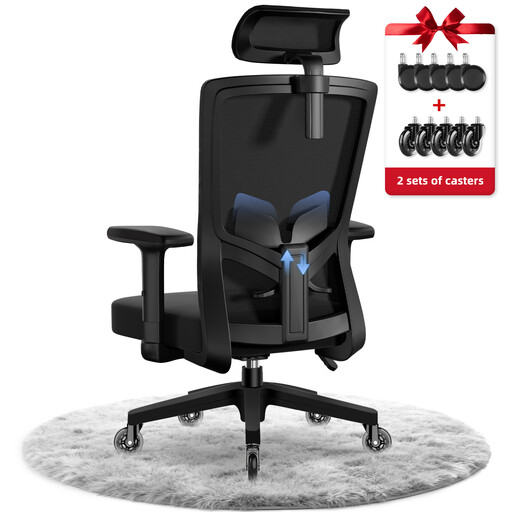
Why this product fits the profile: The foldable armrests and breathable mesh can be practical for smaller workspaces with varying usage.
Specific details on 10 cm seat height adjustment, 6 cm lumbar support adjustment and 10 cm armrest adjustment make selection easier.
Height-adjustable headrest, breathable nylon mesh backrest, foldable armrests and a stated weight capacity of up to 150 kg.
We’ve put together a complete, regularly updated list of products that fully meet these strict selection criteria and the safety regulations in force in the EU.
Start with the seat height: both feet should be flat on the floor. Then adjust the seat depth, lumbar support, backrest and armrests. The backrest should support your upper body without unnecessarily restricting your freedom of movement. Adjust the headrest and recline function only after that.
The lifespan depends on the material, daily use, body weight, floor surface and maintenance. Regularly tightening screws, gentle cleaning and adhering to the maximum weight capacity can help extend its life. Check warranty and spare parts information before buying.
Yes, depending on the tilt angle, the backrest needs extra space behind the chair. So measure the distance to the wall and check whether the footrest can be fully extended. For small rooms, foldable armrests and a compact base are often more practical.