
Lieferung heute & morgen

Qualitätsgarantie

Willkommens-Angebote freischalten: KOSTENLOSE Lieferung | Bis zu 80 % RABATT | Kostenlose 30-Tage-JoyPlus-Testphase
App herunterladen
Long workdays at a desk, whether in the office or at home, have become the norm for many. This often leads to tension in the neck and back. A suitable ergonomic office chair is not a luxury purchase but a fundamental component of a functional workspace. It promotes a healthy posture and can help prevent the discomfort that arises from prolonged sitting.
This article serves as your guide. We will introduce the key features to look for when making a purchase and present a selection of models with different functions to help you make an informed decision.
The variety of office chairs is vast. To find the right model for your individual needs, it's helpful to understand a few core features.
An ergonomic desk chair is primarily defined by its wide range of adjustment options. Every body is different, so the chair should adapt to you—not the other way around.
The chair's material has a direct impact on comfort, especially for an office chair for long sitting periods.
A good swivel chair for the home office should offer both stability and controlled movement.
Based on the criteria mentioned, we have compiled a selection of chairs that stand out for their specific ergonomic features and functions.
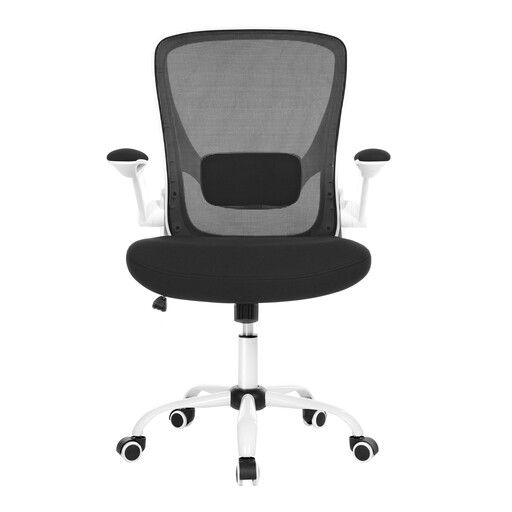
Why it stands out: This model combines essential ergonomic functions with a practical design. The flip-up armrests are a clear standout feature in this category, making the chair exceptionally space-saving.
Advantages:
Who is it for? This chair is a great choice for home office users or students looking for a functional and space-saving chair with the most important basic ergonomic settings. The maximum static load capacity is 120 kg.
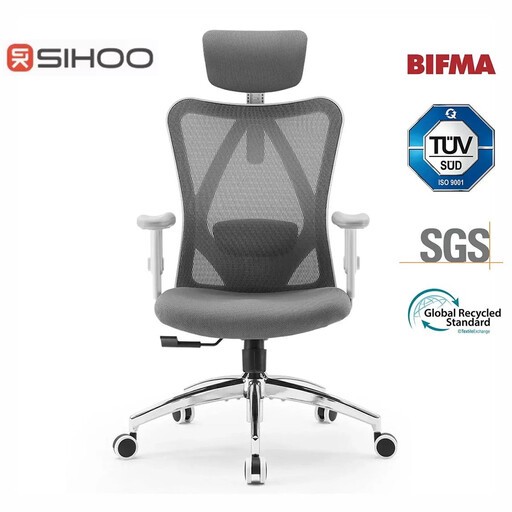
Why it stands out: The Sihoo M18 offers comprehensive adjustment options often found in higher-priced models. With five adjustment points, it can be tailored very precisely to your body.
Advantages:
Who is it for? Ideal for individuals who sit for many hours a day and need a chair with advanced adjustment options to fine-tune their sitting position. Its high load capacity also makes it a solid option for taller and heavier users.
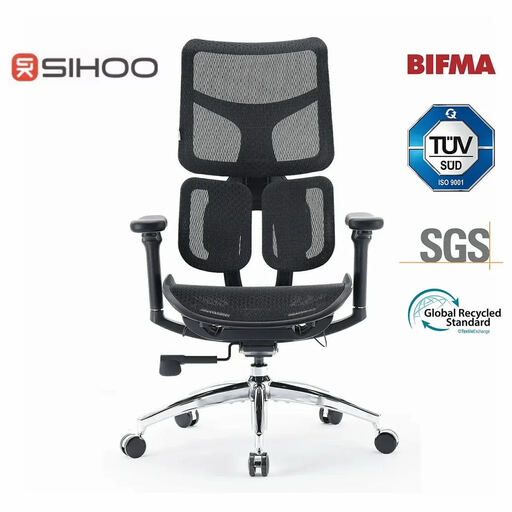
Why it stands out: The Sihoo Doro S100 integrates advanced technologies like a dual dynamic lumbar support system and 4D armrests. It actively adapts to the user's movements.
Advantages:
Who is it for? This chair is aimed at discerning users who value maximum customisation and proactive ergonomic support. It is an excellent choice for professional environments and for anyone looking to invest in a chair with advanced ergonomic technology.
The models presented here focus on functionality and a neutral design in black or grey tones. However, sometimes an office chair should also make a visual statement or blend harmoniously into an existing interior design concept.
For example, if you prefer a chair in a lighter colour that creates a friendly and open atmosphere, discover our selection of beige office chairs.
1. What makes an office chair ergonomic? An office chair is considered ergonomic if its adjustable components allow it to be adapted to the user's individual body measurements and needs. This typically includes an adjustable seat height, seat depth, backrest, armrests, and lumbar support. The goal is to promote a healthy and natural posture and to minimise strain.
2. How do I correctly adjust an ergonomic office chair? Start with the seat height: your feet should be flat on the floor, and your knees should form a 90-degree angle. Adjust the seat depth so there is a gap of about two to three fingers' width between the back of your knees and the edge of the seat. Adjust the lumbar support to fit the natural curve of your lower back. The armrests should be set so that your forearms rest horizontally with your shoulders relaxed.
3. How important is a headrest on an office chair? A headrest is particularly useful if you frequently work in a reclined position or use the chair for relaxation breaks. It helps to relieve tension in the neck and shoulder muscles. For a consistently upright working posture, it is not strictly necessary but can enhance overall comfort.