
Lieferung heute & morgen

Qualitätsgarantie

Willkommens-Angebote freischalten: KOSTENLOSE Lieferung | Bis zu 80 % RABATT | Kostenlose 30-Tage-JoyPlus-Testphase
App herunterladen
Selection by the Joybuy Product Recommendation Officer
An ergonomic office chair is designed to provide a stable sitting position for extended periods, whether you're working from home, in the office, or gaming. In practice, however, the label "ergonomic" alone doesn't tell the whole story. Many products advertise comfort, support or particularly high-quality materials without adequately explaining the key dimensions and features.
Before you buy, it's worth taking a close look at the actual product specifications. Seat height, backrest, armrests, weight capacity and assembly effort all affect whether a chair suits your height and daily routine.
A curved backrest alone doesn't make an ergonomic desk chair. If there's no information about seat height or the position of the lumbar support, it's difficult to judge whether the chair can be individually adjusted. A fixed backrest may suit some people, but it's less flexible than a model with adjustable elements.
Look for concrete values, such as a seat height adjustment of 43 to 53 cm or a height-adjustable lumbar support. The more precise the specifications, the easier it is to compare.
A durable office chair should have a clearly stated maximum static load capacity. Claims like "particularly sturdy" or "suitable for many hours" are no substitute for technical specifications. What's more, the load limit shouldn't be equated with a recommendation for every body type.
Also check the width of the seat, the height of the backrest and the distance between the seat and the armrests. A chair may have a high weight capacity, but its dimensions might still make it unsuitable for everyone.
A breathable mesh office chair can be more comfortable in warm rooms than a fully upholstered surface. Faux leather, on the other hand, is often easier to wipe clean, but can feel different depending on the room temperature. With a gaming chair featuring a PU or PVC cover, you shouldn't just focus on the look – also consider cleaning, padding and ventilation.
Your feet should be able to rest firmly on the floor when sitting, while your knees form roughly a right angle. For shorter people, lower seat heights are important. With the GTIMEX Ergonomic Office Chair, the seat height is between 43 and 53 cm according to the product description; the model is recommended for a height of 145 to 185 cm.
A height-adjustable desk chair should also match your desk height. If the desk surface isn't height-adjustable, getting the right seat height becomes especially important. A position that's too low or too high can negatively affect your arm posture when using the keyboard and mouse.
When choosing an office chair with lumbar support, you should assess whether the support is fixed, height-adjustable or adjustable in depth. The label alone tells you little about the actual adjustment. Look for clear information about the position and adjustment range.
The recline function is also relevant. With the GTIMEX office chair, the backrest can recline up to 125° according to the manufacturer. This can be handy for short breaks or changing position, but it doesn't replace regular breaks from sitting.
An office chair with armrests should be adjustable so that your shoulders aren't permanently raised. Foldable armrests save space under the desk, while height-adjustable armrests offer more customisation options.
Also pay attention to:
A rocking function is useful for varying your sitting position. It should be easy to control and lockable when needed. For a swivel chair for the home office, a stable base and smooth-rolling castors are also practical selection criteria.
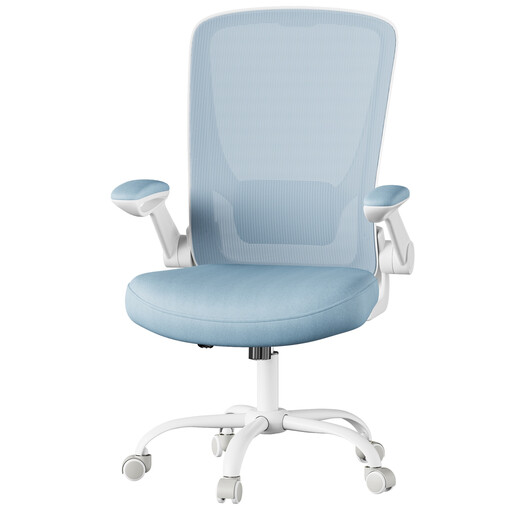
Why this product suits the profile: The combination of adjustable seat and lumbar height, foldable armrests and mesh material makes it ideal for anyone looking for a flexible desk chair.
The product data provides specific dimensions of 103 to 110 cm height, a weight capacity of 120 kg and a rocking function, rather than just general comfort claims.
Breathable material, foldable armrests, adjustable seat height and quiet castors according to the product description.
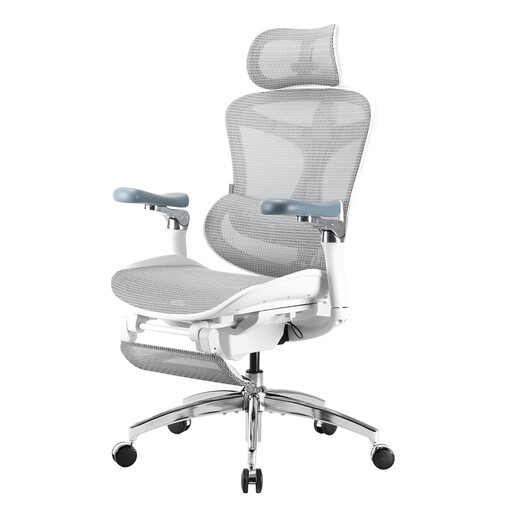
Why this product suits the profile: This model combines 3D armrests, dynamic lumbar support, an adjustable backrest and a pedal for those who prefer multiple adjustment options.
Rather than just highlighting a fixed back shape, the product name points to several adjustable contact points that can be checked before purchase.
3D armrests, dynamic lumbar support, adjustable backrest and integrated pedal according to the product specifications.
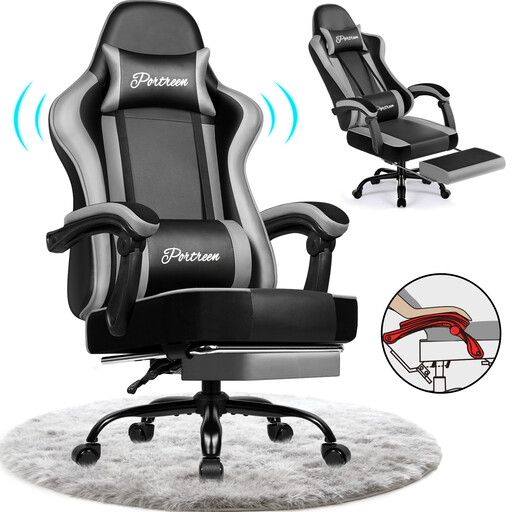
Why this product suits the profile: This gaming chair is aimed at users who need an extendable footrest, headrest and a wide recline range for gaming, reading or breaks.
The product description specifies a recline range of 90 to 170°, 10 cm height adjustment and a weight capacity of 150 kg. These figures make it easier to evaluate compared to vague marketing claims.
Extendable footrest, headrest and lumbar support, height-adjustable seat position and stated BIFMA and SGS certification.
We've put together a complete, regularly updated list of products that fully meet these strict selection criteria and the safety regulations in force in the EU.
Before assembly, check that all screws, castors and covers are present. The build time depends on the design. A model with detailed instructions can make initial assembly easier, while complex armrest or footrest mechanisms require more attention.
Then set up the chair in this order:
Even a well-adjusted office chair doesn't replace taking movement breaks. Varying your position and taking short breaks are all part of a sensible workstation setup.
The seat height should be chosen so that both feet are firmly on the floor and your knees aren't bent significantly upwards or downwards. Your height, desk height and seat depth are all key factors.
The lifespan depends on factors including frequency of use, load, materials and care. Before buying, check the specifications for maximum load capacity, base, castors and warranty. Regularly tightening screws can help maintain safe use.
A gaming chair can be used in the home office if the seat height, backrest, armrests and seat suit the user. A footrest or strong recline is practical for breaks, but isn't automatically necessary for everyday desk work. What matters most are the adjustable dimensions and a suitable sitting posture.