
Lieferung heute & morgen

Qualitätsgarantie

Willkommens-Angebote freischalten: KOSTENLOSE Lieferung | Bis zu 80 % RABATT | Kostenlose 30-Tage-JoyPlus-Testphase
App herunterladen
For many professionals, students, and self-employed individuals, long days at a desk have become the norm. An unsuitable chair can quickly lead to tension and discomfort. Choosing the right chair is therefore a crucial decision in creating a functional workspace.
This article serves as a guide to help you navigate your options. We will introduce various models and explain the key features to consider when selecting an ergonomic office chair, enabling you to make an informed decision that meets your individual needs.
The term "ergonomic" refers to a range of adjustable features designed to support a healthy sitting posture. Here are three core aspects you should consider.
Support for the lower back is a fundamental feature. An office chair with lumbar support is designed to maintain the natural S-curve of the spine. Ideally, this support is height-adjustable or dynamically adapts to your movements. This helps reduce strain on the lumbar spine during long periods of sitting. Look for a backrest that is high enough to support your entire back and offers an adjustable recline angle.
Armrests should be adjustable so that your forearms can rest at a 90-degree angle on your desk, which helps relieve shoulder tension. A desk chair with flip-up armrests offers additional flexibility. It can be pushed completely under the desk when not in use, saving valuable space—a practical feature, especially for a home office swivel chair in smaller apartments. An integrated office chair with a rocking function also promotes dynamic sitting by allowing for subtle movements and preventing a rigid posture.
The foundation of a good office chair is its stability. Look for a sturdy base, often made of metal or reinforced nylon, and smooth-rolling casters suitable for your flooring. The maximum weight capacity is also a critical factor. Models certified as an office chair for up to 150 kg offer solid construction and durability, designed for heavier individuals or intensive daily use. Check for certifications like BIFMA or SGS, which verify standards for safety and durability.
Based on the criteria mentioned above, we have compiled a selection of models that stand out for their specific features and design.

Why this model stands out: The SIHOO M59S features a two-part backrest design with adaptive, dynamic lumbar support. According to the manufacturer, this construction automatically adjusts to the curve and movements of your back, ensuring continuous support.
Benefits at a glance:
Who is this model for? This chair is an excellent choice for individuals seeking an ergonomic desk chair with advanced back support who value a high degree of customisation. The flip-up armrests and high weight capacity make it versatile for both office and home office environments.
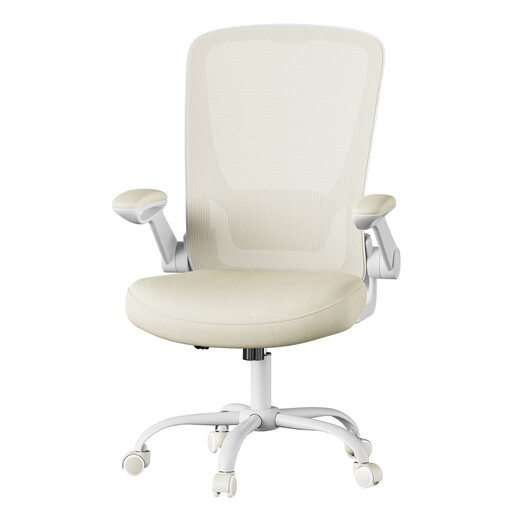
Why this model stands out: The Ochama office chair combines a sleek, modern design in beige with essential ergonomic functions. Its focus is on ease of use and balanced comfort for daily use.
Benefits at a glance:
Who is this model for? This model is suitable for users looking for a functional and stylish swivel chair for the home office. It offers the most important ergonomic adjustments in an understated design and is a solid option for everyday use with a weight capacity of up to 120 kg.
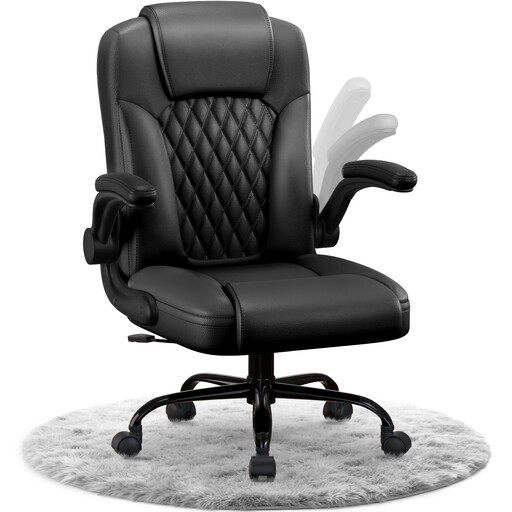
Why this model stands out: The GTIMEX office chair features a classic look with a PU faux leather cover, combining it with modern adjustment options. According to the manufacturer, the faux leather is 25% thicker, aiming for greater durability.
Benefits at a glance:
Who is this model for? This chair is ideal for individuals who prefer the look of faux leather and need a particularly sturdy ergonomic office chair. With its high weight capacity and flexible adjustment options, it is well-suited for intensive use in the office or home office.
Are space-saving solutions like flip-up armrests particularly important to you? Discover more models with similar practical features in our category for Chairs with Flip-Up Armrests.
An ergonomic office chair is defined by its ability to adapt to the individual user. Key features include:
A basic setup can be done in a few steps:
An office chair with a rocking function or synchronous mechanism promotes "dynamic sitting." Instead of remaining in a rigid position for hours, the function allows for small, intuitive movements. This can improve circulation and relieve pressure on the spinal discs by encouraging regular, subtle changes in posture.