
Lieferung heute & morgen

Qualitätsgarantie

Willkommens-Angebote freischalten: KOSTENLOSE Lieferung | Bis zu 80 % RABATT | Kostenlose 30-Tage-JoyPlus-Testphase
App herunterladen
By the Joybuy Product Recommendation Officer, July 18, 2026
Long days at the desk, whether in a corporate office or a home office, have become the norm for many. This often leads to neck and back strain caused by poor posture. An ergonomic office chair isn't a luxury item; it's a fundamental component of a healthy and productive workspace.
This article serves as an objective guide. We'll explain which features to look for when making your selection and present a range of models that meet different needs for comfort, adjustability, and durability. Our goal is to provide you with clear information so you can make an informed decision for your daily work life.
Choosing the right chair depends on your individual needs. Three key criteria will help you narrow down the options and find a model that is truly right for you.
An ergonomic desk chair should adapt to your body—not the other way around. Look for the following adjustment options:
An office chair with lumbar support is crucial for supporting the natural S-curve of the spine and reducing pressure on the lower back. Lumbar supports can be fixed or adjustable. Adjustable models, which can be modified in height and depth, offer more personalised and therefore more effective support.
The material affects both comfort and durability. Mesh is breathable and promotes air circulation, which is particularly beneficial during long workdays. Faux leather or padded fabrics often provide a softer feel and a classic look, as is common with an executive chair.
Always check the maximum weight capacity. A standard office chair is often rated for up to 120 kg. If you require greater stability, an office chair with a 150 kg weight capacity is the right choice. A sturdy metal base and a certified gas lift are indicators of solid construction.
Based on the criteria above, we have compiled a selection of chairs that stand out for their specific ergonomic features and functionality.
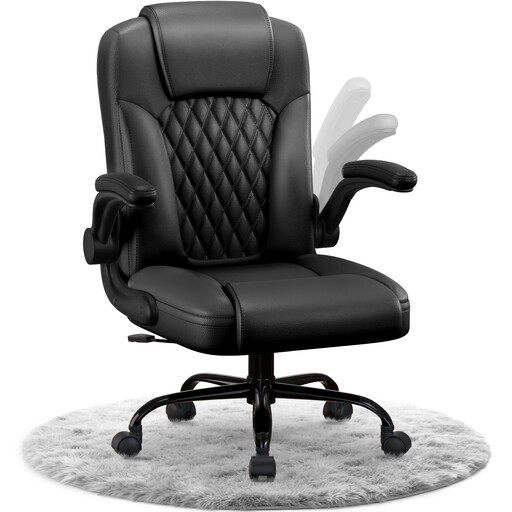
Why it stands out: This model combines the classic aesthetic of an executive chair with thoughtful ergonomic features. The 90° flip-up armrests make it especially versatile for different desk heights and allow for space-saving storage.
Pros:
Who it's for: For users seeking a professional-looking swivel chair for the home office or corporate setting that offers both comfort and a high weight capacity without compromising on flexibility.
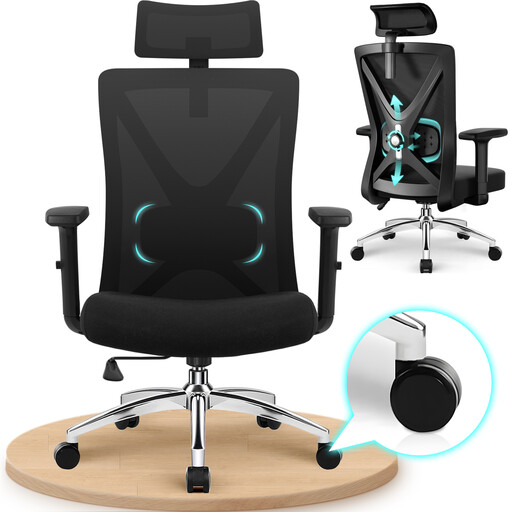
Why it stands out: This chair's focus is on maximum customisation of its back support. The lumbar support is adjustable not only in height (up to 6 cm) but also in depth (up to 3 cm), allowing for precise adaptation to the individual's spinal curve.
Pros:
Who it's for: Ideal for individuals who sit for very long periods and require targeted, individually adjustable support for the lumbar region. Its high breathability makes it an excellent choice for warmer environments.
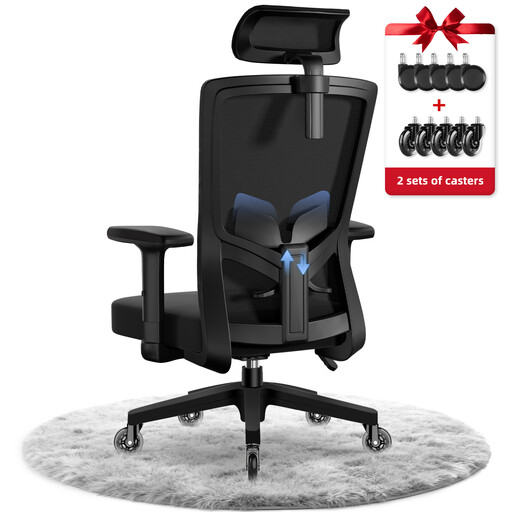
Why it stands out: This chair is a practical solution for workspaces with limited room. Thanks to its flip-down armrests and low-profile seat height, it can be pushed completely under a desk, making it particularly suitable for compact home office setups.
Pros:
Who it's for: Perfect for users in smaller apartments or offices who need a fully-featured ergonomic chair that can be tucked away discreetly when not in use.
The models presented here are a selection tailored to specific needs. If you want to compare other styles, materials, or features to find the perfect ergonomic office chair for you, it's worth taking a look at our broader assortment.
Explore Our Full Range of Office Chairs
A desk chair is ergonomic when it offers a variety of adjustment options to fit the user's individual body dimensions and needs. These include adjustable seat height, seat depth, armrests, and a backrest with integrated, preferably customisable, lumbar support. The goal is to promote a healthy sitting posture and minimise physical strain.
Both options have their advantages. A mesh backrest is highly breathable and prevents heat buildup, which many users find comfortable during long periods of sitting. A padded backrest (e.g., fabric or faux leather) is often perceived as softer and more plush. The decision ultimately depends on personal preference and the climate of your workspace.
Weight capacity is a critical safety and quality feature. A chair should always be chosen to match the user's body weight to ensure stability and durability. An office chair with a 150 kg weight capacity features a reinforced base, more robust castors, and a more powerful gas lift, making it a safe choice for a wider range of users.