
Lieferung heute & morgen

Qualitätsgarantie

Willkommens-Angebote freischalten: KOSTENLOSE Lieferung | Bis zu 80 % RABATT | Kostenlose 30-Tage-JoyPlus-Testphase
App herunterladen
Long days at the desk, whether in the office or at home, have become the norm for many of us. However, sitting for hours can lead to tension and discomfort if your chair isn't tailored to your body's unique needs. A suitable ergonomic office chair is therefore not a luxury, but a fundamental component of a functional workspace.
This article serves as your guide. We'll explain which features to look for when making your selection and present a range of models that stand out for their specific characteristics and customisation options. Our goal is to provide you with objective information so you can make an informed decision for your daily work life.
Choosing the right chair can be a challenge given the multitude of options. The following three criteria will help you identify the features that are crucial for long-lasting sitting comfort.
Having an adjustable office chair is the foundation of ergonomics. The chair must adapt to your body's dimensions, not the other way around. Look for the following adjustment options:
An office chair for long hours should actively support your back. An integrated office chair with lumbar support is a key feature here. This support fills the curve in your lower back, helping to maintain the natural S-shape of your spine. Some models offer a height- or depth-adjustable lumbar support for more precise customisation. For taller individuals, an office chair with a high backrest can be beneficial, as it also supports the upper back and shoulder area.
The material affects both comfort and durability. A mesh office chair is particularly advantageous for prolonged sitting, as the breathable fabric ensures good air circulation and prevents heat buildup.
Also, look for recognised certifications like BIFMA or SGS. These standards, awarded by independent organisations, test office furniture for safety, durability, and structural stability. Such a certification is an indicator of the quality and resilience of the components used, such as the gas lift or the chair base.
Based on the criteria mentioned above, we have compiled a selection of chairs that are distinguished by their specific ergonomic functions.
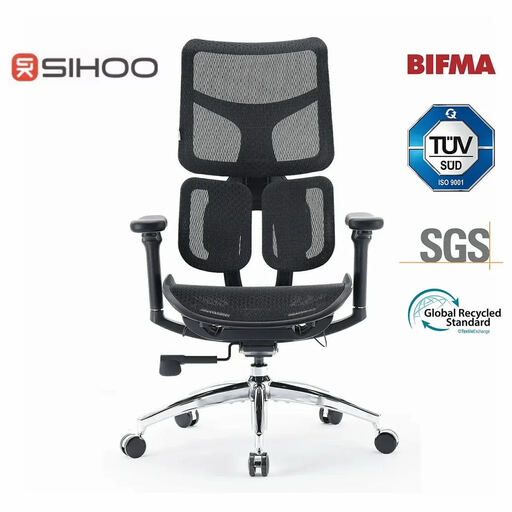
What Makes It Stand Out: The Sihoo Dora S100 is distinguished by its dual, dynamic lumbar support system. According to the manufacturer, it automatically adapts to different body shapes and sitting postures to provide continuous support for the lower back.
Benefits at a Glance:
Who Is This Model For? This model is an excellent choice for individuals who place a high value on advanced, self-adjusting lumbar support and seek maximum adjustability for different body sizes and sitting habits in the home office or corporate office.
View Details for the Sihoo Dora S100
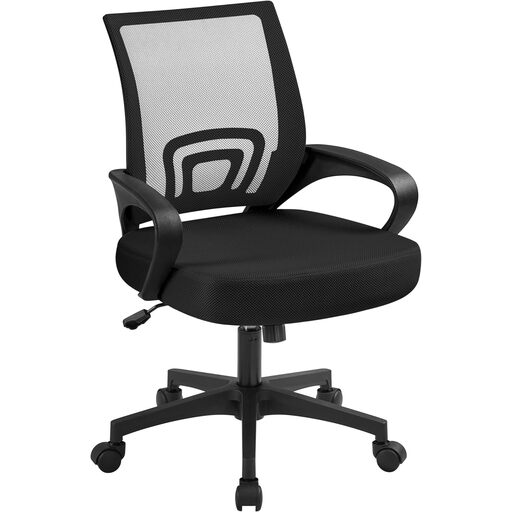
What Makes It Stand Out: The Yaheetech office chair offers solid ergonomic fundamentals with a focus on certified durability. According to the manufacturer, the gas lift has passed tests of over 100,000 cycles, and key components are SGS and BIFMA certified.
Benefits at a Glance:
Who Is This Model For? This ergonomically designed desk chair is suitable for users seeking a reliable and certified entry-level solution for the home office, studying, or occasional office use, who also appreciate excellent value for money.
View Details for the Yaheetech Office Chair
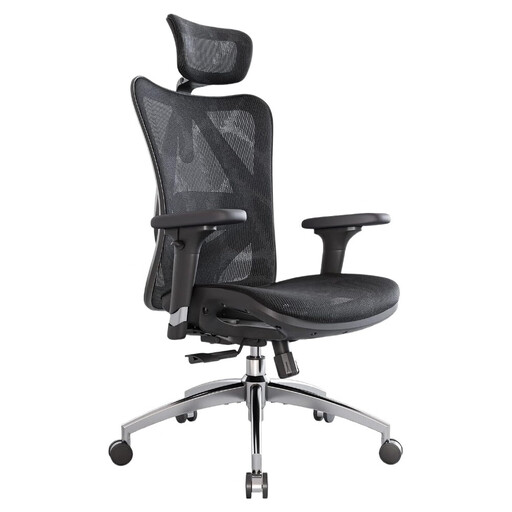
What Makes It Stand Out: The Sihoo M57S is a versatile model that combines a high backrest with extensive adjustment options. The S-shaped backrest, adjustable lumbar support, and 3D armrests offer a balanced mix of support and flexibility.
Benefits at a Glance:
Who Is This Model For? This model is ideal for users looking for an all-rounder with a high backrest. It is well-suited for focused work where the upper back and neck also need support, as well as for individuals who appreciate versatile armrest settings.
View Details for the Sihoo M57S
The models presented here offer a glimpse into the variety of ergonomic office chairs available. However, every workspace and every body is different. If you would like to compare other models with specific features, you can find additional alternatives in our broader selection.
Discover our entire range of black mesh office chair models for more options.
1. How do I correctly adjust an ergonomic office chair? Start with the seat height, ensuring your feet are flat on the floor. Adjust the seat depth so there is about a hand's width of space between the seat edge and the back of your knees. The lumbar support should support the natural curve of your lower spine. Finally, set the armrests so your shoulders are relaxed and your forearms rest at a 90-degree angle.
2. What does BIFMA certification mean for an office chair? BIFMA stands for the "Business and Institutional Furniture Manufacturer's Association." This organisation sets standards for the safety, durability, and performance of office furniture. A BIFMA-certified chair has been tested for aspects such as load capacity, stability, and the lifespan of its components. It is a quality mark that indicates a robust construction.
3. How long should you sit in an ergonomic chair before taking a break? Even the best ergonomic chair is no substitute for movement. It is generally recommended to stand up, stretch, and walk a few steps at least once per hour. Regular posture changes and short breaks promote circulation and help prevent one-sided strain.