
Lieferung heute & morgen

Qualitätsgarantie

Willkommens-Angebote freischalten: KOSTENLOSE Lieferung | Bis zu 80 % RABATT | Kostenlose 30-Tage-JoyPlus-Testphase
App herunterladen
By the Joybuy Product Recommendation Officer
Long days at a desk have become the norm for many, whether in a corporate office or a home office. Poor posture can lead to tension and discomfort. An ergonomic office chair is designed to support your body and promote a healthier posture. This guide provides objective criteria to help you select the right model for your needs.
Choosing the right chair depends on your individual needs. Three key aspects should be considered when making your decision.
A truly ergonomic desk chair is defined by its adjustability. Look for the following adjustment options:
The chair's material affects both comfort and durability.
Certifications like BIFMA (Business and Institutional Furniture Manufacturer's Association) or EN 1335 indicate that a chair meets specific standards for safety, durability, and dimensions. Products that have passed these tests have been evaluated for their stability and the resilience of their components.
Based on the criteria above, we have curated a selection of models that cater to different needs and preferences.
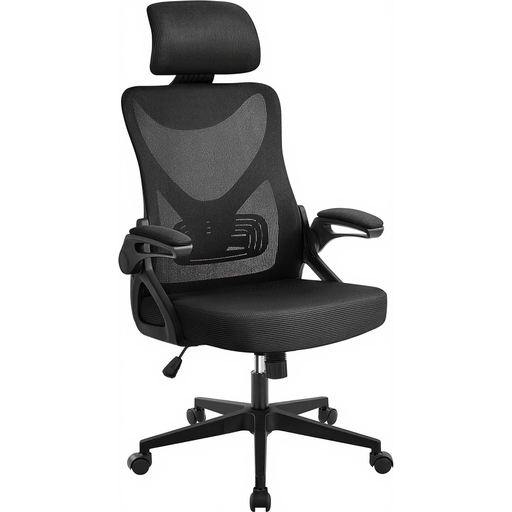
What sets it apart: This model combines a classic black faux leather look with practical functionality. The flip-up armrests are a key feature, allowing the chair to be pushed completely under the desk for a space-saving solution. The adjustable headrest and 5 cm adjustable lumbar support provide targeted comfort.
Pros:
Who is it for? Users looking for a classic leather-look chair for their home or office who value a space-saving design.
Shop the Yaheetech Office Chair
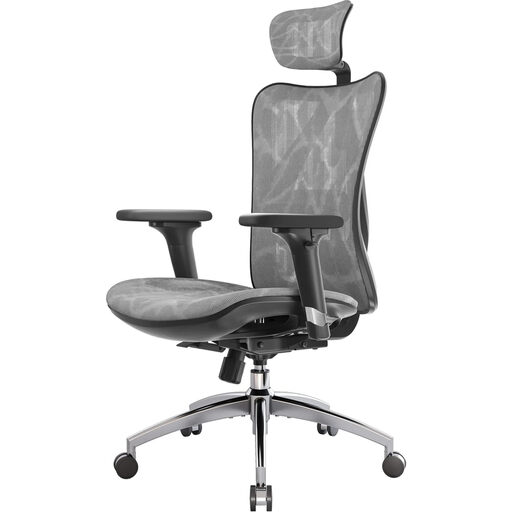
What sets it apart: The Sihoo M57S is a swivel chair for the home office designed for maximum breathability and customisation. Its high-elasticity mesh backrest ensures excellent air circulation. With five adjustment modes, including adjustable lumbar support and 3D armrests, the chair can be precisely tailored to your body.
Pros:
Who is it for? Individuals who spend many hours at their desk daily and need a chair for extended sitting with high breathability and versatile adjustment options.
Shop the Sihoo M57S Office Chair
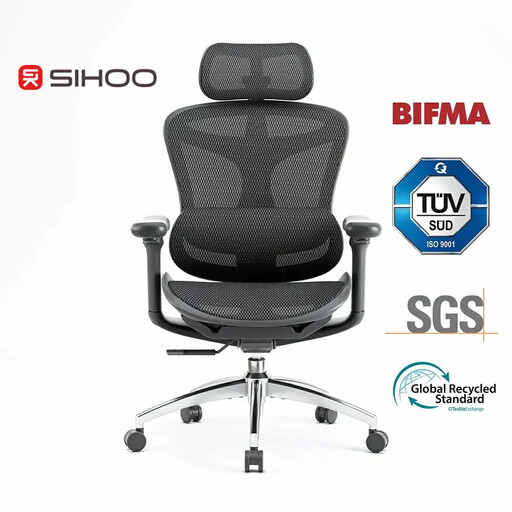
What sets it apart: The Sihoo Doro C300 focuses on adaptive ergonomics. Its self-adaptive, dynamic lumbar support adjusts to the user's movements to continuously support the lower back. Another key feature is its intelligent weight detection, which automatically adjusts the backrest resistance to the user's body weight.
Pros:
Who is it for? Users seeking a technologically advanced seating solution with self-adjusting support features for a dynamic and healthy posture.
Shop the Sihoo Doro C300 Office Chair
The models featured here cover a broad spectrum of needs. However, if you are looking for other alternatives or specific designs, you can find a wider selection of chairs with various backrest and armrest features in our comprehensive category.
1. What makes an office chair ergonomic? An office chair is considered ergonomic if it has multiple adjustment features that allow the user to adapt the chair to their body measurements and work style. These typically include adjustable seat height, seat depth, armrests, and a customisable backrest with lumbar support. The goal is to promote a neutral and supported posture.
2. Is a mesh back or a padded back better? Both materials have specific advantages. A mesh back is highly breathable and flexibly conforms to the shape of your back, reducing heat build-up during long periods of sitting. A padded back (e.g., fabric or faux leather) is often perceived as softer and more comfortable and offers a more traditional look. The choice depends on personal preference and the climate of your work environment.
3. How important is the weight capacity of an office chair? The specified maximum weight capacity is a crucial indicator of the chair's stability and durability. A chair designed for a higher weight (e.g., an office chair with a 150 kg capacity) typically features a reinforced base, a more robust gas lift, and a sturdier overall construction. Adhering to the maximum weight limit is essential for the safe use of the chair.