
Lieferung heute & morgen

Qualitätsgarantie

Willkommens-Angebote freischalten: KOSTENLOSE Lieferung | Bis zu 80 % RABATT | Kostenlose 30-Tage-JoyPlus-Testphase
App herunterladen
An ergonomic office chair should make your working day more comfortable, whether you work from home, in an office or at a desk. Many products are advertised as “ergonomic”, “orthopaedic” or “especially comfortable”. On their own, however, these labels tell you little about the chair’s actual features. What matters are specific, verifiable details such as the seat height range, backrest, armrests, weight capacity and the space it takes up.
If you’re choosing an ergonomic desk chair, don’t focus on design alone. A striking executive chair can take up a lot of room, while a mesh office chair with folding armrests may be a better fit for a small home office. A gaming chair with a footrest won’t necessarily suit every type of work, either.
“Ergonomic” in a product name isn’t a standard mark of quality. Instead, check which adjustments the chair actually offers:
An office chair with lumbar support can be a good option if the support is positioned to suit your height. A fixed or overly pronounced support, on the other hand, won’t feel comfortable for everyone.
The maximum weight capacity should suit how you plan to use the chair. Check the static weight capacity and allow for clothing, work materials and movement when sitting down. If a model has a stated weight capacity of 110 kg, you shouldn’t use it continually right up to that limit.
Seat width, seat depth and overall height matter, too. A large executive chair or a recliner with a reclining function can limit movement in a small room. Also check whether the backrest will hit a wall or bookcase when you lean back.
A mesh office chair lets air circulate around your back and may feel cooler in a warm room. Mesh doesn’t replace a suitable seat or correct adjustment, though. Padded models offer a different feel when sitting, but may retain more heat.
If you’re considering faux leather, check the care instructions. A damp cloth may be suitable for cleaning, but harsh cleaning products can damage the surface. Fabric upholstery is often comfortable for everyday use, but check whether it can be washed and how easily it stains.
When seated, your feet should ideally rest flat on the floor. The seat height therefore needs to suit both your desk and your height. A height-adjustable office chair is more flexible than one with a fixed seat height.
Adjust the armrests so that your shoulders don’t stay raised. An office chair with armrests can support your forearms while you work, but it needs more space at the sides. Folding armrests are handy if you want to slide the chair under your desk.
Check the shape and height of the backrest, along with the range of adjustments available. Adaptive or adjustable lumbar support can make it easier to tailor the chair to different body shapes. Product details alone aren’t enough to support claims about medical benefits or treating back pain.
A computer chair with castors should be placed on a level surface. For hard floors, suitable castors or a floor protector may be useful. Before assembly, check that all screws, castors and connecting parts are securely fastened. A swivel chair for your home office should have enough room to move without bumping into furniture.
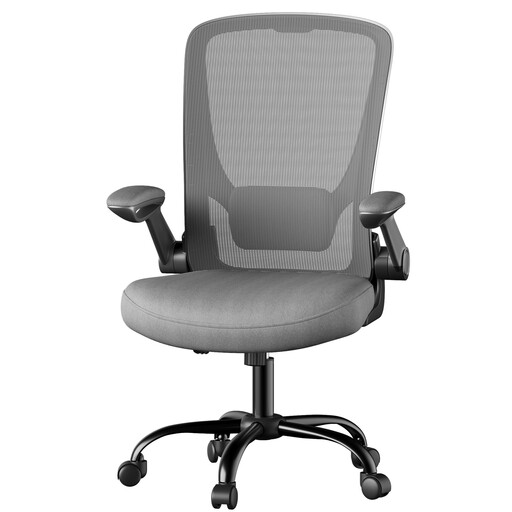
Why it suits this profile: The combination of an adjustable seat, mesh back and folding armrests makes this chair a good fit for workspaces where room is limited.
Its features list specific functions rather than making vague promises about comfort: a gas lift, 360-degree swivel, castors and folding armrests.
Mesh back for air circulation, padded seat and folding armrests. Assembly required.
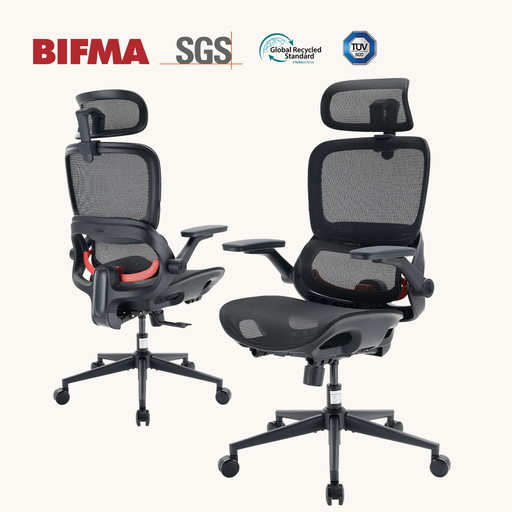
Why it suits this profile: This model is aimed at people who pay particular attention to the backrest, headrest and armrests when choosing a computer chair.
The product name specifically mentions adaptive lumbar support, a wide headrest and folding armrests. Check the adjustment ranges before buying.
Mesh construction, 360-degree swivel and flip-up armrests, according to the product name.
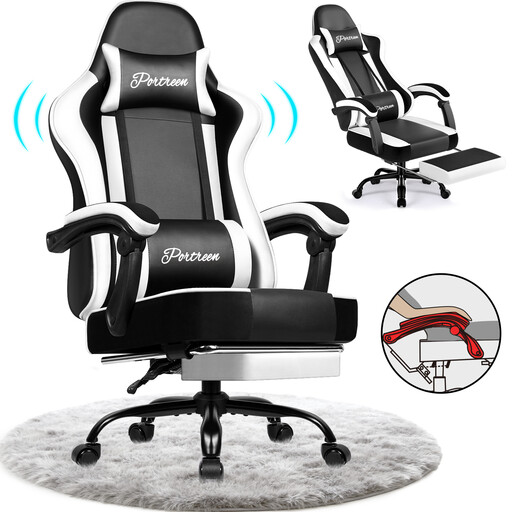
Why it suits this profile: For gaming, breaks and longer periods of sitting, this model has an extendable footrest, an adjustable backrest and a stated weight capacity of 150 kg.
The technical details give specific limits: a backrest that reclines from 90 to 170 degrees, 10 cm of seat-height adjustment and a maximum weight capacity of 150 kg.
Extendable footrest, PU upholstery, steel frame and stated BIFMA and SGS certifications, according to the product details.
A recliner with a reclining function or a large executive chair is better suited to relaxing or making a statement in a reception area. For a range of work tasks, an adjustable desk chair is usually more practical. Your choice should always depend on how you plan to use it and how much space you have.
The seat is at the right height when your feet rest flat on the floor and your knees are at roughly a right angle. The exact setting depends on your height, desk height and seat padding.
How long a chair lasts depends on its construction, daily use, materials and care. A high stated weight capacity doesn’t guarantee a particular lifespan. Regularly tightening the screws and following the assembly instructions can help you use the chair safely.
The price depends on factors such as the mechanism, padding, lumbar support, armrests, castors and materials. Don’t compare the purchase price alone. Consider the features, availability of spare parts, space required and whether the chair suits the amount of time you spend sitting each day.