
Lieferung heute & morgen

Qualitätsgarantie

Willkommens-Angebote freischalten: KOSTENLOSE Lieferung | Bis zu 80 % RABATT | Kostenlose 30-Tage-JoyPlus-Testphase
App herunterladen
An ergonomic office chair should provide a stable sitting position for long hours, whether you’re working from home, at the office or gaming. But eye-catching product claims don’t necessarily mean you’ve found the right chair. What matters is clear information about dimensions, weight capacity, adjustment ranges and materials.
Terms such as ‘ergonomic’ or ‘comfort chair’ don’t tell you much on their own. Check which components are actually adjustable. These may include the seat height, backrest tilt, lumbar support, armrests and, where applicable, the headrest. Padding that can’t be adjusted may make it difficult for people of different heights to find a comfortable sitting position.
The stated maximum weight capacity usually refers to the total static load. When choosing a chair, you should also consider the seat width and depth, as well as the space available under your desk. A chair with a seat that’s too deep may make it difficult to use the backrest properly.
Fabric upholstery is generally breathable, while PVC or PU surfaces may be easier to wipe clean. If you’ll be using the chair frequently, check the care instructions, type of padding and the durability of the castors, base and gas lift. A soft seat alone is no guarantee of long-term comfort.
Your feet should rest as flat as possible on the floor, with your knees at roughly a right angle. So check the stated height adjustment range. It’s also important that the backrest supports your lower back and helps you sit upright.
A tilting office chair can be useful for short breaks or when switching between tasks. Check whether the tilt can be locked and whether the mechanism allows controlled movement. A rocking function alone can’t make up for a seat height that doesn’t suit you.
An office chair with lumbar support may suit users who want to position their lower back more precisely. Check whether the support can be adjusted for height or depth. Fixed cushions won’t necessarily suit every body shape.
An office chair with a headrest can be useful if you like to lean back in your seat. When you’re concentrating on work, the headrest shouldn’t push your head forwards. Here, too, the height and angle matter more than simply having a headrest.
Height-adjustable armrests can support your forearms while you type or use a controller. Check whether the armrests fit under your desk and whether their support surface is wide enough.
When checking the weight capacity, allow a reasonable margin between your body weight and the stated maximum. A product with a maximum static load of 120 kg isn’t the same as one rated for 150 kg. This information should be included in the product description or technical specifications.
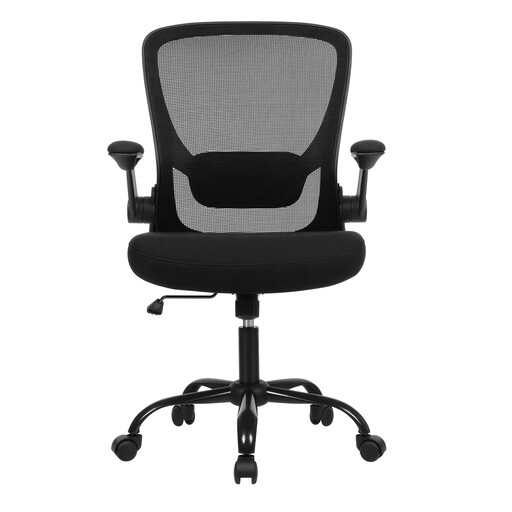
Why this product suits this profile: This fabric office chair features a height-adjustable seat, padded lumbar support, folding armrests and a rocking function, making it suitable for working from home and everyday desk use.
The product specifications give precise dimensions of 66 × 60 × 99–107 cm and a maximum static load of 120 kg.
Fabric upholstery, a padded seat, folding armrests and castors for easy movement.
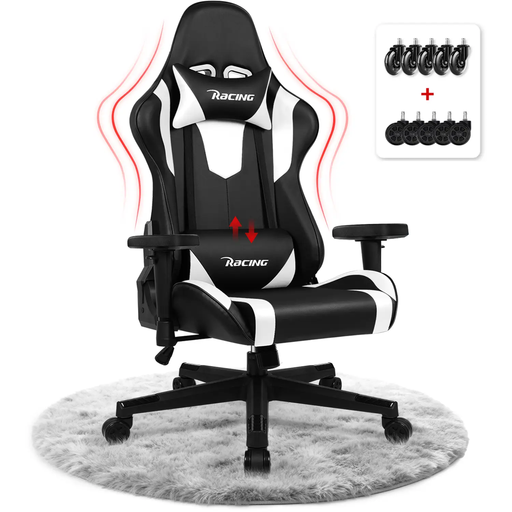
Why this product suits this profile: This model combines a metal frame with adjustable lumbar support and headrest, plus height-adjustable armrests for work and gaming.
The product specifications state a backrest angle range of 90° to 170°, a 30° tilt function and precise adjustment ranges.
Up to 10 cm of height adjustment, armrests adjustable by 8 cm and a recommended user height of 158 to 190 cm.
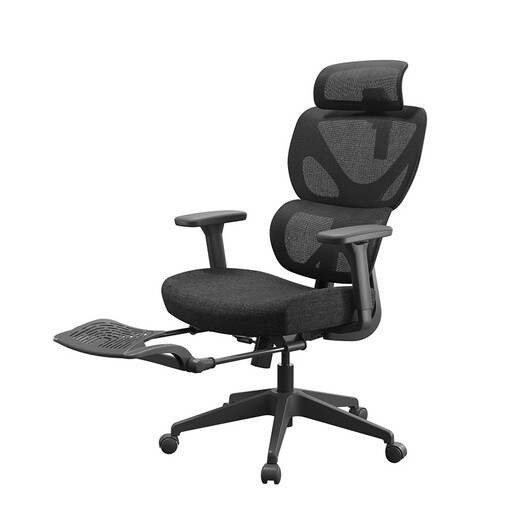
Why this product suits this profile: This gaming chair is designed for people who want a pull-out footrest, headrest and adjustable armrests for gaming or taking a break.
The key comfort features are clearly specified: a footrest, 10 cm-thick seat padding and a backrest that reclines to 132°.
Footrest, flexible lumbar support, rotating armrests and headrest, according to the product specifications.
We’ve put together a complete, regularly updated list of products that meet these strict selection criteria and fully comply with the safety regulations in force in the EU.
Start by adjusting the seat height so both feet rest firmly on the floor. Then set the backrest upright, position the lumbar support around your lower back and adjust the armrests to the height of your forearms. Keep your shoulders as relaxed as possible.
Its lifespan depends on how often you use it, your body weight, the materials, how well you care for it and the quality of the mechanism. Check the screws, castors, gas lift and tilt mechanism regularly. The seat padding or castors may wear out before the backrest does.
A gaming chair can be used for working from home if the seat height and depth, backrest and armrests suit your workspace. Also consider its appearance, padding and whether you can slide it under your desk. You can’t judge how ergonomic a chair is from the term ‘gaming chair’ alone.