
Lieferung heute & morgen

Qualitätsgarantie

Willkommens-Angebote freischalten: KOSTENLOSE Lieferung | Bis zu 80 % RABATT | Kostenlose 30-Tage-JoyPlus-Testphase
App herunterladen
If you work every day from home, in an office or in a gaming room, you need more than a padded seat. An ergonomic office chair should suit your body, desk height and actual hours of use. However, marketing terms such as ‘ergonomic’ or ‘premium comfort’ alone tell you little about whether a particular model is right for you.
The following points can help you avoid a poor purchase and compare ergonomic office chairs objectively.
An office chair with a headrest, footrest and several levers may look appealing. What matters is whether you can adjust the seat height, backrest and armrests to suit your height. If the seat height isn’t right, your feet may not rest firmly on the floor, or your arms may not be in the right position at your desk.
The term ‘office chair with lumbar support’ doesn’t automatically tell you how effective or adjustable that support is. Check whether you can change its height, depth or tension. A fixed curve may suit one person but be less suitable for someone with a different body shape.
The maximum weight capacity is a technical limit, not a measure of how comfortable the chair is. An office chair rated for up to 150 kg should also have a sturdy base, durable castors and a seat of suitable width. So, when choosing a chair, consider both the weight capacity and the seat dimensions.
A height-adjustable office chair should be easy to set so that your feet rest flat on the floor. Your knees should be at roughly a right angle, without the front edge of the seat pressing into the backs of your knees. Look for:
Always check the product dimensions against the height of your desk. A chair with a wide height-adjustment range may still be unsuitable if your desk is particularly low or high.
An office chair with lumbar support should support the natural curve of your lower back without forcing you into a rigid position. An adjustable backrest or flexible backrest can be useful. If you work for long periods, a recline function is also worth considering, as changing position from time to time can help break up prolonged sitting.
An adjustable headrest can be useful on a chair with a high backrest. It shouldn’t push your head forwards and should suit your height. When choosing an office chair with a headrest, the height, angle and distance from your head matter more than the label alone.
An office chair with breathable mesh can provide a well-ventilated backrest during long periods of sitting. However, fabric, mesh, faux leather and velvet all differ in how easy they are to clean, how much heat they retain and how much care they need. Choose castors to suit your floor: floor-friendly castors are a good choice for parquet or laminate, while carpet castors may roll differently.
Fold-up armrests can save space if you want to slide the chair under your desk. A footrest can be useful for breaks or reclined positions. However, it’s no substitute for setting the seat to the right height, and shouldn’t leave your legs hanging without support from the floor for long periods.
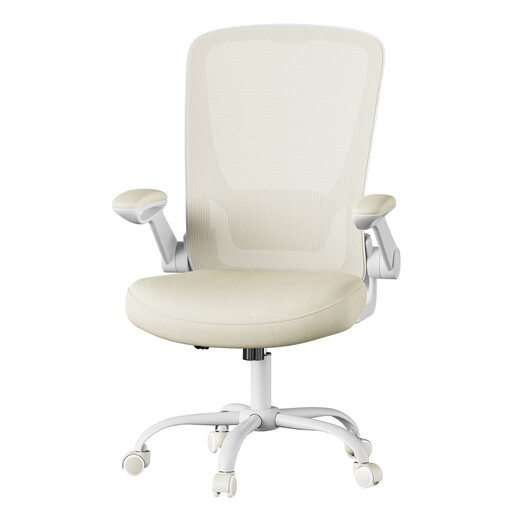
Why this product suits this profile: This beige model combines an adjustable seat height, adjustable lumbar support and fold-up armrests with compact dimensions of 66 x 60 x 99–107 cm.
The product details give specific dimensions, a static weight capacity of 120 kg and adjustable lumbar support, rather than relying solely on general comfort claims.
Breathable fabric, fold-up armrests, rocking function and quiet-rolling castors, according to the product description.
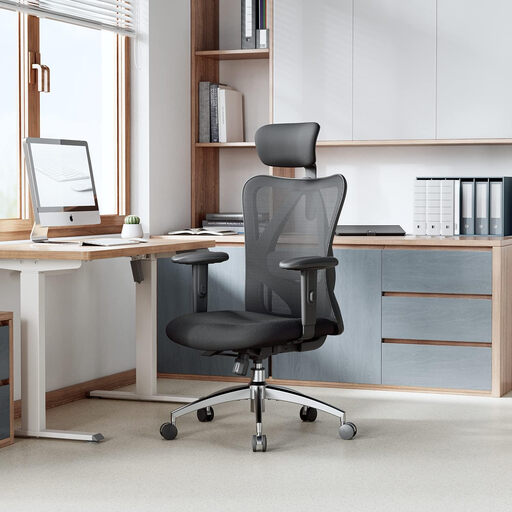
Why this product suits this profile: This model is aimed at people looking for an office chair with a headrest and lumbar support, plus several adjustment options for long working days.
The product details specify a seat height of 43–51 cm, an overall height of 110–125 cm and a backrest recline of up to 126 degrees.
Adjustable headrest, armrests and lumbar support; according to the product details, BIFMA- and SGS-certified and designed to support up to 150 kg.
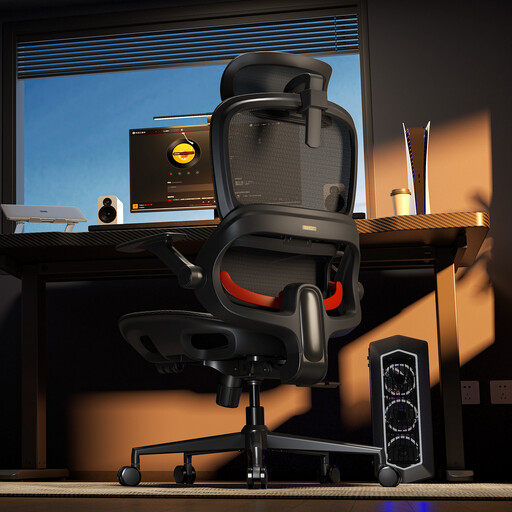
Why this product suits this profile: The combination of a footrest, wide headrest, adaptive lumbar support and fold-up armrests suits people who switch between sitting and taking breaks.
The additional features are clearly listed. However, before buying, check that the extended footrest will fit in the space available.
Footrest, flip-up armrests and high back, as stated in the product name; available in black.
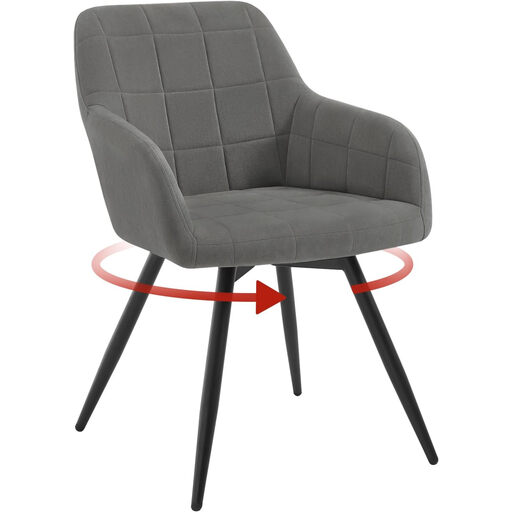
Why this product suits this profile: This upholstered swivel chair is designed for dining areas, bedrooms or occasional desk work, making it an alternative for rooms used for more than one purpose.
The product description gives dimensions of 57 x 63 x 78 cm, adjustable feet and a maximum weight capacity of 150 kg. Seat-height adjustment isn’t specified.
Velvet upholstery, padded backrest, armrests, 360-degree swivel function and metal frame, according to the product details.
We’ve put together a complete, regularly updated list of products that meet these strict selection criteria and the safety regulations applicable in the EU.
Start with the seat height. Both feet should rest firmly on the floor. Then adjust the backrest so that your back stays supported without being pushed forwards. The armrests shouldn’t raise your shoulders. Finally, position the lumbar support against your lower back.
Its lifespan depends on how many hours it’s used each day, the load it carries, the quality of its materials and how well it’s maintained. Check the screws, castors and gas lift regularly. If any parts feel unusually loose, show cracks or seem unstable, stop using the chair until you’ve had the problem checked.
No. Price alone doesn’t tell you whether the chair will provide the right seating position. Look instead for clear product details, such as seat height and dimensions, weight capacity, adjustment options, materials and warranty terms. A model with fewer features may suit your workspace better than a chair with a longer list of features.