
Lieferung heute & morgen

Qualitätsgarantie

Willkommens-Angebote freischalten: KOSTENLOSE Lieferung | Bis zu 80 % RABATT | Kostenlose 30-Tage-JoyPlus-Testphase
App herunterladen
An ergonomic baby carrier can be practical in everyday life, whether you are out for a walk, travelling or doing household chores. However, not every model suits every child, body size or situation. Terms such as “ergonomic”, “breathable” and “suitable for newborns” are not, on their own, enough to base a purchasing decision on.
When choosing a baby carrier, you should therefore check the actual product details: weight range, carrying positions, fit, materials, fastenings and safety information. This can help you avoid buying the wrong product, such as a carrier that no longer fits after a short time or provides insufficient airflow in warm weather.
A baby carrier from birth must meet a minimum weight requirement and specific height guidelines. For example, the Chicco Baby Carrier Hip Seat Hazelwood has a stated minimum weight of 3 kg. Other models only start at around 3.18 kg, or the product information states that they are intended for children from approximately three months.
It is also important to check whether the baby’s head is adequately supported and whether the baby can sit upright safely. The information on the product page does not replace the instruction manual. In the case of premature babies, medical considerations or uncertainty about the sitting position, suitability should be clarified before use with a medical professional or qualified advisory service.
A baby carrier up to 20 kg may cover a wider weight range and therefore be usable for longer. However, as your child gets heavier, a supportive waist belt, padded shoulder straps and good weight distribution become increasingly important. A high maximum weight does not automatically mean that the carrier will feel comfortable over longer distances.
You should therefore check not only the weight limit, but also the likely carrying duration, adjustment options and fit for multiple users.
A breathable baby carrier made with mesh fabric can improve airflow. Nevertheless, body contact, the outside temperature and clothing remain important factors. A thin layer of fabric is not automatically sufficient in summer if the carrier sits very close to the body.
Cleaning also matters: machine-washable covers or easy-care materials are often more practical for family life than demanding care instructions.
Look out for three details:
With a baby carrier for newborns, correct adjustment is particularly important. The baby should sit upright, close to your body, with their airways unobstructed. Their face must remain visible; their nose and mouth must not be covered by fabric.
The ergonomic sitting position is often referred to as the M-position: the knees are positioned roughly level with or higher than the bottom. The exact adjustment depends on the child’s age, height and the model.
A baby carrier with a waist belt can distribute more of the weight across the pelvis. Models with a hip seat also provide a firm seat on which the child can be supported during shorter carrying periods. This is particularly practical with toddlers who frequently want to be carried and then want to walk independently again.
Also consider whether you only want to carry your child on the front, or whether you need a hip or back carrying position as well. Not every carrier supports all options equally.
A wide, adjustable waist belt can affect how the weight is distributed. A baby carrier with lumbar support or integrated lower-back support may offer some parents more suitable back support. It is important that the belt feels secure without being uncomfortable.
Before buying, you should check:
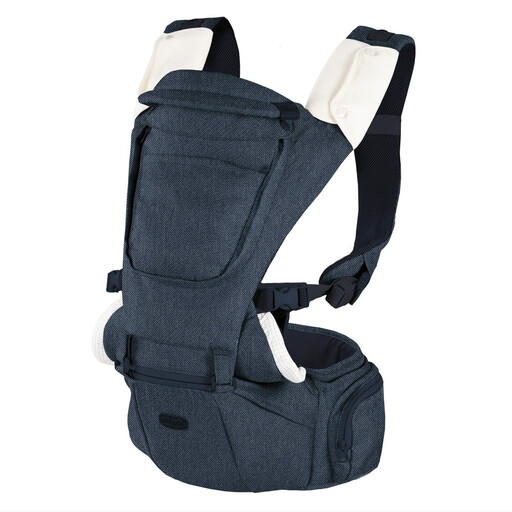
Why this product suits this profile: According to the product information, the 3-in-1 system combines a carrier with a removable hip seat and is suitable from 3 kg to 15 kg.
Using the carrier and hip seat separately makes the possible applications clearer than a weight specification alone.
Removable hip seat, cotton material according to the product information, and suitability from newborn to approximately three years.
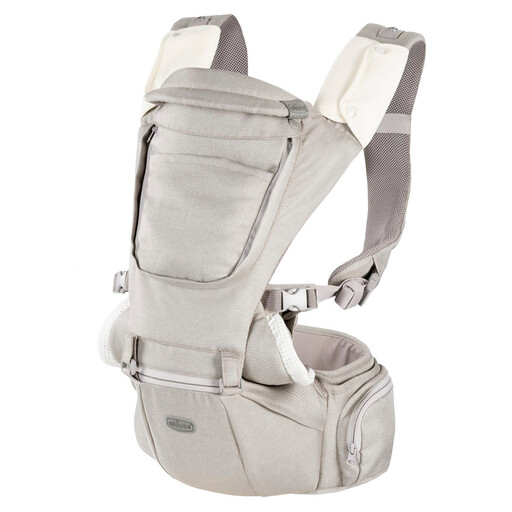
Why this product suits this profile: According to the manufacturer, this model offers eight carrying positions and combines a firm hip seat with a soft fabric carrier.
The 15 kg weight limit and 3 kg minimum weight are clearly stated; the instructions remain the key reference for the specific position.
Eight configurations, a machine-washable cover at 30 °C and IHDI recognition according to the product description.
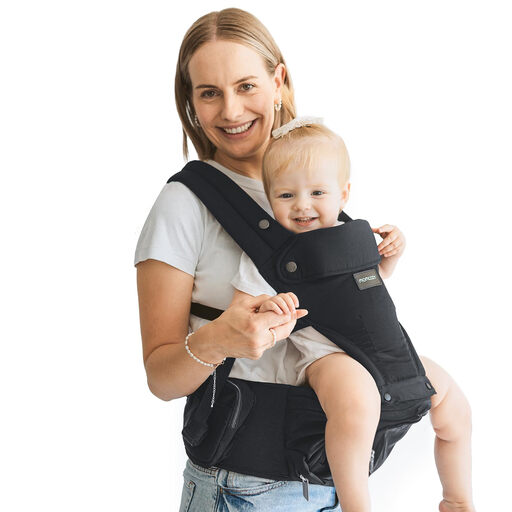
Why this product suits this profile: The combination of a carrier and removable hip seat is appealing to families who switch between longer and shorter carrying periods.
The specifications state six carrying positions, a hip seat and a weight range of 3.2 to 20 kg. Additional age requirements apply to individual positions.
Padded straps, 3D waist support, X-shaped back structure and removable hip seat according to the product information.
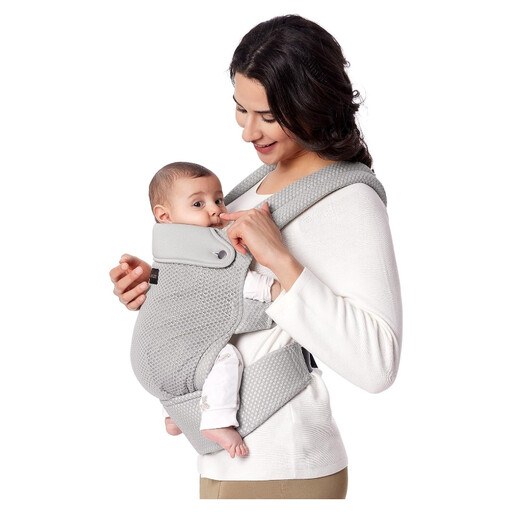
Why this product suits this profile: According to the specifications, the lightweight mesh carrier weighs approximately 771 g and is designed for babies and toddlers weighing around 3.18 to 20 kg.
The material, product weight and stated weight range are specified clearly, so you can compare them directly with your own needs.
Breathable mesh, machine-washable material, EVA waist support and three adjustable size positions according to the description.
We have put together a complete, regularly updated list of products that fully meet these strict selection criteria and the safety regulations applicable in the EU.
Regardless of the model, parents should check the following before putting on the carrier:
A baby carrier is not a protective system in the event of an accident and is not a sleep product. When using a baby carrier for travelling, parents should also bear in mind that longer journeys require regular breaks and checks of the sitting position.
Only a model whose instructions cover the baby’s current weight and height is suitable. A baby carrier for newborns must provide adequate head support and allow for a safe, upright position. The minimum requirements vary from one product to another.
This depends on the stated weight, age, height and the carrying position being used. Some models are suitable from approximately 3 kg to 15 kg, while others go up to around 20 kg. If the straps, seams or buckles show signs of wear, the carrier should no longer be used, regardless of the child’s age.
A baby carrier with a hip seat can be useful if your child often wants to be picked up for short periods or if you would like to use different carrying positions. However, the hip seat usually adds to the carrier’s own weight. For long walks, a traditional carrier with a well-fitting waist belt may be more comfortable. Fit, weight and correct use according to the instructions are the key factors.