
Lieferung heute & morgen

Qualitätsgarantie

Willkommens-Angebote freischalten: KOSTENLOSE Lieferung | Bis zu 80 % RABATT | Kostenlose 30-Tage-JoyPlus-Testphase
App herunterladen
An ergonomic baby carrier can make everyday life easier: whether you’re out for a walk, travelling or simply want to keep both hands free. Baby carriers vary considerably, though, in their weight limits, adjustability and materials. An appealing product description alone won’t tell you whether a carrier is suitable for a newborn, an older baby or a toddler.
Figures such as “3 to 20 kg” may seem versatile at first. What matters, however, is the age, height and developmental stage at which the model can actually be used. Some carriers are approved from a certain minimum weight, but the product information may say they are only suitable from around three months. Your baby may also need to be able to hold their head up independently.
Before buying, check:
The term ergonomic baby carrier doesn’t describe a standard product category. More useful are clear, verifiable features such as an adjustable seat width, padded leg openings, suitable back support and straightforward instructions for adjusting the carrier.
With a baby carrier that supports the M-position, your baby’s knees sit higher than their bottom. The position must be suitable for your baby’s size and shouldn’t be forced by adjustments that are too wide or too narrow. Each time you use the carrier, check that your baby’s face is uncovered and their airways are clear.
A breathable baby carrier made with mesh can help improve airflow. However, several layers of heat can build up between you and the carrier, especially in summer or under a jacket. Look for breathable panels, a low overall weight and clothing that won’t make your baby too warm.
A suitable baby carrier should adjust so your baby sits upright and close to your body. Their back shouldn’t slump without support. A padded head or neck support can offer additional adjustment for the age ranges it is approved for, but it doesn’t replace checks by the person carrying the baby.
When using a front carrier, you should be able to see your baby’s face at all times. Your baby’s chin shouldn’t rest on their chest. Also bear in mind that not every model is designed for outward-facing or back carrying.
A lightweight baby carrier adds less weight to your luggage and can be handy when travelling. But the carrier’s weight alone isn’t enough to guide your choice. How the shoulder straps, back panel and hip support work together is also important.
The models in the product information provided weigh around 760 to 810 grams. Several Momcozy variants are listed for approximately 3.18 to 19.96 or 20 kg. The appropriate use also depends on your baby’s age and development, and the instructions for use.
A machine-washable baby carrier is handy for everyday use, as contact with skin, sweat and dirt is unavoidable. Check whether the whole carrier or just the fabric cover is machine washable, and what temperature is recommended.
A baby carrier with lumbar support can help distribute weight. The Momcozy carrier product information mentions features including EVA elements, an X-shaped back panel and cross straps. How well these work depends on correct adjustment and your individual body shape. If you feel any pain, stop using the carrier and check the fit.
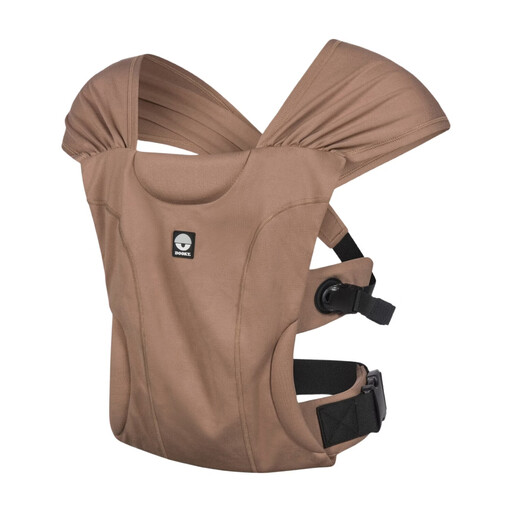
Why this product suits this profile: According to the product information, this hybrid carrier is suitable for babies measuring 56 to 74 cm and weighing up to 9 kg. Cross straps are designed to make it easier to put on and help distribute the weight.
The clearly defined height and weight limits help prevent a model that seems to grow with your baby from being used for too long.
Soft, breathable fabric, cross straps and, according to the supplier, an easy-to-use design that doesn’t require wrapping.
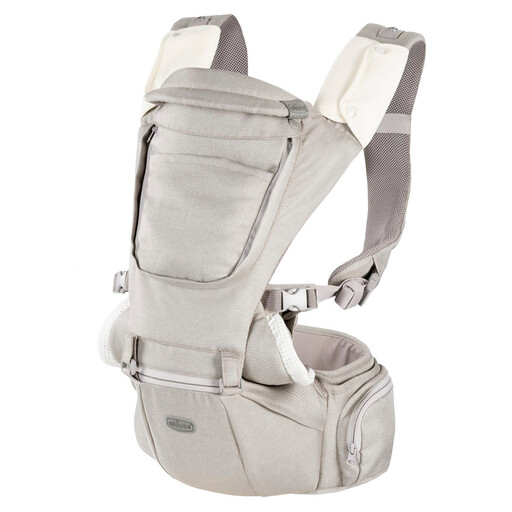
Why this product suits this profile: The 3-in-1 system combines a hip seat with a fabric carrier. According to the product information, it is suitable from 3 kg up to 15 kg and offers eight listed carrying configurations.
The different ways to use it and the minimum weight are clearly specified. The cover is machine washable at 30 °C; simply wipe the base clean.
Adjustable design, hip seat base and manufacturer-stated support for the M-position.
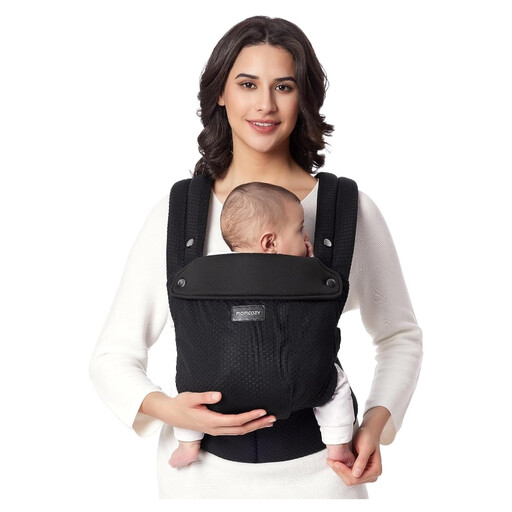
Why this product suits this profile: The breathable mesh design is made for warm days, travel and regular use. It is listed for around 3.18 to 19.96 kg and has three adjustable size positions.
The mesh fabric and cooling-touch material help tackle the risk of heat building up. The machine-washable design also makes regular care easier.
Weighs 760 grams, with an X-shaped back panel, integrated EVA lumbar support and a front-carry option.
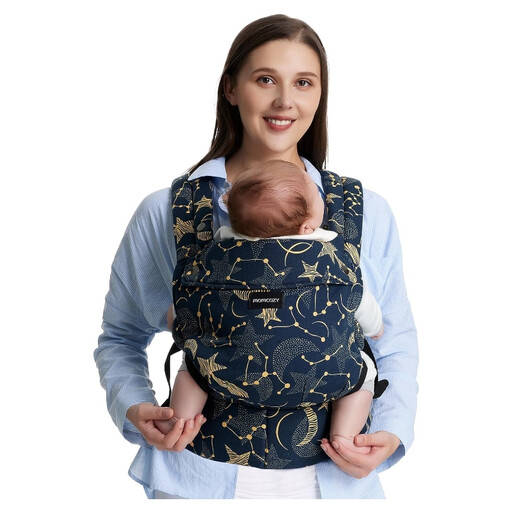
Why this product suits this profile: According to the product information, this cotton carrier is suitable for approximately 3.18 to 19.96 kg. It features cross straps, padded leg openings and a foldable neck support.
The three size positions and stated weight limits make it easier to understand how to adjust the carrier than a vague “grows with your baby” claim.
Made from 100% cotton according to the product information, machine washable, with an EVA element for back support and support for the M-position.
We’ve put together a complete, regularly updated list of products that meet these strict selection criteria and fully comply with the safety regulations in force in the EU.
It depends on the model. According to the product information, the Chicco Baby Carrier Hip Seat Hazelwood is suitable from 3 kg and from birth. The Dooky Be One, by contrast, is listed for babies measuring 56 to 74 cm and weighing up to 9 kg. Several Momcozy models recommend use from around three months. Always follow the manufacturer’s guidance and take your baby’s height and development into account.
This depends on the maximum weight, your baby’s height and whether the carrier can be adjusted to fit properly. A baby carrier rated for 3 to 20 kg could theoretically be used over a longer period, provided the model is approved for your baby’s stage of development. Before each use, check the fit, your baby’s leg position, and the straps, seams and fastenings.
Follow the care label. Several of the models mentioned are machine washable. The Chicco carrier has a cover that can be washed at 30 °C, while the solid base should only be cleaned with a damp cloth. Fasten any buckles before washing. After each use, check the straps, seams and buckles for signs of damage.