
Lieferung heute & morgen

Qualitätsgarantie

Willkommens-Angebote freischalten: KOSTENLOSE Lieferung | Bis zu 80 % RABATT | Kostenlose 30-Tage-JoyPlus-Testphase
App herunterladen
An ergonomic baby carrier can make everyday life easier: on walks, while travelling, around the house or whenever you need to keep both hands free. At the same time, baby carriers vary considerably in terms of weight range, fit, material and ease of use. Focusing only on attractive design or sweeping marketing claims could leave you with a model that becomes uncomfortable after a short time or is not suitable for your child’s stage of development.
The specification “3 to 20 kg” may initially sound like a baby carrier suitable for newborns and toddlers. However, body weight is not the only factor that matters. Many models require the baby to be able to hold their head independently. The design, leg positioning and shoulder-strap adjustment must also suit the child’s height.
A 3 to 20 kg baby carrier is therefore not necessarily suitable from birth. Always check:
The term ergonomic baby carrier does not, on its own, describe a particular level of quality. More useful are verifiable features such as an adjustable seat width, padded leg openings, a supportive back section and correctly adjustable straps.
A back-friendly baby carrier can improve weight distribution, but it does not replace proper adjustment. If you experience pain, pressure points or an unstable fit, stop using the carrier and check its adjustment.
A lightweight baby carrier is practical for travelling and longer journeys. Even so, the combined weight of the carrier and child affects the load placed on it. Thin fabrics or lightly padded straps are not automatically problematic, but they may be less comfortable during prolonged use. You should therefore consider the balance between the carrier’s own weight, padding, adjustment options and permitted load.
Many parents are interested in a baby carrier for newborns and toddlers. For the Momcozy model described here, the stated weight range is approximately 3.18 to 19.96 kg, with a recommended age of around 3 to 24 months. According to the product details, the carrier is not suitable for babies who cannot yet hold their head independently.
The stated weight range should always be checked against the instruction manual. The manufacturer’s guidance on the actual product is decisive, rather than the offer headline alone.
When using a front-facing baby carrier, the child should sit upright and close to the wearer’s body. The airways must remain clear, the face must be visible and the chin must not be pressed against the chest. According to the product details, the legs should be positioned in an M-position, with the knees higher than the bottom.
C-shaped back support and an M-shaped leg position are described as design features of the models mentioned. These details do not constitute a medical claim regarding effectiveness. Correct adjustment and regular checks remain essential.
A cotton baby carrier can feel comfortable and is easy to care for when it is machine washable. According to the product information, the Momcozy models are made from 100% cotton and weigh approximately 771 grams. An EVA element for lumbar support, a foldable neck cushion and padded leg openings are also listed.
Before buying, also check:
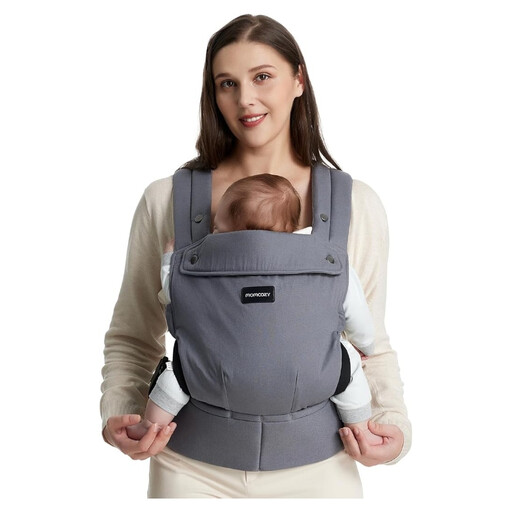
Why this product suits this profile: The stated range of approximately 3.18 to 19.96 kg and the carrier’s own weight of around 771 grams offer a straightforward starting point for everyday journeys and occasional outings.
The product details specify weight limits, material and care instructions. This means your choice is not based solely on marketing terms such as “ergonomic”.
100% cotton, machine washable, front carry and a stated EVA element for lumbar support.
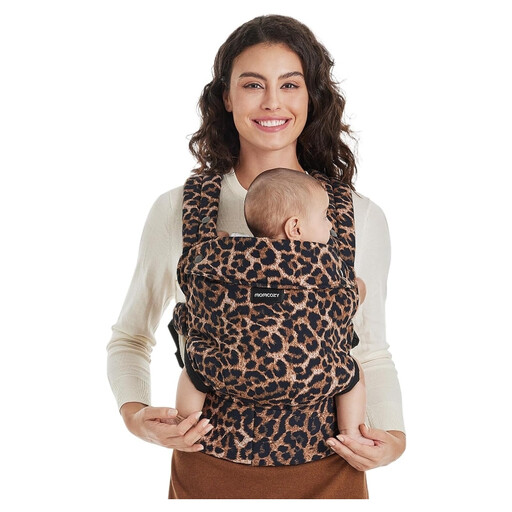
Why this product suits this profile: The combination of cotton fabric, front carry, neck support and padded leg openings will appeal to buyers who prioritise fit and comfort details over minimal weight.
The information about the M-position, straps and safety checks helps you choose a carrier based on more than its pattern or product name.
100% cotton, machine washable, foldable neck support and padded leg openings according to the product description.
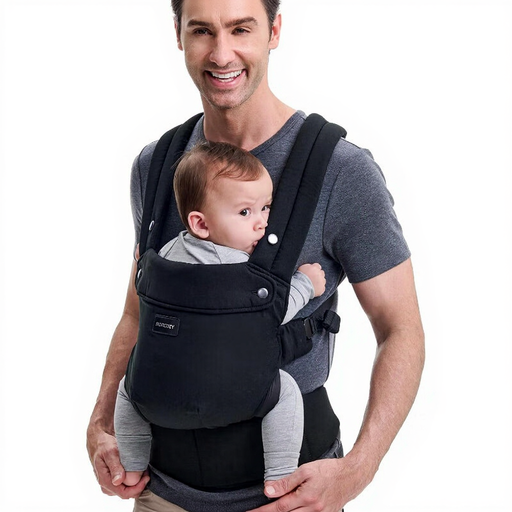
Why this product suits this profile: The neutral colour makes it suitable for frequent use by different people and it can be chosen as a baby gift for mothers or expectant parents.
The instructions require the buckles, straps and fabric to be checked before every use. They also specify clear limits regarding weight, head control and risky activities.
Front carry, 100% cotton, machine washable and a stated weight range of up to approximately 19.96 kg.
We have put together a complete, regularly updated list of products that fully meet these strict selection criteria and the safety regulations applicable in the EU.
This depends on the model. The Momcozy carrier mentioned is described as suitable from around 3 months and approximately 3.18 kg. The baby must also be able to hold their head independently. The instructions for the specific product are the definitive source.
The baby should sit upright, close to your body and with their face unobstructed. Check that the airways are clear, the buckles have audibly clicked into place and the legs are in an M-position. The shoulder and waist straps should sit securely without digging in uncomfortably. Stop using the carrier if you experience pain or pressure points.
The service life depends on how the material is cared for, how frequently the carrier is used and how well it fits. A model with a range of approximately 3.18 to 19.96 kg may be suitable across several stages of development, provided that the child meets the requirements and the carrier is undamaged. Check the seams, straps, buckles and fabric before every use. Do not continue using the carrier if it shows signs of wear.