
Lieferung heute & morgen

Qualitätsgarantie

Willkommens-Angebote freischalten: KOSTENLOSE Lieferung | Bis zu 80 % RABATT | Kostenlose 30-Tage-JoyPlus-Testphase
App herunterladen
An ergonomic memory foam pillow is designed to support your head and neck correctly while you sleep. In practice, however, not every viscoelastic pillow suits every sleeping position, body shape or mattress. If you focus only on terms such as “orthopaedic”, “cooling” or “neck support”, you may overlook important details.
Side sleepers generally need a higher pillow to fill the gap between their shoulder and the mattress. Back and front sleepers often find a lower profile more comfortable. A general height measurement is therefore not particularly meaningful if your sleeping position is not taken into account.
Memory foam, also known as viscoelastic foam, responds to body heat and pressure. However, the actual feel also depends on the shape, support height, cut-outs and ventilation. A pillow with pronounced contours may suit some people perfectly, while feeling too firm or too high for others.
A cooling pillow does not automatically stay cold all night. The material structure, air circulation and cover are the key factors. Care is just as important: as a rule, the foam core must not be washed like a standard textile cover. Before buying, check the care instructions, whether the cover can be removed and how it should be dried.
First, check whether the pillow is designed for your preferred sleeping position:
The stated height of “8 cm” does not automatically reflect the height you will perceive. Depending on the shape and how much you sink into it, a pillow can feel significantly different.
For a memory foam pillow, the product description should clearly state whether the core is made from viscoelastic or another type of foam. A firm core can retain a defined contour, while a softer version will give way more readily. The following questions can help you choose:
An ergonomic neck pillow can support your sleeping position, but it does not replace medical advice and is not a pillow for treating neck problems in a therapeutic sense.
People with particular comfort requirements should look for clear, verifiable material and care information. According to the product description, the smartsleep model features certified materials, a cover for sensitive users and integrated air channels in the viscoelastic foam. Such information should always be checked against the actual product label and care instructions.
Allergy sufferers should also check the list of materials and follow the manufacturer’s guidance in the case of known intolerances. The term “hypoallergenic” is not a universal guarantee for every person.
The following models meet different requirements. The categorisation is based on the available product information, the stated dimensions and the intended areas of use.

Why this product suits the profile: With a stated height of 8 cm, this model is a sensible option for people looking for a lower neck support pillow for student accommodation, hotels or an adult bed.
The specific height measurement makes it easier to narrow down your options and avoids choosing based solely on vague marketing terms such as “ergonomic”.
Memory foam construction; stated height of 8 cm; specified for students, hotels and adults.
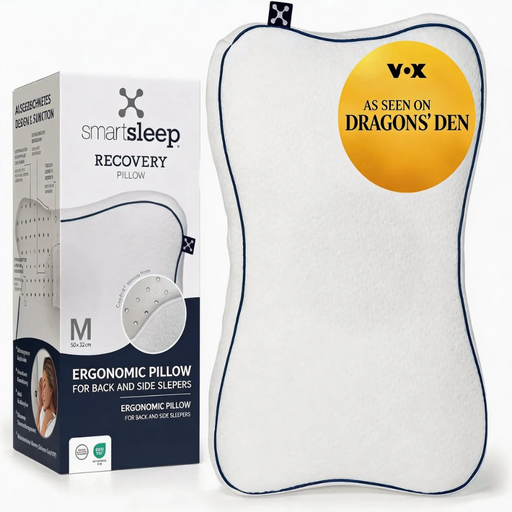
Why this product suits the profile: According to the product description, this model is designed for back and side sleepers and features a memory foam core with a head recess, certified materials and integrated air channels.
Details about the head recess, air channels and material certification provide more points to assess than a purely promotional claim about ergonomics.
Head recess; suitable for back and side sleepers; stated air channels; 30-night trial period according to the product description.
We have put together a complete, regularly updated list of products that fully meet these strict selection criteria and the safety regulations applicable in the EU.
The right height depends primarily on your sleeping position, shoulder width, mattress firmness and pillow shape. Side sleepers often need more height than back or front sleepers. Do not measure the distance between your head and the mattress in isolation; also take into account how much your shoulder and the foam sink down.
There is no standard lifespan that applies in every case. It depends on the quality of the foam, daily use, body weight, room temperature and care. Signs that it may be time for a replacement include permanent indentations, reduced shape retention or a damaged cover. The foam core should not be washed or sharply folded unless the care instructions expressly allow it.
No. “Orthopaedic pillow” is often simply a product description, not a guarantee of an individual fit. Instead, look for specific information about height, shape, sleeping position, materials, cover and returns policy. If you have persistent or severe discomfort, seek medical advice to establish the cause rather than simply changing your pillow.