
Lieferung heute & morgen

Qualitätsgarantie

Willkommens-Angebote freischalten: KOSTENLOSE Lieferung | Bis zu 80 % RABATT | Kostenlose 30-Tage-JoyPlus-Testphase
App herunterladen
An espresso cup set often looks straightforward in product images. In practice, however, a small difference in capacity, material or care requirements can determine whether the cups suit your daily coffee ritual. If you focus only on colour and price, you may end up buying a set that is too large for espresso, sensitive to temperature changes or difficult to clean.
Before buying, you should consider three common misunderstandings:
The handle also deserves attention. Cups with handles are generally safer to hold, while handleless models look more compact and require less storage space. If you are specifically looking for an alternative, you can find further options in the handleless coffee cup set category.
Capacity is the most important point of comparison:
The term “espresso cup” should therefore always be checked against the actual capacity in millilitres.
Ceramic cups and porcelain cups differ in weight, appearance and everyday performance:
A reactive glaze can create varying colour patterns on handmade products. This is not a defect, but a product-specific variation. If you prefer a completely uniform appearance, it is better to look for plain porcelain with an even finish.
For dishwasher-safe cups, the manufacturer’s information should be clear and unambiguous. You should also consider the following points:
Ceramic and porcelain can break if dropped. Damaged cups should no longer be used, especially if the glaze or rim has chipped.
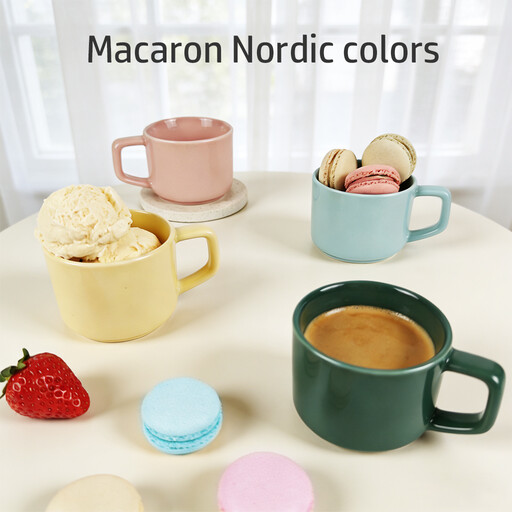
Why this product suits this profile: Four 120 ml ceramic cups in yellow, light blue, green and pink are suitable for small drinks, desserts or sauces, offering several uses in one set.
The clear capacity specification prevents the cups from being mistakenly classified as very small 80 ml espresso cups. Hand washing is expressly recommended.
120 ml capacity, four different pastel colours and compact dimensions for smaller cupboards.
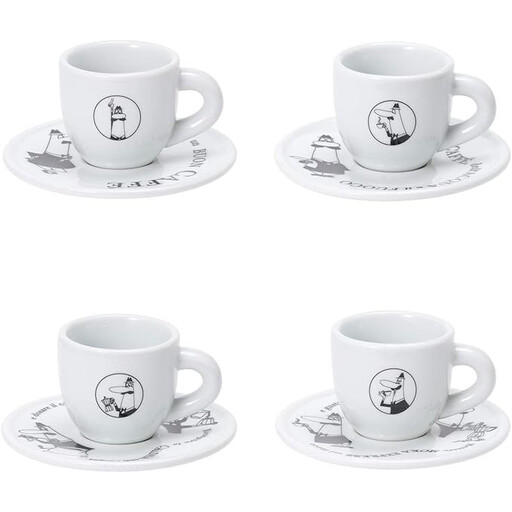
Why this product suits this profile: With a capacity of 80 ml per cup, this four-piece porcelain set is designed for espresso and moka servings. The white design with Flyaway Orchid pattern appeals to buyers looking for a decorative gift set.
The precise 80 ml specification reduces the risk of buying a coffee cup set that is too large for small espressos. According to the product description, the cups are dishwasher-safe.
Porcelain, 80 ml capacity, four cups and handles for a clearly defined espresso use.
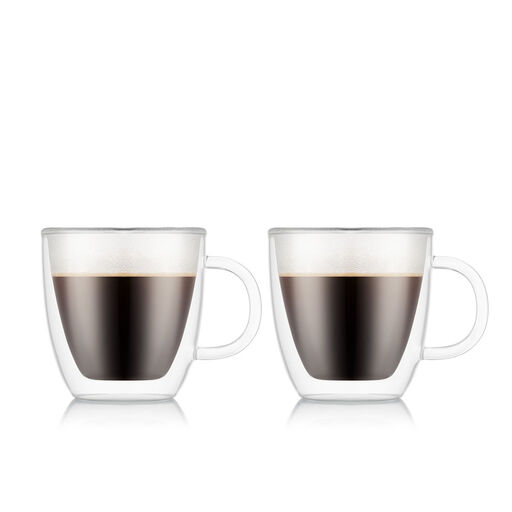
Why this product suits this profile: This two-piece set of double-wall thermal glasses is designed for households that need two matching cups for espresso, small hot drinks or enjoying coffee together.
The product name specifies both the material concept and the 150 ml capacity. This makes it easy to compare the choice with your preferred serving size before buying.
Double-wall thermal glass and 150 ml capacity; two cups for a small household.
We have put together a complete, regularly updated list of products that fully meet these strict selection criteria and the safety regulations applicable in the EU.
For a classic espresso, around 60 to 90 ml is usually suitable, so that the drink quantity and cup shape work well together. Capacities of 120 ml and 150 ml offer more flexibility for moka, tea, small milk-based drinks or desserts. The actual capacity is what matters, not just the name used in the product title.
That depends on how you intend to use them. Porcelain is often lighter and has a more delicate appearance, while ceramic and stoneware are usually more robust and heavier. When choosing, capacity, rim thickness, handle, glaze and care instructions are therefore more important than the material name alone.
With normal use, a cup set can last for a long time, provided it is not dropped and has no cracks or chips. Frequent temperature changes, hard knocks when putting cups away and unsuitable care can damage the surface. With hand-decorated or reactively glazed cups, hand washing can help preserve their appearance.