Hosts making several espressos
You grind several servings in a row when entertaining and want a smooth, easy-to-manage routine.


If you’re grinding several espressos in a row for guests, an electric grinder with finely adjustable settings is usually more convenient. For just a few occasional servings, an espresso-capable hand grinder may be a better fit if space is limited. Check that it has a fine enough adjustment range, then make sure the portafilter holder or dosing cup suits your routine. A timer won’t adjust the grind for your beans and machine, or automatically weigh the coffee for you.
You grind several servings in a row when entertaining and want a smooth, easy-to-manage routine.
You want to make fine grind adjustments when dialling in your beans and espresso machine.
You grind just a few servings and weigh up compact storage against the manual effort of using a hand grinder.
First, consider whether you’ll be grinding several servings in a row when entertaining. Then check for fine espresso adjustments and a dosing option that works with your portafilter.
| What matters | What to check when buying | Who is this important to? |
|---|---|---|
| Dialling in the grind | Check the fine espresso range and the size of the adjustment steps. The total number of settings alone doesn’t tell you how finely you can adjust the grind. | When matching my beans to my portafilter machine, I want to be able to make small adjustments in the fine range. Around 36% of consumers put grind adjustment first. |
| Grinding several servings | Consider the motor and controls, and check whether the outlet, portafilter holder or dosing cup works with your accessories. | When several guests want espresso one after another, I want a quick routine that doesn’t mean grinding every serving by hand. For around 29% of consumers, grinding multiple servings is a priority. |
| Space requirements | Compare the grinder’s actual dimensions with your storage space and consider whether you’re happy to grind each serving by hand. | If I want to put the grinder away in a cupboard between visits, I need a compact option and am happy to do the work by hand for a few servings. Saving space is the main concern for around 21% of consumers. |
| Dosing and workflow | Know the difference between timer-based and weight-based controls, and check whether the stated portafilter holder fits your portafilter. | When I grind into the portafilter repeatedly, I want to add the right dose and need the holder to fit my accessories. Around 14% of consumers prioritise dosing and a tidy workflow. |
A blade coffee grinder doesn’t have conical or flat burrs. ETM TESTMAGAZIN points to uneven grinding with blade grinders as a problem for espresso.
Check whether the specific model has conical or flat burrs before comparing grind settings or extra features.
A programmable timer controls how long the grinder runs; weight-based control measures the amount of coffee dispensed. Manufacturers describe these as separate features on some models.
Consider whether a timer-based routine is enough for you, or whether you’re looking for a genuinely weight-controlled feature.
Fine click adjustments don’t tell you how easy it is to grind several servings one after another. With a hand grinder, every serving takes manual effort.
If you’re planning to make several espressos in a row, consider the whole grinding and filling process rather than just the adjustment specification.
The Mignon Specialità is an electric option for finely adjusted grinding straight into the portafilter.
The EKM 500 combines electric espresso grinding with several dosing options to suit different hosting routines.
The manual J-Ultra is an option for making a few espressos and storing the grinder in a small space.
The Smart Grinder Pro is aimed at buyers looking for an electric grinder with a display and programmable grinding time for espresso and other brewing methods.
The electric Fred Prima PL043MMI is a space-conscious option for portafilter users, with stepless grind adjustment.
The CM800 is an electric grinder with settings for espresso and coarser brewing methods.
These electric grinders cater to different espresso settings and routines for making several servings. For each model, check the burr type, whether it has a sufficiently fine adjustment range and whether its dosing option works with your portafilter.
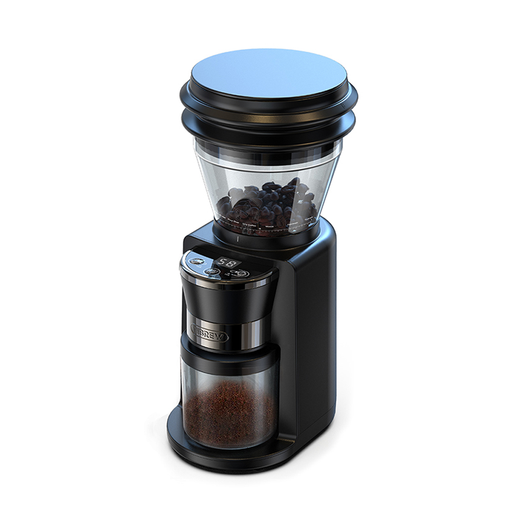 No image available
The product title describes a conical burr grinder with automatic espresso grinding.
40-mm burrs; 31 grind settings; six memory settings; manual and automatic modes.
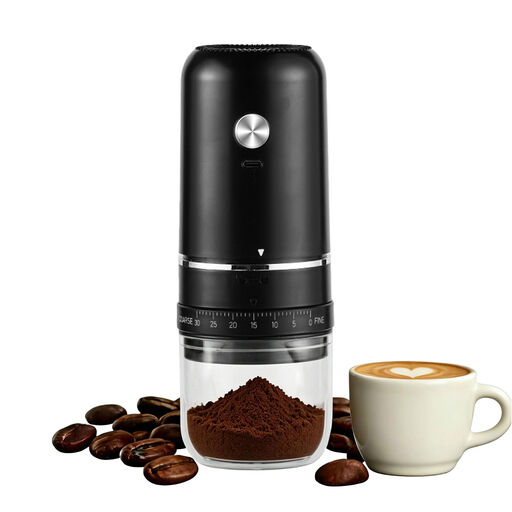 No image available
The product title lists espresso among the grind settings and specifies battery operation. If conical or flat burrs are essential, check the burr type before buying.
30 adjustable grind settings; USB-C.
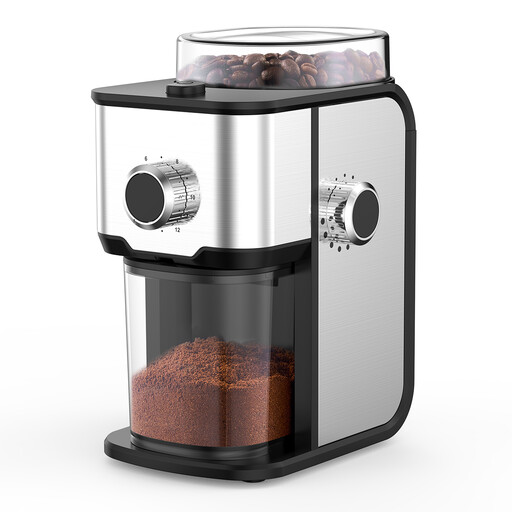 No image available
The product title describes an electric flat burr grinder for home use.
14 grind settings; designed for 2–12 cups.
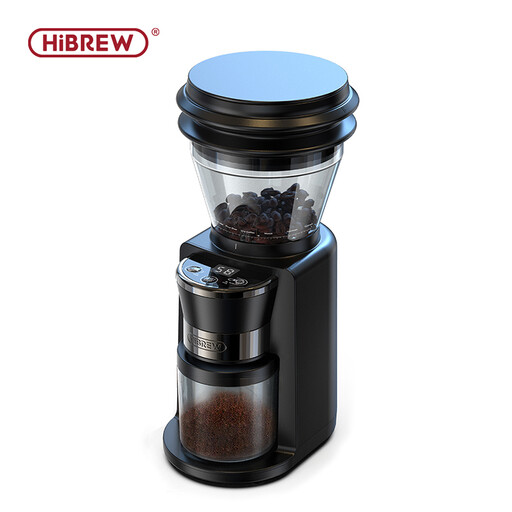 No image available
The product title describes an automatic coffee grinder with espresso settings.
31 grind settings; single- and double-cup portions.
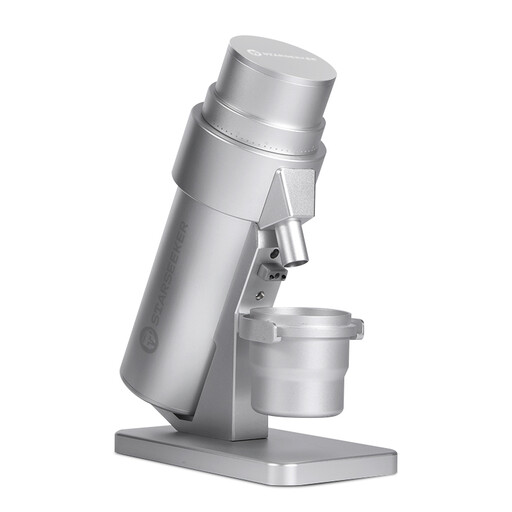 No image available
The product title describes an electric grinder for espresso and pour-over coffee.
63-mm flat burrs. The product description warns against running the grinder for more than 60 seconds without a cooling break and against using very oily, flavoured beans; follow the manufacturer’s instructions.
No. What matters is whether you can make sufficiently small adjustments in the fine range you actually need. The right setting depends on the beans, dose and preparation method; the total number of grind settings doesn’t prove this on its own.
Dial in the grinder with your beans and machine in advance, and check that the portafilter holder or dosing cup works with your accessories. GRAEF notes in its instructions that the right grind setting also depends on the dose and beans, and that you may need to make test grinds.
Follow the instructions for the specific model. For the J-Ultra, 1Zpresso recommends using a brush and blower and warns against cleaning it with water. Sage provides instructions for cleaning the Smart Grinder Pro’s burrs. This doesn’t mean there’s one set of disassembly instructions for all grinders.
When you buy from a business seller in the EU, faulty goods are generally covered by a statutory guarantee period of at least two years from the date you receive them. Your Europe identifies the seller as your point of contact for these rights; this is separate from any additional manufacturer’s warranty. The EU rules cited do not apply in the same way to private sales.
According to the European Union, relevant harmonised rules for electrical and electronic equipment may require a CE marking. The marking is the manufacturer’s declaration that the product meets the applicable requirements; it is not a central EU test certificate. For a specific electric product listing, check the marking and that the electrical specification is suitable for Germany. Electrical requirements should not automatically be assumed to apply to a purely manual grinder.