What should you look for when buying?
Electric grinder with timed dosing
A good fit if: you repeatedly grind into the portafilter for guests and want to set a grinding time.
The trade-off: A timer does not measure the weight of the grounds. Also check that the holder and dispensing height suit your portafilter.
Electric grinder with weight-based dosing
A good fit if: you make several portions and want to cut down on separate weighing steps.
The trade-off: Built-in scales add another piece of technology. Check the space available and make sure your portafilter fits.
Espresso-capable hand grinder
A good fit if: you only grind for friends occasionally and are happy to do it by hand.
The trade-off: You’ll need to grind every additional portion by hand.
These questions will help you decide what matters most before you buy.
| Priority |
What to check when buying |
Who is it important to? |
| Making several portions |
Check the dosing method, how your portafilter fits and the space required. |
If I’m making several espressos in a row when I have guests, I want to dose and fill the portafilter with as few extra steps as possible. Around 36% of consumers prioritise the workflow for making repeated portions. |
| Fine-tuning espresso |
Check the espresso range and adjustment mechanism, not just the total number of grind settings. |
If I want to adjust the grind precisely for my espresso shot, easy-to-follow fine adjustments are important. Around 29% of consumers prioritise grind adjustment for espresso. |
| Space and manual effort |
Compare the dimensions and container capacity with the number of guests you usually have. |
If I only grind coffee for guests occasionally and have limited space, I’m more willing to turn the handle by hand. Around 21% of consumers focus on space and manual effort. |
| Changing beans and cleaning |
Check access to the burrs, cleaning instructions and compatible spare parts for the model number. |
If I want to change beans and clean the grinder regularly, I want the care routine to fit into my everyday life. Around 14% of consumers prioritise changing beans and cleaning. |
Coffee grinders for espresso at Joybuy
This selection includes electric grinders for espresso-focused and repeated grinding, as well as a portable electric grinder for different brewing methods.
 No image available
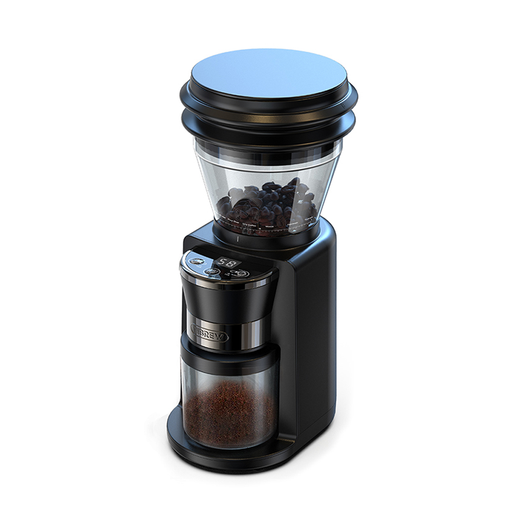
HiBREW G3
For repeated grinding, the memory function and manual and automatic modes may be useful. Check that the grind suits your machine and beans.
40 mm conical burr grinder; 31 grind settings; six memory settings; manual and automatic modes.
Joybuy
 No image available
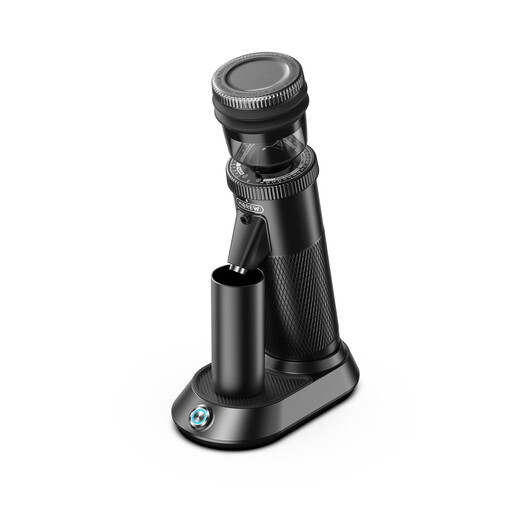
HiBREW G5
If you want to switch between espresso and coarser brewing methods, check that the adjustment range and outlet suit your portafilter and brewing routine.
48 mm conical burr grinder; 36 grind settings; slow and fast grinding speeds; grounds blow-out system.
Joybuy
 No image available
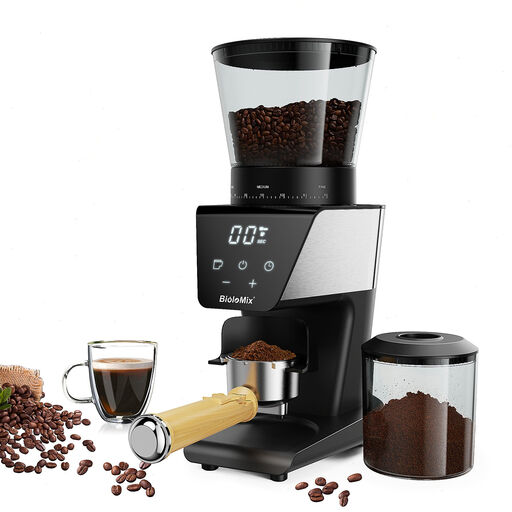
BioloMix BG706
If you want to use a timer for several drinks, check that its controls suit the way you like to dose.
160 W; 30 grind settings; 40 mm conical burr grinder; touchscreen and timer.
Joybuy
 No image available
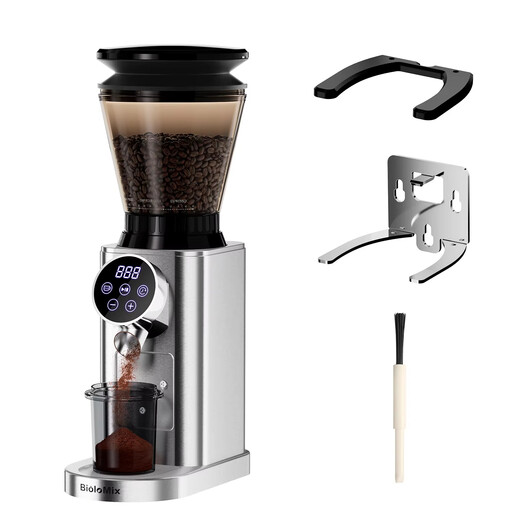
BioloMix CG210
The cup selection may be useful when making several drinks. Check that the espresso range and dosing suit your recipe.
48 grind settings; conical burr grinder; electronic timer; cup selection from 2 to 12; stainless steel housing.
Joybuy
 No image available
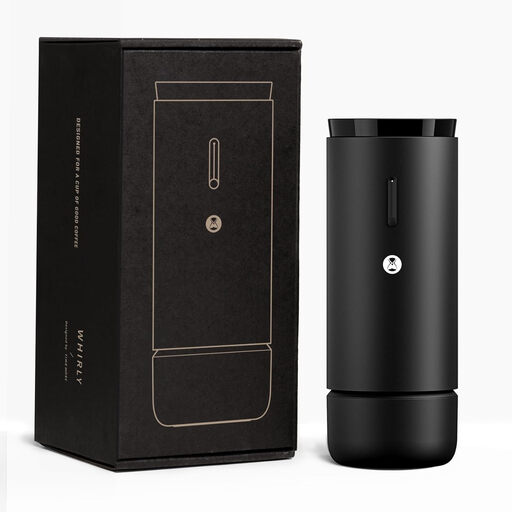
TIMEMORE Whirly Burr
As a portable electric grinder, it is described in the product name as suitable for everything from espresso to French press. The product description advises against grinding more than six espressos in a row because of the risk of overheating.
30 grind settings; metal housing.
Joybuy
Frequently asked questions
How should you set up the grinder before guests arrive?
Pull a test shot and adjust the grind a little at a time, keeping the dose consistent. If the shot runs too quickly and the espresso tastes sour, Baratza recommends grinding finer. If it runs very slowly and tastes bitter, the manufacturer recommends grinding coarser. These tips won’t give you a fixed setting that works for every bean.
Does a coffee grinder for espresso need complicated installation?
A hand grinder doesn’t need a power socket where you grind. For an electric grinder, check the connection details for the specific model and choose a suitable place to set it up. Baratza’s German product page lists 220–240 V AC for the Sette 270Wi. Also choose a portafilter or dosing cup that fits the relevant holder.
How should you clean a J-Ultra after changing beans?
1Zpresso recommends using a brush and a blower for the J-Ultra, and the instructions say not to clean the grinder with water. Don’t assume these instructions apply to an electric grinder.
What are your rights if an online purchase in Germany is faulty or you change your mind?
For a consumer purchase, the seller is responsible for the statutory warranty for faulty goods. According to the German Federal Ministry of Justice and Consumer Protection, the limitation period for new goods must generally be at least two years. For a distance contract between a consumer and a business, you usually have a 14-day right to cancel. Any return costs and exceptions should be checked separately. A voluntary manufacturer’s guarantee is a separate matter.
Does an electric or manual grinder need a CE marking?
The European Union requires a CE marking only for products that are explicitly covered by a relevant harmonised regulation. Such regulations may apply to electrical equipment; the Low Voltage Directive covers electrical equipment within its specified voltage limits. This does not mean that every purely manual hand grinder needs a CE marking, nor does it confirm that any specific product mentioned here complies.


