If you’re making several espressos with the same beans, an electric grinder with timed dosing, precise adjustment in the espresso range and a suitable portafilter workflow is usually the more straightforward choice. If you often switch beans, single dosing gives you more flexibility. A hand grinder takes up little space and doesn’t need electricity, but you’ll need to crank it for every dose. A timer can make a repeatable routine easier, but after changing beans or grind settings, check the amount dispensed again.
Which grinder suits you?
Families making several espressos in the morning
If you’re grinding the same beans for several shots in a row, repeatable dosing steps and a suitable portafilter workflow are important. Kaffeemacher and Eureka describe features that can help with this routine.
Households that switch between beans
If you switch between roasts or between caffeinated and decaffeinated beans, single dosing can help you prepare each dose separately. Kaffeemacher identifies changing beans as a factor to consider when choosing a grinder.
Espresso beginners with limited worktop space
You’re looking for a grinder with precise adjustment in the fine espresso range, but also want to weigh up its footprint and ease of use. Kaffeemacher, Sage, Baratza and 1Zpresso all offer guidance on these considerations.
What to look for when buying
First compare how the grinder doses for several shots, then look at the precision of its adjustment, how easy it is to switch beans, and its cleaning requirements and footprint.
| Consideration |
What to check |
Who it matters most to |
| Grinding several doses quickly |
Compare a timer, weight-based dosing and manual operation; check that the portafilter holder or dosing cup is a good fit. |
If you make several doses in a row in the morning, you’ll want to repeat as few steps as possible. Around 31% of consumers prioritise a quick workflow for several shots. |
| Fine-tuning for espresso |
Check the espresso range and adjustment mechanism of the specific model; don’t compare only the total number of grind settings. |
If you want to dial in your grinder to suit your espresso machine, precise, easy-to-follow adjustment matters. Around 25% of consumers prioritise fine-tuning their espresso grind. |
| Switching between beans |
Check whether the grinder supports single dosing and whether the dosing cup and access for cleaning suit your needs when switching beans. |
If your household uses different beans, you’ll want to prepare each dose separately. Around 19% of consumers prioritise hassle-free bean changes. |
| Noise, cleaning and maintenance |
If you’re sensitive to noise, look for comparable measurements for the specific model; check the cleaning instructions and model-specific replacement parts. |
If grinding noise and coffee residue could be a nuisance in a shared kitchen, pay attention to cleaning and maintenance requirements. Around 13% of consumers prioritise quiet operation and easy care. |
| Footprint and ease of use |
Check the dimensions, including the space needed to fill and clean the grinder; consider whether cranking for every dose will fit into your morning routine. |
If you have limited worktop space or don’t need automatic dosing, a manual grinder could be an option. Around 12% of consumers prioritise a compact footprint or lower upfront cost over automatic grinding. |
Common misconceptions when buying
-
Assuming all grind settings offer the same level of espresso precision
The total number of settings doesn’t tell you how finely the grinder adjusts in the espresso range. Baratza specifies settings 1–20 on the Encore ESP as its espresso range.
Check which adjustment range is intended for espresso, and compare the type of adjustment rather than just the total number of settings.
If the settings aren’t suited to your needs, you may spend more time dialling in the grinder and use more beans in the process.
-
Assuming a timer and weight-based dosing do the same thing
A timer stops grinding after a set time, while scales measure the amount dispensed. With a timed grinder, the amount can vary depending on the beans and grind setting.
Choose based on your routine: a timer for an established routine, weight-based dosing to control the amount dispensed, or single dosing if you often switch beans.
-
Choosing a hand grinder for its small footprint alone, even if you make several shots
An espresso-capable hand grinder doesn’t need an electric motor, but you’ll have to crank it for every dose. If you make several shots back to back at breakfast, you’ll repeat this step each time.
Before buying, think about how many doses you grind one after another and whether cranking will fit into your morning routine.
-
Assuming “Silent” means the grinder has been measured against others
A manufacturer’s product name or a claim about vibration damping doesn’t prove that its decibel level has been measured against other grinders under the same conditions.
If quiet grinding matters to you, compare measurements for the specific models and check the conditions under which they were taken.
Brands to consider
Eureka
The Mignon Specialità is an electric espresso grinder with 55 mm flat burrs, stepless adjustment and touch controls.
- Eureka describes its adjustment as stepless and micrometric, and the portafilter fork is adjustable. The manufacturer also promotes its vibration-damping system.
- A Kaffeemacher review describes the grinder as compact, but found that the plastic bean hopper felt less robust. This observation relates to the model tested.
Sage
The Smart Grinder Pro is an electric grinder for espresso and coarser brewing methods. Sage lists 60 settings and timed dosing directly into the portafilter.
- The display and programmable grind time can help you repeat the same steps.
- In a 2020 review, Kaffeemacher described the model as an interesting option for beginners. If you change beans or settings, check the timed dose again. This assessment from the time is not a current comparison of models.
Baratza
The Encore ESP has a designated espresso adjustment range and comes with a dosing cup. It’s different from the separately named Encore ESP Pro.
- Baratza specifies settings 1–20 for espresso and 21–40 for coarser methods on the Encore ESP. The manufacturer lists a quick-release burr assembly, as well as German-language documentation and parts information.
- The Encore ESP has stepped settings rather than stepless adjustment.
Graef
According to Graef, the electric CM800 is designed for various brewing methods and features conical burrs.
- Graef lists 40 external grind settings, with additional fine adjustment on the upper burr. The CM800 has a portafilter-activated switch, and a compatible lower conical burr is listed as a replacement part.
- With the portafilter-activated switch, the amount of grounds depends on how long you press it; there’s no evidence of an integrated scale.
1Zpresso
The J-Ultra is a manual grinder that the manufacturer specifically designs for espresso. It has external click adjustment and a magnetic grounds cup.
- 1Zpresso specifies an adjustment of 8 µm per click. This manufacturer’s figure describes the burr adjustment, not the taste or measured particle size.
- For several breakfast shots, you’ll still need to grind each dose by hand.
Joybuy products for morning espresso
This selection includes electric espresso grinders and manual models. If you make several shots one after another, a hand grinder means cranking for every dose. Before buying an electric model, check the exact version and its power connection specifications.
 No image available
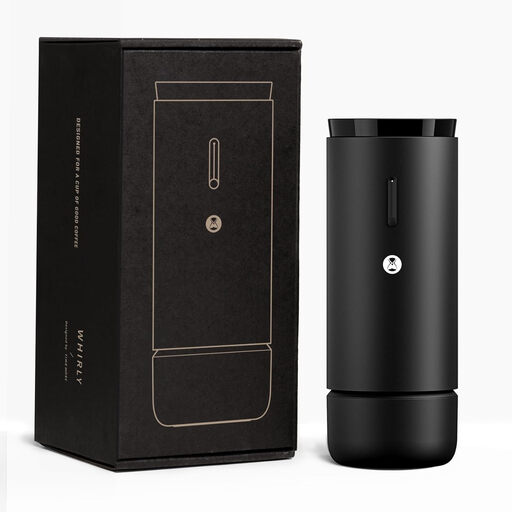
TIMEMORE Whirly Burr electric coffee grinder
The electric motor saves you from cranking when making several espresso doses; the product information lists espresso as a suitable use.
30 grind settings with a 0.025 mm adjustment range. The product information says it can make up to six espressos per charge; according to the usage guidance, you shouldn’t make more than six in a row.
View at Joybuy
 No image available
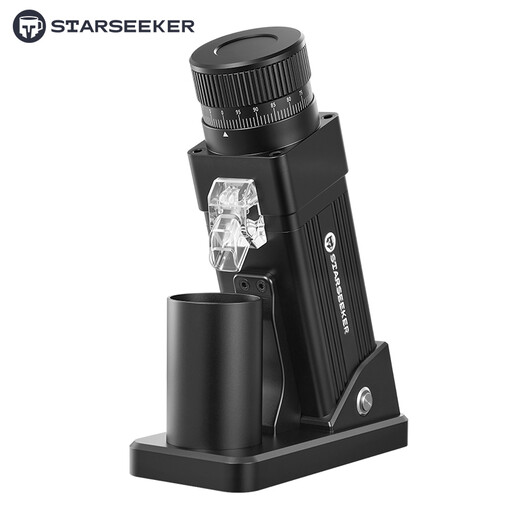
Starseeker E55 Pro electric coffee grinder
The electric motor and stepless adjustment are designed for fine-tuning espresso.
55 mm conical burrs and stepless fine adjustment, with a specified 0.01 mm adjustment. Check the details of the model version and power connection before buying.
View at Joybuy
 No image available
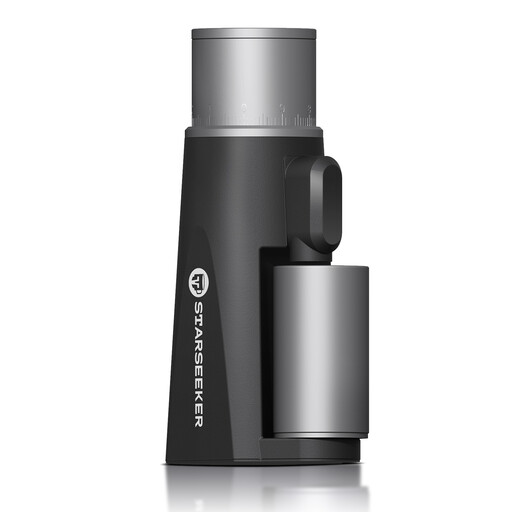
Starseeker EDGEmini cordless electric coffee grinder
This cordless electric grinder is designed for espresso and saves you from cranking for every dose.
The product information lists USB-C charging and 100 grind settings for espresso. According to the product information, very light-roast beans may cause the grinder to jam when finely ground for espresso.
View at Joybuy
 No image available
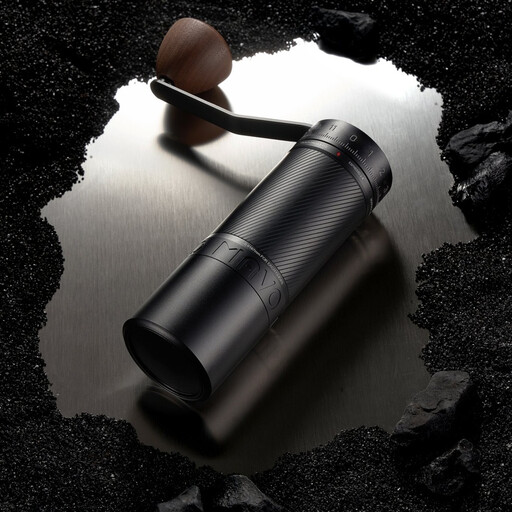
MAVO Phantom PRO manual coffee grinder
This manual grinder is designed for espresso and is best suited to a routine where you’re happy to crank out each dose by hand.
External grind adjustment with 120 clicks per rotation and stainless-steel burrs.
View at Joybuy
 No image available
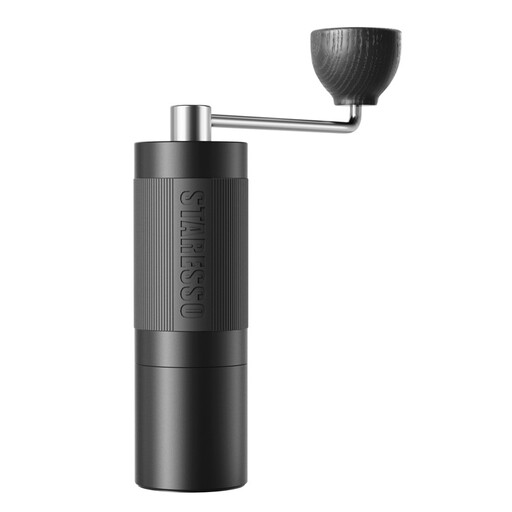
STARESSO D6 PLUS manual coffee grinder
This manual grinder is described as suitable for espresso and coarser brewing methods; making several doses means cranking it repeatedly.
Click-based grind adjustment and a 20 g grounds container.
View at Joybuy
Frequently asked questions
Do lots of grind settings automatically make a grinder suitable for portafilter espresso?
No. What matters is how precisely the specific model can be adjusted in the fine espresso range. Baratza specifies settings 1–20 for espresso on the Encore ESP; according to the manufacturer, the Eureka Mignon Specialità has stepless adjustment.
Do I need to check the timer again after changing beans?
Yes, if you want a consistent amount of grounds. Kaffeemacher points out that the amount dispensed by a timed grinder can change depending on the beans and grind setting. Weigh the first few doses after making a change, then adjust the grind time if needed.
How do I clean a coffee grinder safely?
Follow the instructions for your specific model, and unplug an electric grinder before working on the grinding mechanism. For the manual 1Zpresso J-Ultra, the manufacturer recommends using a brush and blower rather than water; this advice doesn’t necessarily apply to other models.
What requirements apply to electric grinders in Germany?
The EU Low Voltage Directive covers electrical equipment rated for 50–1,000 V AC. For the specific mains-powered model, check the product and connection details, as well as the applicable EU product requirements. The European Commission describes the CE marking as the manufacturer’s declaration that relevant product regulations have been met, not as an independent quality assessment.
Who should I contact if there’s a fault?
When buying consumer goods in Germany, you have statutory warranty rights against the seller; a voluntary manufacturer’s guarantee is separate. Your Europe states that the statutory period is generally at least two years from the date you receive the goods. Check your sales contract to see who the seller is and what additional guarantee terms apply.


