Kitchens with very limited worktop space
If you need to fit the machine and accessories into a small space, it’s worth measuring the whole setup, including the room you’ll need while making your coffee.


When making an espresso macchiato with limited worktop space, it’s not just the width of the machine that matters. You also need room to prepare the milk and operate the machine. A slim portafilter machine combines an espresso maker and steam wand, but requires manual effort; a pod machine needs a second appliance to froth milk. A bean-to-cup machine takes care of more steps, but still needs enough space.
If you need to fit the machine and accessories into a small space, it’s worth measuring the whole setup, including the room you’ll need while making your coffee.
If you want to froth a small amount of milk yourself, remember to allow for operating the steam wand and space for a milk jug.
If a simple espresso-making process is important to you, consider a pod machine with a separate milk frother. A bean-to-cup machine takes care of more steps, but needs room for the machine and milk system.
Decide what matters most to you when making an espresso macchiato, then measure the space you’ll need for the machine, accessories and operation.
A good fit if: you want to make the espresso and small amount of milk yourself, and have room to fit the portafilter and for a milk jug.
The trade-off: Preparation is manual; depending on the coffee system, you’ll need ground coffee or additional accessories.
A good fit if: you want a simple way to make espresso and have enough worktop space for both the machine and milk frother.
The trade-off: The machine doesn’t froth milk itself, so the extra appliance takes up more space, and the pod system limits your choice of pods.
A good fit if: you want to automate more of the process, from using coffee beans to frothing milk, and have enough space for the machine and its maintenance.
The trade-off: Automation doesn’t remove the need for enough worktop space. You’ll also need access to the water tank, bean hopper and milk system.
| Buying criterion | What to check | Who it matters most to |
|---|---|---|
| Room to make your coffee | De’Longhi lists the EC685.M EX:4 as 149 mm wide. Nespresso gives the Essenza Mini C dimensions as 8,4 × 33,0 × 20,4 cm; the Aeroccino3 is listed by Nespresso as 9 cm in diameter. Allow extra room for accessories and operation. | When every bit of worktop space counts, I want room for accessories and to work comfortably too. Around 33 % of consumers put space for the complete preparation process first. |
| Milk preparation to suit your drink | Check whether the specific machine has a steam wand, a separate appliance or an integrated milk system. Lavazza describes an espresso macchiato as espresso with a dash of milk; a latte macchiato contains considerably more milk. | If the small amount of milk and its texture matter to me, I want to choose a preparation method that suits my drink. Around 27 % of consumers prioritise milk preparation. |
| Steps and maintenance | Check the steps involved in making espresso, preparing milk and cleaning the specific model, and make sure the tank and milk system are easy to reach. | If I want as few steps as possible in the morning, I look at how the espresso and milk are prepared and how the parts are cleaned afterwards. Around 20 % of consumers prioritise ease of use and maintenance. |
| Ongoing costs and coffee system | Compare the cost of your preferred coffee format and any necessary accessories based on how you’ll use them; for pod machines, check the stated compatibility. | If everyday spending matters more to me than other criteria, I want to consider the coffee format and any accessories I’ll need. Around 20 % of consumers prioritise ongoing costs. |
A slim machine may need extra worktop space for a milk frother, milk jug or grinder.
Measure the space needed for the complete setup, and remember to allow room to operate the machine.
A separate milk frother or grinder may take up additional space.
In their test, Kaffeemacher:innen described the Pannarello wand on the Dedica EC685 as less suitable for finely controlled milk foam than the wand on the EC885 they tested.
If milk texture matters to you, check the design of the steam wand on the specific model rather than simply looking for a milk function.
In its market survey dated 20 October 2025, Verbraucherzentralen found that ground coffee was considerably cheaper than pod coffee in the range surveyed. The survey covered eight branches in Baden-Württemberg; it isn’t a current price comparison for every brand or purchase.
Compare the costs of the coffee system you actually plan to use, and factor in any accessories and maintenance you’ll need.
Pods or coffee, as well as any accessories and maintenance products, may involve recurring costs.
The Dedica Style EC685.M EX:4 is a slim manual portafilter machine with a steam wand; the Rivelia EXAM440.55.W is a bean-to-cup machine with a milk system.
The Essenza Mini C makes espresso using Nespresso Original pods; a separate Aeroccino3 can froth the milk.
The Bambino SES450BSS4EEU1 is a manual portafilter machine with a steam wand for making your own milk foam.
The Virtuoso+ XP444C10 is a portafilter machine with a steam wand and filter baskets for ground coffee and E.S.E. pods.
The CM5418 is a portafilter model included in F.A.Z. Kaufkompass’s test.
These product options include portafilter machines and espresso machines with a steam wand, for making your own milk foam or preparing suitable milk-based drinks.
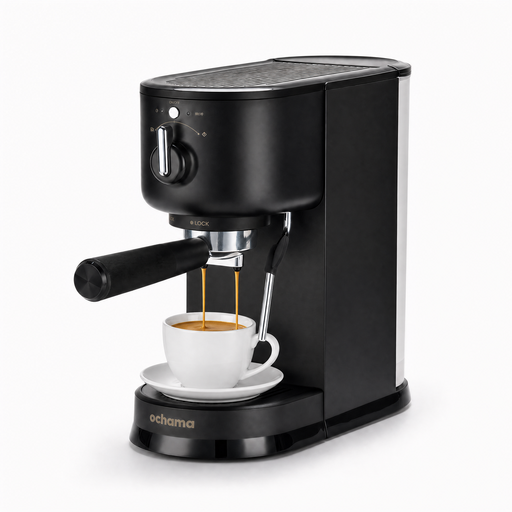 No image available
For making espresso and preparing milk with one machine; the product description calls the casing compact.
Specifications include 15 bar and a 1,25 l water tank. The casing is described as plastic; when frothing milk, follow the stated instructions to avoid scalds.
 No image available
For espresso and manually frothed milk; the removable tank has a stated capacity of 1,5 l.
The steam wand requires you to froth the milk manually and, according to the product description, should be cleaned after use.
 No image available
For espresso and manually prepared milk foam; the product description calls the machine compact.
Specifications include 20 bar, a pressure gauge, an adjustable steam wand and a removable 1,1 l water tank. The stated width is 11,2 inches and the depth is 5,1 inches.
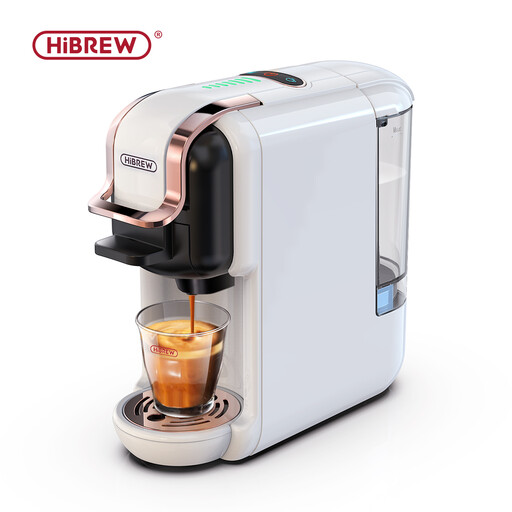 No image available
For a range of coffee formats and milk-based drinks; the product description mentions latte and cappuccino, as well as a compact casing.
Specifications include 20 bar and compatibility with several capsule, pod and ground coffee formats. Use the right format for the drink you want to make.
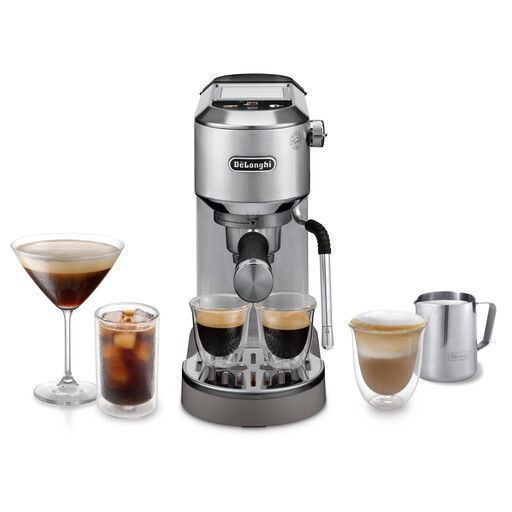 No image available
For espresso and manually frothed milk on a narrow worktop; the product description says a milk jug is included.
Specifications include a width of 15 cm and a 1,1 l water tank. There’s no built-in grinder, so you’ll need ground coffee or a separate way to grind your beans.
An espresso macchiato is espresso with a small amount of milk, usually frothed; a latte macchiato is primarily milk. Before you buy, decide which drink you want to make, as they require different approaches to preparing the milk.
Measure the space needed for the machine, accessories and operation, and follow the instructions for the specific model when cleaning and descaling it. De’Longhi notes that how often you need to descale the Dedica depends, among other things, on the water hardness in your area.
No. If there’s a fault, your statutory rights are against the seller; a manufacturer’s guarantee is an additional voluntary service subject to its own terms. Verbraucherzentrale explains that if a product is faulty, you can initially request a repair or replacement.
Electrical and electronic waste must not go in household rubbish. Take it to an authorised collection point, such as a local council recycling centre. The German Federal Environment Ministry explains how to dispose of and return electrical and electronic waste.