
Lieferung heute & morgen

Qualitätsgarantie

Willkommens-Angebote freischalten: KOSTENLOSE Lieferung | Bis zu 80 % RABATT | Kostenlose 30-Tage-JoyPlus-Testphase
App herunterladen
Finding the right espresso machine can be a challenge given the vast array of models and features. From quick capsule machines for your morning coffee to sophisticated portafilter machines for the passionate home barista, the options are diverse. This guide will help you understand the technical features and differences to make an informed decision that suits your needs and coffee habits.
As your Joybuy Product Recommendation Officer, I have compiled the essential information to give you a clear overview of the available machine types and their characteristics.
Before you decide on a model, it's helpful to consider a few basic criteria. These will help you narrow down the selection and find a machine that fits your habits.
The most fundamental decision concerns the type of machine. Both variants have specific use cases:
Modern espresso machines offer a range of features that influence the coffee experience:
Here is a selection of models that cover different needs and use cases.
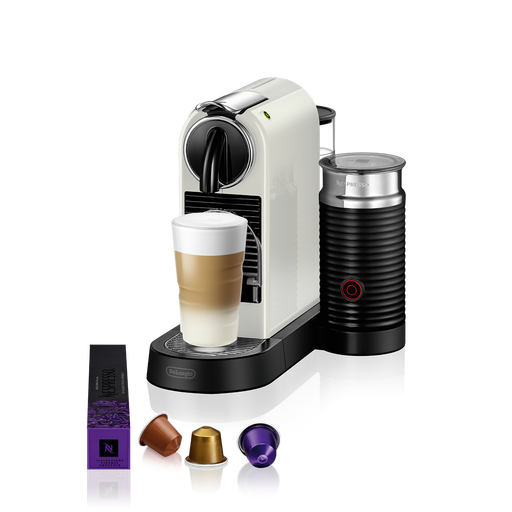
Why it stands out: The CitiZ & Milk combines a compact, retro-modern design with high functionality. Thanks to the integrated Aeroccino milk frother, you can prepare both espresso and milk-based coffee specialities at the touch of a button. The short heat-up time and simple operation make it a highly practical appliance for daily use.
Benefits:
Who is it for? This model is ideal for users who value speed, convenience, and a consistent coffee result without having to deal with manual settings. Perfect for a quick espresso in the morning or a cappuccino in between.
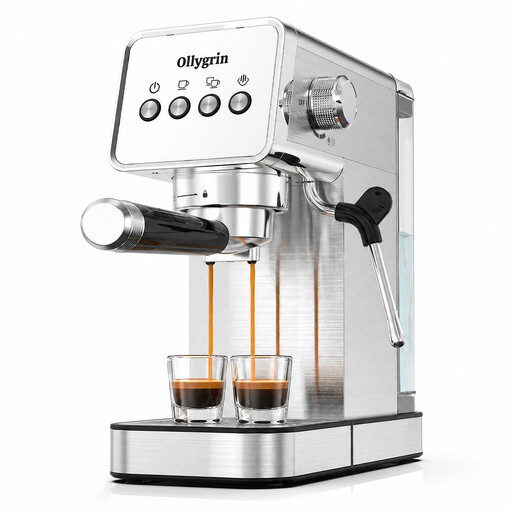
Why it stands out: The Ollygrin EM1502 is a classic portafilter machine that serves as an entry point into the world of manual espresso preparation. With a 20-bar pump system and a manual steam wand, it provides the necessary tools to create espresso and milk foam to your own specifications. The stainless steel housing also gives it a robust and professional look.
Benefits:
Who is it for? This machine is aimed at coffee enthusiasts who want to take the brewing process into their own hands and learn the basics of the barista craft. It offers a good balance between manual control and user-friendly operation.
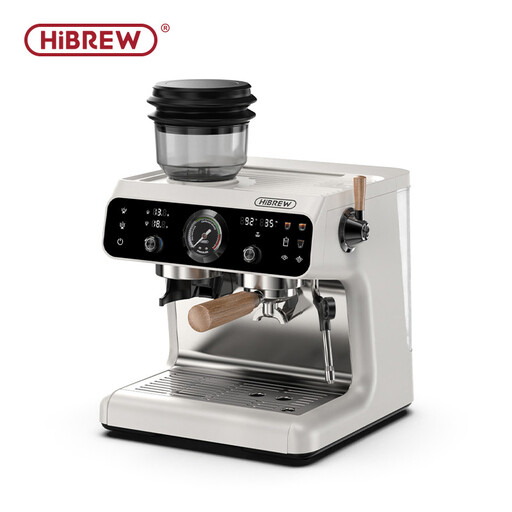
Why it stands out: The HiBREW H7B is an all-in-one solution for discerning home users. As an espresso machine with grinder, it features an integrated conical burr grinder with 30 adjustment levels. The dual heating system allows for simultaneous espresso brewing and milk frothing, while the PID temperature control ensures a precise and stable brewing temperature.
Benefits:
Who is it for? This model is designed for ambitious home baristas who want comprehensive control over the entire preparation process—from grinding the bean to the final extraction. It offers features typically found in professional-grade machines.
If these recommendations don't include the perfect model for you, you might find a suitable alternative in our broader selection. Discover more machines with different features and in various price ranges.
Explore Our Full Range of Espresso Machines
1. What is the difference between an espresso machine and a drip coffee maker? The main difference lies in the brewing method. An espresso machine forces hot water at high pressure (typically 9 bar) through finely-ground coffee powder. This process takes only about 25–30 seconds. A drip coffee maker, on the other hand, lets hot water slowly drip through coarser ground coffee, driven solely by gravity.
2. How many bars of pressure should an espresso machine have? To prepare a true espresso, a pressure of about 9 bar is required directly at the brew head. Many home-use machines are equipped with pumps that can generate a maximum pressure of 15 to 20 bar. This higher capacity serves as a reserve to ensure that the target pressure of 9 bar is consistently reached, regardless of grind fineness and coffee amount.
3. Is an espresso machine with an integrated grinder worth it? An espresso machine with grinder offers several advantages. The most important is freshness, as the beans are ground right before brewing, which maximises the aroma. It is also a space-saving, all-in-one solution. A potential downside is that if either the grinder or the machine malfunctions, the entire unit may be affected. A separate grinder offers more flexibility for replacing or upgrading individual components.