Occasional affogato get-togethers
You want to make individual espresso servings without a lengthy introduction, and you’re happy to commit to one capsule system.


For the occasional affogato made by different people, a compact capsule machine is a simple option. If your team makes coffee frequently, a bean-to-cup machine may be worth considering, provided you organise its shared upkeep. A portafilter machine is better suited to someone who wants to control the grind and extraction and is happy to take on the extra work. The ice cream needs to be stored separately – an espresso machine doesn’t replace freezer space.
You want to make individual espresso servings without a lengthy introduction, and you’re happy to commit to one capsule system.
Several people make espresso frequently, so water and used-coffee containers, along with clearly assigned cleaning duties, matter more than extra drink programmes.
You want to control the grind or extraction yourself, and have someone who can explain how to prepare the coffee and take responsibility for cleaning the portafilter machine.
First decide what matters most in your office: simple single servings, organised shared upkeep or manual control. Then check that the machine’s capacity and footprint suit the way you’ll actually use it.
| What matters when buying | What to check | Who is this important to? |
|---|---|---|
| Simple single servings | De’Longhi specifies a 40 ml espresso serving for the EN85.B. Also check whether the compatible original capsule system suits your office routine. | If different people will occasionally make an affogato, I want a clearly selectable serving size and a simple process. Around 33% of consumers prioritise straightforward single servings. |
| Shared upkeep | Philips describes the EP2223/40’s brew group as removable. Also agree who will clean the containers, brew group and work surface, and portion the ice cream hygienically. | If several colleagues use the machine, I want to know who’s responsible for cleaning, rather than relying on convenient operation alone. Around 27% of consumers prioritise manageable shared upkeep. |
| Several servings in a row | Compare the specific model’s water tank and used-coffee or capsule container with the number of servings you expect to make, and measure the available worktop space. | If several affogatos are being made one after another, I don’t want to keep refilling the water tank or emptying containers. The machine also needs to fit on the worktop. Around 20% of consumers prioritise making consecutive servings. |
| Manual control over your espresso | Check whether the machine has an integrated grinder, what serving options it offers, and who will be responsible for adjusting the settings and cleaning it. | If someone wants to fine-tune the espresso, I want control over the grind or extraction, with clear responsibility for preparation and cleaning up. Around 20% of consumers prioritise manual control over their espresso. |
When a machine is shared, refilling the water tank and emptying the capsule or used-coffee container are part of the daily routine too.
Estimate how many servings you’ll actually make, and agree who will empty the containers and look after the machine. Check the specifications for the exact model.
Emptying and cleaning take time, so the team needs to plan for them.
A higher pressure rating or extra drink buttons don’t, on their own, guarantee a particular taste with your ice cream or prove that the machine performs better.
Start by comparing espresso serving sizes, ease of use and cleaning requirements. Treat claims about taste as statements made by the manufacturer concerned.
A portafilter machine requires hands-on steps between servings. Models without an integrated grinder also need ground coffee from another source.
Before buying, agree who will prepare the coffee and clean the portafilter after each use.
Depending on the model, you’ll need to have suitable pre-ground coffee ready or use a separate grinder. Preparation and cleaning mean extra steps.
An espresso machine doesn’t make or store the ice cream. The Federal Office of Consumer Protection and Food Safety warns that unclean ice-cream scoops can spread germs.
Check freezer space and plan a hygienic routine separately from choosing the machine, and keep serving utensils clean.
The original capsule systems are worth considering here, including the Essenza Mini EN85.B, which is also sold in Germany as a De’Longhi model.
For the office, you could consider either a manual Dedica portafilter machine or a Magnifica S bean-to-cup machine; they differ in how they’re used and maintained.
The Series 2200 EP2223/40 is worth considering if easy access to the brew group for cleaning is important in a bean-to-cup machine.
The Barista Express is better suited to teams that want to grind beans before brewing and fine-tune their espresso.
The EspressoGourmet is a compact portafilter option for manual preparation.
This selection includes bean-to-cup machines for regular team use and portafilter machines for manually prepared espresso servings.
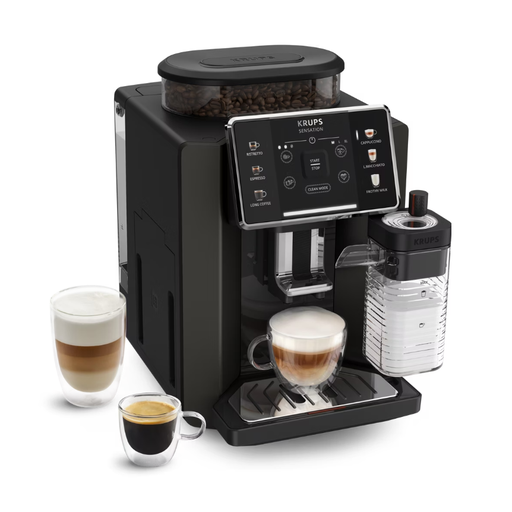 No image available
Could suit a team that regularly makes coffee from beans and can build the machine’s stated cleaning programmes into the office routine.
Bean hopper: 260 g; water tank: 1.7 l; used-coffee container: 10 servings; makes two cups at once. The description also specifies a removable, dishwasher-safe milk container.
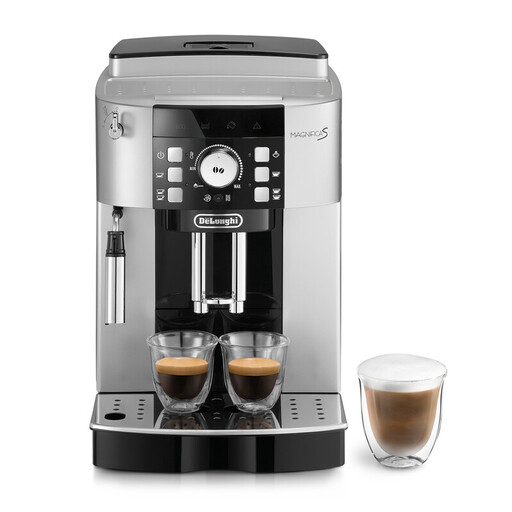 No image available
An option for teams that regularly make coffee from beans, provided there’s a plan for looking after the removable brew group.
Water tank: 1.8 l; bean hopper: 250 g; grinder with 13 settings. The description also specifies adjustable coffee and water quantities.
 No image available
Could work well for making several espressos in a row, provided the removable parts fit into your shared cleaning routine.
Water tank: 1.8 l; bean hopper: 250 g; 13 grind settings. According to the description, it can make two espressos at once and has a removable water tank and milk container.
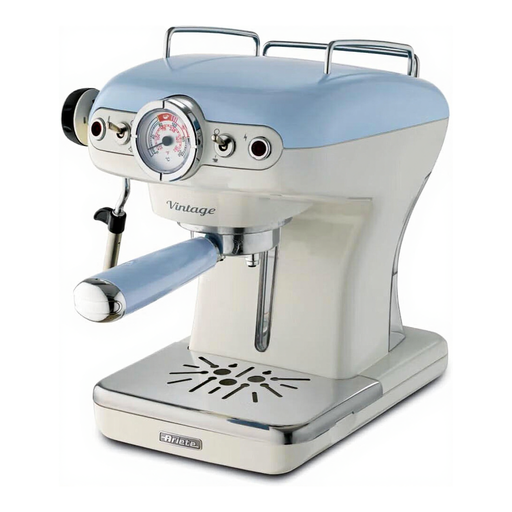 No image available
Better suited to a team that wants to prepare ground coffee or E.S.E. pods manually and is happy to take care of the cleaning afterwards.
The filter holder is designed for one or two cups, and the water tank holds 0.9 l. The product description lists ground coffee and E.S.E. pods as options.
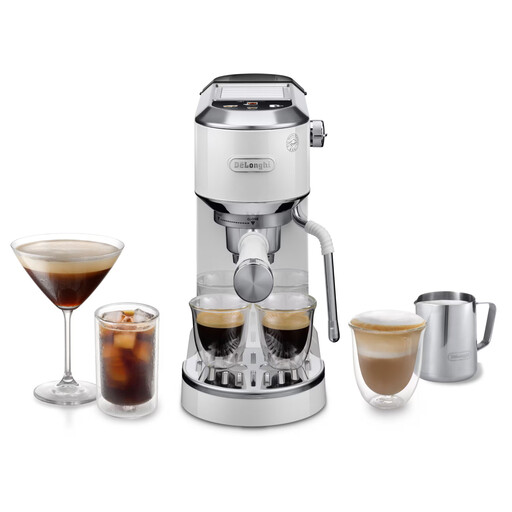 No image available
A manual option for teams that want to choose between single and double espresso servings and can plan for cleaning the portafilter and steam wand.
Water tank: 1.1 l; stated machine width: 15 cm. The product description specifies separate touch controls for single and double espresso.
If you’re making affogato with espresso and ice cream stored separately, the machine doesn’t need a milk or cold brew function. Choose these programmes only if you’ll use them for other drinks in the office too.
Store the ice cream according to the instructions on the packaging and take it out only when you’re ready to serve it. The Federal Office of Consumer Protection and Food Safety warns that unclean scoops can transfer germs to ice cream; its hygiene guidance recommends keeping frozen food within the cold chain.
Decide who will look after the water and drip trays and clean the brew group in line with the instructions for the specific model. Philips describes the EP2223/40’s brew group as a removable part that needs regular cleaning; this doesn’t establish a standard cleaning schedule for other machines.
New electrical equipment covered by the EU Low Voltage Directive and made available in Germany must meet the relevant EU requirements. EUR-Lex states that electrical equipment with a rated voltage of 50 to 1,000 V AC must, among other things, carry a CE marking and include clear operating and safety information. Check these details for the specific product or device.
For electrical equipment in the workplace, the DGUV recommends visual checks for obvious defects before use, as well as periodic inspections by qualified people. This doesn’t mean there’s one inspection interval that applies to every office; check how to put this into practice with the relevant contact at your employer.