By Joybuy Product Recommendation Officer, July 14, 2026
The desire for barista-quality coffee in the comfort of your own home leads many coffee lovers to a portafilter espresso machine. Unlike capsule or fully automatic machines, a portafilter coffee machine offers complete control over the brewing process—from the grind size to the extraction time. While this process may seem complex at first, this guide will bring clarity, helping you understand how they work and the key purchasing criteria to make an informed decision on your new espresso machine for home use.
What to Look for When Buying an Espresso Machine
The range of models is vast, from simple entry-level devices to complex semi-automatic espresso machines. The following criteria will help you narrow down your search.
1. Grinder: Integrated or Separate?
One of the first decisions you'll face concerns the grinder. An espresso machine with a built-in grinder offers an all-in-one solution that saves space and simplifies the workflow. Freshly ground beans are crucial for aroma. Integrated grinders are often calibrated to the machine, which makes adjustments easier.
On the other hand, models without an integrated grinder offer more flexibility. You can choose a separate coffee grinder that precisely meets your requirements for grind size and consistency. This is often the preferred option for enthusiasts who want to experiment with different bean varieties and grind settings.
2. Heating System: Speed and Stability
The heating system determines how quickly the machine is ready for use and how stable the water temperature remains during the brewing process.
- Thermoblock Systems: These heat water on demand and are therefore ready to use very quickly, often in under a minute. They are energy-efficient and found in many home-use machines.
- Boiler Systems: Traditional boilers store a larger volume of hot water. They offer high temperature stability but require a longer heat-up time. Machines with two boilers (dual-boiler) allow for simultaneous espresso brewing and milk frothing.
3. Milk Frother: Manual or Automatic?
For lovers of cappuccino or latte macchiato, an espresso machine with a milk frother is essential.
- Manual Steam Wand: This gives you full control over the texture and temperature of the milk foam. It requires some practice but allows you to create microfoam for latte art.
- Automatic Milk Frother: These systems draw milk from a container, heating and frothing it automatically. They offer great convenience and consistent results at the touch of a button, which is particularly beneficial for beginners.
Our Top Espresso Machine Picks
Based on the criteria mentioned, we have compiled a selection of models that cater to different needs and budgets. While espresso machine reviews from consumer organisations can offer additional guidance, this overview focuses on objective product features.
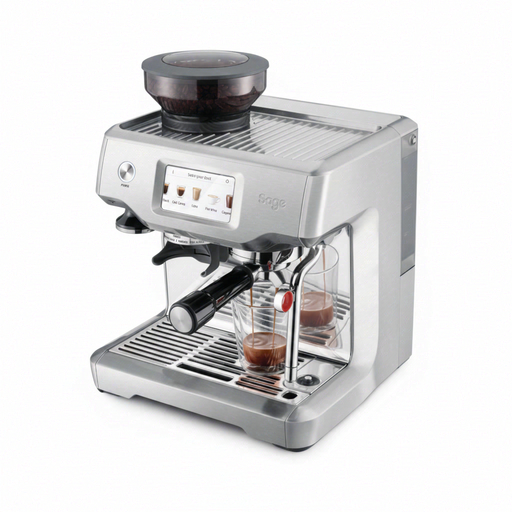
For Convenience and Precision: Sage Barista Touch

Sage Barista Touch Espresso Machine with Grinder
- Why it stands out: The Sage Barista Touch combines the precision of a barista-style coffee machine with the convenience of a fully automatic one. It is operated via an intuitive touchscreen display where you can select and personalise pre-set coffee specialities.
- Advantages:
- Integrated Conical Burr Grinder: Grinds the beans right before brewing for maximum freshness.
- ThermoJet Heating System: According to the manufacturer, the machine is ready to use in just 3 seconds.
- Automatic Milk Frother: Creates fine-pored microfoam with adjustable temperature and texture.
- Personalisation: Up to 8 individual coffee settings can be saved.
- Who is it for?: For users who value high coffee quality and consistency but prefer a straightforward and fast preparation process.
For Beginners and Small Kitchens: Ariete 1380 Metal

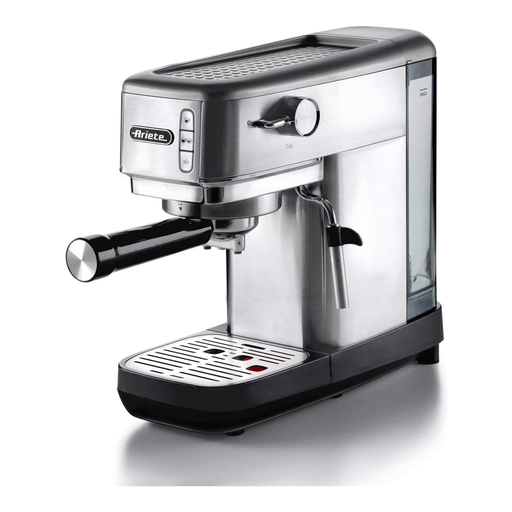
Ariete 1380 Metal Coffee Machine, 1 or 2 Cup Filter, Cappuccino Nozzle
- Why it stands out: With its slim stainless steel design, the Ariete 1380 fits even in kitchens with limited space. It focuses on the essential functions of an espresso machine and offers flexibility through its compatibility with both ground coffee and E.S.E. pods.
- Advantages:
- Compact Dimensions: Very space-saving with a width of just 14 cm.
- Flexibility: Can be used with both ground coffee and convenient E.S.E. (Easy Serving Espresso) pods.
- Manual Steam Wand: The "Maxi-Cappuccino" nozzle allows for manual milk frothing for cappuccinos.
- Simple Operation: Clear buttons for preparing 1 or 2 cups of espresso.
- Who is it for?: For beginners who want to learn the art of espresso making, or for users with limited space looking for a simple and budget-conscious solution.
For Design Lovers Wanting an All-in-One: Ariete Espresso Machine Moderna 1318

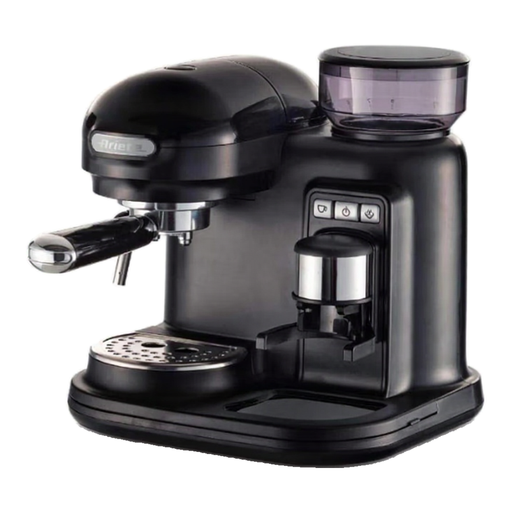
Ariete Espresso Machine Moderna 1318, with Coffee Grinder
- Why it stands out: The Moderna 1318 combines a striking retro design with the functionality of a modern espresso machine with a grinder. It is a complete solution for preparing espresso and cappuccino from fresh beans.
- Advantages:
- Integrated Grinder: The 250g bean hopper and integrated grinder ensure fresh coffee grounds for every cup.
- 15 Bar Pump Pressure: Ensures proper extraction and a stable crema.
- Integrated Milk Frother: The steam wand is designed for creating creamy foam for cappuccinos.
- Design Series: Part of Ariete's "Moderna" series, which also includes matching kettles and toasters in the same style.
- Who is it for?: For design-conscious coffee drinkers who are looking for an all-in-one solution with an integrated grinder and value a cohesive aesthetic in their kitchen.
Looking for the Right Accessories?
A good espresso only reveals its full aroma in the right cup. The thick walls of a classic espresso cup or the bulbous shape of a cappuccino cup help to retain the temperature and crema for longer.
If you want to complete your coffee setup, you can find a selection of matching cappuccino cups here.
Frequently Asked Questions (FAQ)
1. What is the difference between a portafilter machine and a fully automatic coffee machine?
A portafilter machine requires manual steps: you grind the beans (or use pre-ground powder), fill and compress the powder in the portafilter (tamping), and start the brewing process manually. This gives you full control over the result. A fully automatic coffee machine handles all these steps—from grinding to milk frothing—at the touch of a button. It offers convenience but less influence over the brewing process.
2. How much pressure should a good espresso machine have?
To brew a true espresso, a pressure of about 9 bars is needed at the brew head. Most home-use machines advertise a pump pressure of 15 bars or more. This higher value ensures that even with a less-than-optimal grind or tamp, enough pressure reaches the coffee grounds to achieve the required 9 bars for a good extraction.
3. Is a portafilter machine worth it for beginners?
Yes, a portafilter machine can be worthwhile even for beginners, provided there is a willingness to engage with the process. Entry-level models or semi-automatic espresso machines with assistive features (like the Sage Barista Touch) make it easier to get started. The learning curve is part of the experience and is rewarded with a personally crafted, high-quality coffee.