
Lieferung heute & morgen

Qualitätsgarantie

Willkommens-Angebote freischalten: KOSTENLOSE Lieferung | Bis zu 80 % RABATT | Kostenlose 30-Tage-JoyPlus-Testphase
App herunterladen
The right espresso machine should offer more than an impressive pressure figure on the box. What really matters is the brewing method, ease of use, space it takes up, cleaning requirements and the features it actually offers. Check these points before you buy to avoid unnecessary ongoing costs and a machine that quickly becomes impractical for everyday use.
Many products are advertised as an espresso machine with 20 bar. This figure usually refers to the pump’s maximum pressure, not necessarily the pressure applied to the coffee grounds throughout extraction. When choosing a machine, also consider temperature control, the portafilter, ease of use and whether you can monitor the pressure.
An espresso machine with a grinder saves you from needing a separate appliance and lets you use whole beans. However, it takes up more space and needs extra cleaning. Check whether the bean hopper is large enough and how many grind settings are available. If you mainly use pre-ground coffee or capsules, you may not need this feature.
A coffee machine with a milk frother or an espresso machine with a steam wand is suitable for cappuccino and latte, but needs cleaning after every use. Milk residue on the steam wand should be removed promptly. If you only drink espresso, you can do without this feature and make the machine easier to use and clean.
A portafilter machine, or semi-automatic espresso machine, gives you control over the amount of coffee, grind size and tamping pressure. It’s a good choice if you want to be involved in the brewing process. However, it requires several steps: grinding, dosing, tamping, locking in the portafilter and cleaning afterwards.
A bean-to-cup coffee machine handles most of these steps for you. It’s a good choice for households where several drinks need to be made quickly and with the same simple process. A capsule machine is especially easy to use, but ties you to a particular capsule system. Check capsule compatibility, waste and ongoing costs.
A rating of 15 or 20 bar is just one technical specification. Other important features include:
For an espresso machine for home use, choose a capacity that suits your daily consumption. Small tanks of around 0.6 to 1.1 litres save space, but need refilling more often. Larger containers are heavier and take up more room on the worktop.
Removable water tanks, drip trays and brew groups make cleaning easier. If your machine has a steam wand, rinsing and wiping it down should be part of your regular routine. Descale the machine as instructed in the manual and use cleaning products approved for that model.
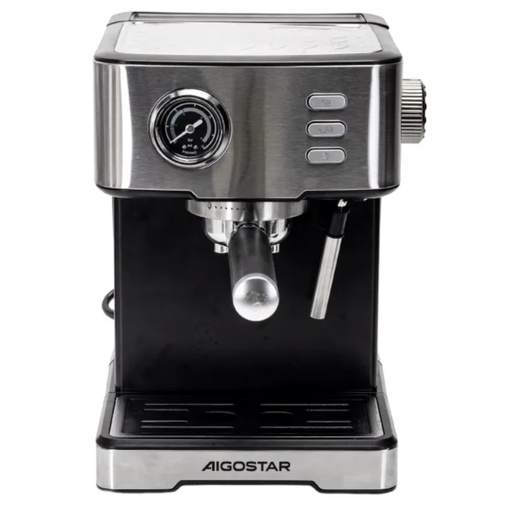
Why this product suits this profile: This machine works with ground coffee and compatible capsules. Its 1.7-litre water tank, single and double servings, and steam and hot water functions provide a versatile set of essentials for beginners.
Being able to choose between coffee and capsules means you’re not tied to just one brewing method. The removable tank and drip tray make regular cleaning easier.
20-bar pump rating, 1.7-litre water tank, 1400 watts and hot water function.
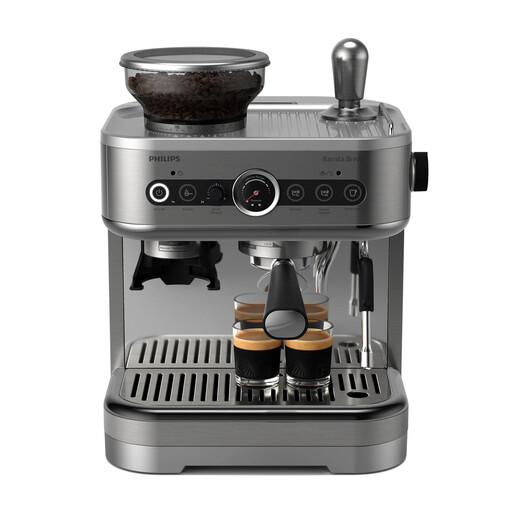
Why this product suits this profile: This model combines an integrated metal conical burr grinder, five grind settings, PID temperature control and a 58 mm stainless steel portafilter. Its 2.5-litre water tank is designed for making several drinks.
As well as a 15-bar pump rating, the specifications clearly list temperature control, a pressure gauge and a grinder. This makes it easier to assess the features than by looking at the pressure rating alone.
PID control, 250 g bean hopper, 0.45-litre milk jug and removable parts listed as dishwasher-safe in the product specifications.
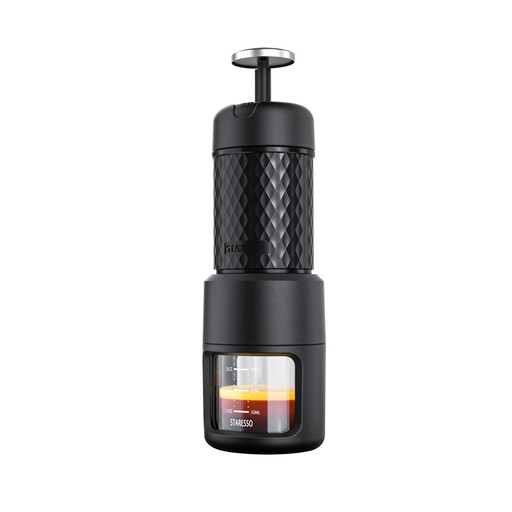
Why this product suits this profile: This portable espresso machine doesn’t need electricity and can be used with capsules or ground coffee. It’s suitable for the office, halls of residence, travel and outdoor use, as long as hot water is available.
There’s no electric heating or pump unit taking up space or requiring a power socket when you travel. Its modular design makes it easier to rinse after use.
Manual pressure generation, 304 stainless steel inner container, 30, 60 and 90 ml markings, and compatibility with ground coffee and capsules.
We’ve put together a complete, regularly updated list of products that meet these strict selection criteria and fully comply with the safety regulations in force in the EU.
The maximum pump rating alone isn’t enough to help you choose. Machines rated at 15, 19 or 20 bar can perform differently depending on the brew group, coffee grounds and water flow. Also look for temperature control, a portafilter and straightforward controls.
Its lifespan depends on how often you use it, water quality, descaling and general care. Clean the portafilter, brew group, drip tray and steam wand regularly. A removable design makes maintenance easier. Warranty terms and the availability of spare parts are important too.
A capsule machine is often simpler to use and needs fewer accessories. However, if you use it regularly, capsules can make each drink more expensive. A portafilter machine also needs a suitable grinder and takes more time, but lets you choose your own beans and control the dose. The right option depends on how much coffee you drink, how much convenience you want and how much control you’d like.