
Lieferung heute & morgen

Qualitätsgarantie

Willkommens-Angebote freischalten: KOSTENLOSE Lieferung | Bis zu 80 % RABATT | Kostenlose 30-Tage-JoyPlus-Testphase
App herunterladen
An espresso machine for home use should work reliably, take up little space and prepare drinks such as espresso, cappuccino or latte macchiato to suit your personal taste. The choice ranges from a manual portafilter machine and semi-automatic espresso machine to a bean-to-cup coffee machine or compact capsule machine.
Marketing claims often make comparisons more difficult, however. A high bar rating alone does not guarantee better results, an integrated grinder does not automatically mean less effort, and extensive features can make cleaning considerably more time-consuming. The following criteria will help you avoid making the wrong purchase.
A 15-bar espresso machine or 20-bar espresso machine may initially sound particularly powerful. However, this often refers to the pump’s maximum pressure. For preparation, what matters most is how steadily the pressure is maintained during brewing and whether the grind size, amount of ground coffee and tamping pressure work well together.
You should therefore avoid considering the bar rating in isolation. A model with 19 or 20 bar is not automatically better suited to your household than a machine with 15 bar. Clear information about temperature control, operation and maintenance is more important.
An espresso machine with milk frother can be used to make cappuccinos and latte macchiatos. A traditional steam wand does require some practice, however: the amount of milk, temperature and position of the nozzle all affect the result. If you have little time in the morning, a bean-to-cup coffee machine with an automatic milk system may be easier to use.
Also check whether the milk system can be easily dismantled and cleaned. Milk residue can build up in hoses, nozzles and containers. An automatic rinsing function or removable components are practical features for everyday use.
An espresso machine with grinder grinds the beans immediately before preparation. With a semi-automatic model, you will usually still need to dose the coffee grounds, tamp them and insert the portafilter. This gives you greater control over the brewing process, but also involves more manual steps.
A bean-to-cup coffee machine takes care of grinding, dosing and brewing largely by itself. Its design, cleaning requirements and purchase price need to be assessed differently as a result. Before buying, consider how much control and how much automation you actually need.
The tank capacity should match the number of cups you make each day. A tank holding 0.6 to 1.0 litres is often sufficient for individuals or a small office with only a few shots. For families, models with a capacity of 1.2 litres or more are more convenient, as they need to be refilled less often.
Measure the available worktop space before buying. As well as width, consider depth, the height available beneath wall units and the space needed to remove the water tank. A compact espresso machine can be a sensible choice for small kitchens, provided the tank and drip tray remain easy to access.
Stable temperature control helps to produce consistent results. Some appliances specify NTC or PID control for this purpose. This technical information is more meaningful than general promises of ‘perfect’ espresso.
For everyday use, you should look for the following:
The correct mains voltage is also important in Germany. The household models mentioned operate at 220–240 V. An espresso machine should be operated using a suitable earthed socket. The manufacturer’s safety and care instructions take priority.
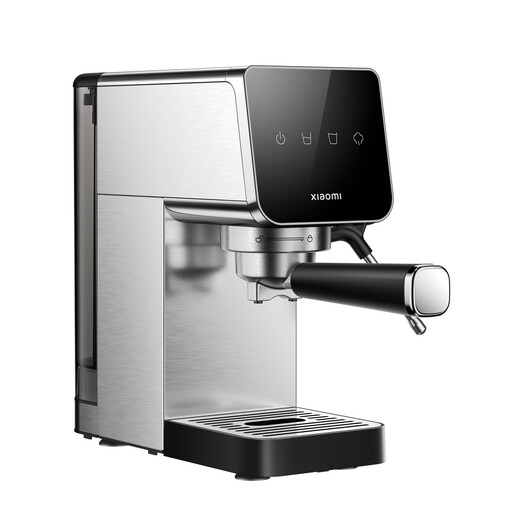
Why this product suits this profile: With a stated width of 14 cm, this machine is designed for small kitchens and offers single and double shots as well as a steam wand.
The compact design and 0.9-litre tank make the space and capacity requirements clear; the 20-bar rating is complemented by NTC temperature control and a pre-infusion function.
20-bar pump, steam wand, single and double shots, plus a stated power consumption of 1,350 W.
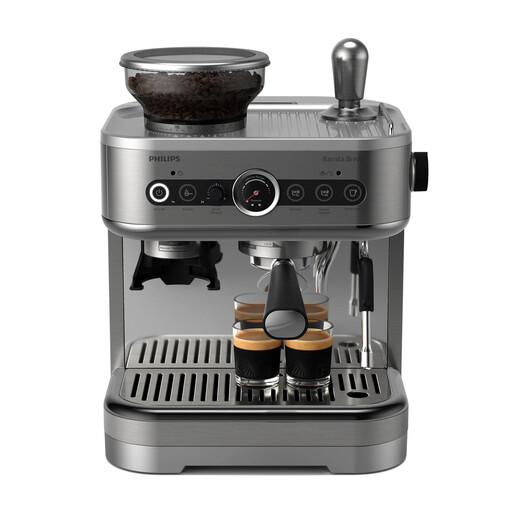
Why this product suits this profile: This model combines portafilter operation with an integrated metal conical grinder, five grind settings, PID temperature control and a pressure gauge.
The specifications list specific adjustment options rather than just a pressure rating. The 2.5-litre water tank and dishwasher-safe removable parts address capacity and maintenance.
15-bar operating pressure, 250-g bean container, 0.45-litre milk jug and three programmes for espresso, Americano and hot water.
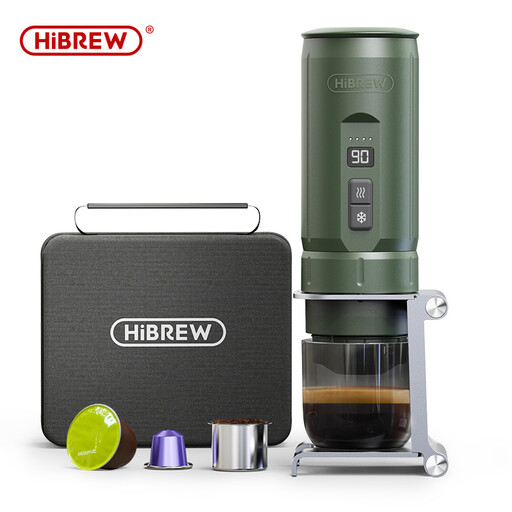
Why this product suits this profile: This portable machine is designed for camping, travelling and flexible use at home. It features a water tank marked for 50, 75 and 100 ml, as well as a digital display.
The battery and water requirements are clearly specified. For operation, only the designated lithium batteries should be used, and the charging accessories and spare batteries should be checked separately.
20-bar pump pressure, 7,500-mAh battery, programmable temperature and brewing functions, plus a weight of 1.5 kg.
For maximum simplicity, a capsule machine such as the Nespresso Essenza Mini is a good choice. It has a 0.6-litre tank, two programmable cup sizes and a stated heating time of 25 seconds. Users should factor in ongoing capsule costs and being tied to compatible capsules.
If you want to prepare several drinks at the touch of a button, you could consider a bean-to-cup coffee machine such as the De’Longhi Magnifica S ECAM21.116.SB or the Magnifica Evo ECAM290.61.SB. According to the product specifications, both models feature an integrated grinder, a 1.8-litre water tank and a milk system. They do require more worktop space and regular maintenance of the brewing and milk units, however.
We have put together a complete, regularly updated list of products that fully meet these strict selection criteria and the safety regulations applicable in the EU.
The bar rating usually describes the pump’s maximum pressure and is not an indicator of quality on its own. Models with 15, 19 or 20 bar can be suitable for espresso. Temperature stability, the right grind size, accurate dosing and even tamping of the coffee grounds are also crucial.
Its lifespan depends on usage, water quality, descaling and cleaning. Removable tanks, drip trays and brewing units make maintenance easier. If your tap water is particularly hard, follow the manufacturer’s guidance on descaling and water hardness.
With portafilter machines and bean-to-cup coffee machines, the main costs are for beans, water, descaler and, where necessary, seals or filters. Capsule machines require capsules, whose price per drink generally has a greater impact. When comparing models, therefore, consider not only the purchase price but also the expected number of cups and the consumables available.