
Lieferung heute & morgen

Qualitätsgarantie

Willkommens-Angebote freischalten: KOSTENLOSE Lieferung | Bis zu 80 % RABATT | Kostenlose 30-Tage-JoyPlus-Testphase
App herunterladen
The right espresso machine should suit your drinking habits, available worktop space and willingness to carry out maintenance. However, many buying decisions fail not because of the price, but because compatibility details are unclear and performance figures are overestimated. If you want to prepare espresso, cappuccino or latte macchiato at home or in a small office, you should check a few technical details before buying.
A 20-bar espresso machine may initially sound more powerful than a model with 15 or 19 bar. However, the pump specification describes the pump’s maximum possible pressure, not necessarily the pressure applied to the coffee puck throughout the extraction. Temperature control, the filter, grind size and operation are also relevant when choosing a machine.
A 15- or 19-bar machine may be perfectly adequate for everyday use. What matters is whether the technical specifications are clear and whether you can adjust the coffee volume, temperature or brewing process.
When choosing a capsule machine, you should pay close attention to the system it uses. A Nespresso-compatible coffee machine is not automatically suitable for Dolce-Gusto, K-Cup or ESE pod systems. Some machines use several interchangeable adapters. This increases flexibility, but requires correct installation and additional storage space for the inserts.
If you only use one particular capsule system, a machine designed specifically for it is often easier to operate. If you use several types of capsule or ground coffee, however, it is worth considering a multi-capsule machine.
An espresso machine with a milk frother or steam wand allows you to make cappuccino and latte macchiato, but requires more cleaning than a machine designed for black coffee. Milk residue must be removed after every use. Integrated milk systems also involve additional removable parts and cleaning programmes.
Before buying, check whether the water tank, drip tray, portafilter and milk container can be removed easily. A cappuccino machine is only practical for everyday use if cleaning fits into your personal routine.
Pay attention to the stated pump pressure, but do not assess it in isolation. Models in the range, for example, operate at 15, 19 or 20 bar. Additional details such as a pre-infusion function, temperature control or separate heating systems provide more information about how the machine can be operated.
With a portafilter machine, grind size, dosage and even tamping also affect the result. An automatic coffee machine handles most of these steps itself, while a machine for ground coffee gives you more control but also requires more practice.
Before buying, check which consumables the machine actually supports:
A compact coffee machine can be a good choice for small kitchens or workspaces. Measure the required footprint, including clearance for the water tank, lever and steam wand. Machines vary considerably: according to the product specifications, the Nespresso Essenza Mini measures 11 × 20,5 × 32,5 cm and has a 0,6-litre tank. Other models have capacities of 1,1 to 1,8 litres, making them more suitable for preparing several drinks one after another.
For ongoing maintenance, removable components, an accessible steam wand and a regular descaling schedule all matter. Hard water may mean that more frequent descaling is necessary. The relevant instruction manual specifies the appropriate schedule.
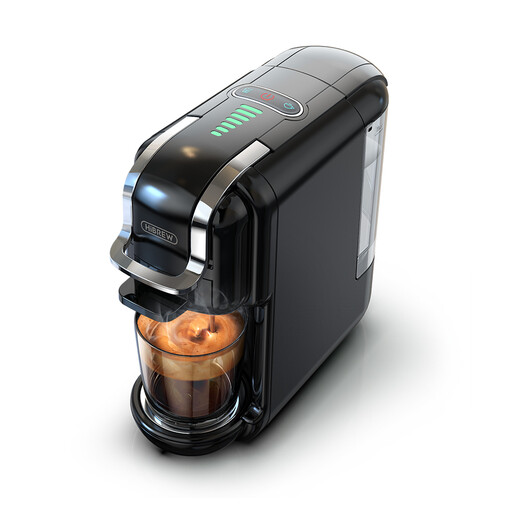
Why this product suits this profile: According to the product description, this machine supports Nespresso, Dolce-Gusto, ESE pods, K-Cup capsules and ground coffee. This allows beginners to enjoy several preparation methods with just one coffee machine.
The compatibility information clearly identifies the supported systems. Before ordering, you should still check that your preferred capsules match the product page.
20-bar pump, 600-ml water tank and hot and cold preparation, according to the manufacturer’s specifications.
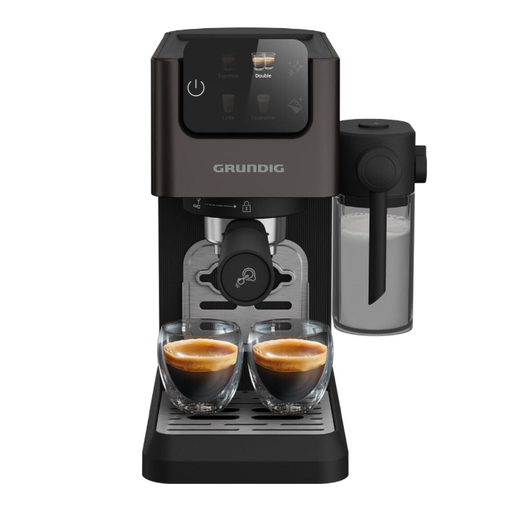
Why this product suits this profile: This semi-automatic machine combines a portafilter with an integrated milk container, colour touchscreen and two coffee outlets. It is designed for users who want to prepare espresso and milk-based drinks with greater convenience.
The milk system is specified as an integrated container. This removes the need to find a separate steam wand, although the milk components still need regular cleaning.
Up to 20 bar pump pressure, 1,1-litre water tank and touchscreen, according to the product specifications.
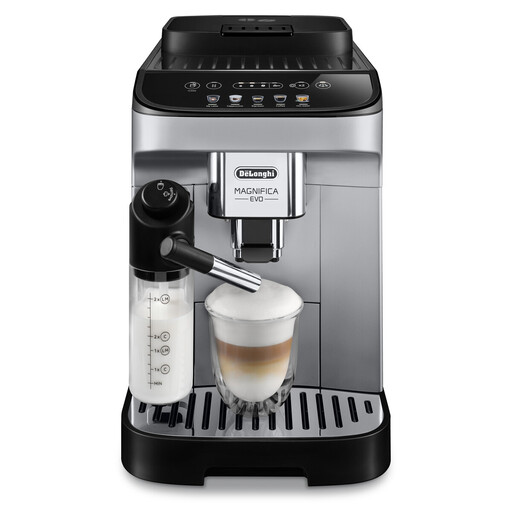
Why this product suits this profile: This fully automatic coffee machine grinds beans immediately before brewing and offers seven drinks programmes, according to the product specifications. It is well suited to households or small offices where coffee and milk-based drinks vary regularly.
The programmes and container capacities are clearly stated. Before buying, you should allow for the required worktop space and the cleaning involved with the integrated milk system.
1,8-litre water tank, 250-g bean hopper, 13 grind settings and two cups at once, according to the manufacturer’s specifications.
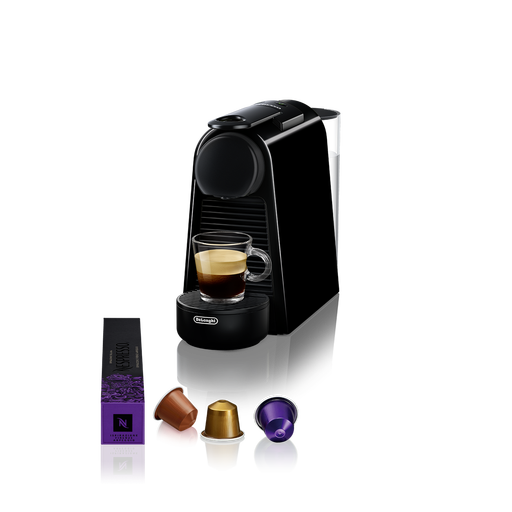
Why this product suits this profile: This capsule machine is designed for Nespresso Original capsules and is just 11 cm wide, according to the product specifications. It therefore fits easily into small kitchens or on a limited office worktop.
The restriction to Nespresso Original capsules is stated explicitly. This means you can check in advance whether your preferred range of capsules is suitable.
19-bar pump, two programmable cup sizes and automatic switch-off, according to the product description.
We have put together a complete, regularly updated list of products that fully meet these strict selection criteria and the safety regulations applicable in the EU.
For beginners, machines with clear controls, a removable water tank and an easily accessible drip tray are a sensible choice. A capsule machine reduces the need for dosing and grinding. A portafilter machine, on the other hand, gives you more control over the type and quantity of coffee and the preparation process, but requires more careful handling.
The pump specification alone does not determine the quality of the drink. Models with 15 to 20 bar are common in the range. You should also consider temperature control, filter size, pre-infusion and whether the coffee volume can be adjusted. With a 20-bar espresso machine, the figure should be understood as a technical pump specification rather than a guarantee of quality on its own.
In addition to the purchase price, you will need to budget for coffee, capsules or ESE pods, descaler and, where applicable, milk-system cleaner. Capsules offer easy portion control, but can cost more per drink. Ground coffee and beans usually provide a more flexible choice. When calculating the total cost, you should also factor in water consumption, filters and regular cleaning.