
Lieferung heute & morgen

Qualitätsgarantie

Willkommens-Angebote freischalten: KOSTENLOSE Lieferung | Bis zu 80 % RABATT | Kostenlose 30-Tage-JoyPlus-Testphase
App herunterladen
An espresso machine for home should reliably make espresso, cappuccino or latte without your kitchen being permanently cluttered with accessories and cleaning tasks. However, there are clear differences between a portafilter machine, semi-automatic espresso machine, bean-to-cup machine and a moka pot. If you only focus on a high bar rating or a shiny casing, you could end up buying something that doesn't suit your habits.
A 20-bar espresso machine is often advertised with particularly powerful extraction. The figure primarily describes the maximum possible pump pressure, not automatically the pressure that reaches the coffee grounds during every extraction. Grind size, dosage, even tamping, water temperature and the freshness of the coffee all influence the result.
A model with 15 or 19 bar can therefore be perfectly adequate for its intended use. What matters is whether the machine controls the pressure and whether the brewing process can be operated in a comprehensible way.
An espresso machine with a milk frother or a coffee machine with a steam wand offers more possibilities, but it does require a bit of practice. The steam wand must be wiped down and briefly flushed through after every use. Otherwise, milk residue can dry out in the wand area.
If you only drink cappuccino occasionally, a manual steam wand gives you flexibility. For several milk-based drinks a day, a bean-to-cup machine with an integrated milk system can be more convenient. In that case, you should check whether the milk-carrying parts can be completely removed and cleaned.
A compact espresso machine saves counter space, but still needs room for the portafilter, the cup and access to the water tank. With models that have a rear-mounted tank, you should also check whether the appliance can be easily refilled under a wall cabinet.
Before buying, also consider the drip tray, filter basket and steam wand as regular cleaning points. Removable parts make maintenance much easier.
With a portafilter machine, ground coffee is filled into a portafilter and manually compressed. This allows you to influence the amount and grind size, but requires a certain routine. A semi-automatic espresso machine with single and double shot options is interesting for users who want to control the process themselves.
A bean-to-cup machine grinds the beans, doses the coffee grounds and brews at the touch of a button. The De’Longhi Magnifica S, for example, features an integrated conical burr grinder with 13 settings, a bean container for 250 g and a 1.8 l water tank. An electric filter coffee machine, on the other hand, is designed for larger quantities of classic filter coffee and not for typical espresso from a portafilter.
The capacity should match the number of people and the choice of drinks. A tank with 0.9 to 1.2 l is often suitable for single households, while larger tanks need refilling less often. However, more volume also means more space required and a higher weight.
The Xiaomi BHR9798EU is described with a width of 14 cm, a 0.9 l tank and functions for single and double shots. For the Philips PSA3218/01, a 2.5 l water tank, a 250 g bean container and an integrated grinder are specified. Such data helps with selection, but doesn't replace checking the actual external dimensions.
For operation in the UK, the mains voltage and frequency must match the local power supply. For the electrical appliances mentioned here, 220–240 V and 50 Hz are specified depending on the model. Also look for an understandable instruction manual, manufacturer or importer details within the EU, and the required markings on the product and packaging.
Practical features include a removable water tank, a detachable drip tray and rinseable filter parts. Stainless steel on the casing or portafilter can make cleaning easier, but is not a sole indicator of quality. A moka pot doesn't need electricity, but must be suitable for your hob: the Bialetti Moka Express is not intended for induction hobs according to the product information.
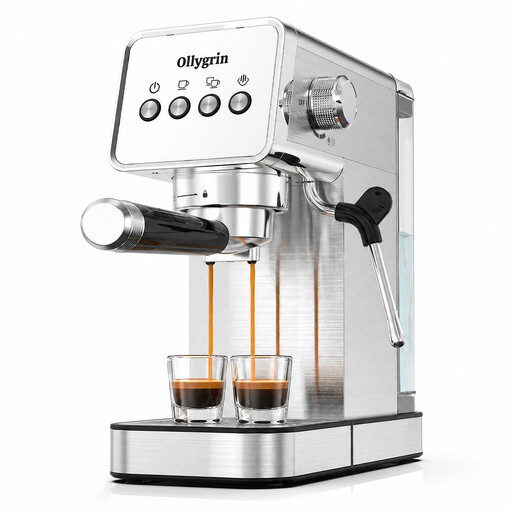
Why this product fits the profile: This portafilter machine combines manual espresso preparation with a steam wand and is aimed at households wanting to try making espresso at home.
The removable 1.2-litre water tank and detachable drip tray keep the main cleaning steps manageable. The 20-bar figure should still not be assessed in isolation.
20-bar pump, steam wand, removable water tank and stainless steel casing according to the product description.
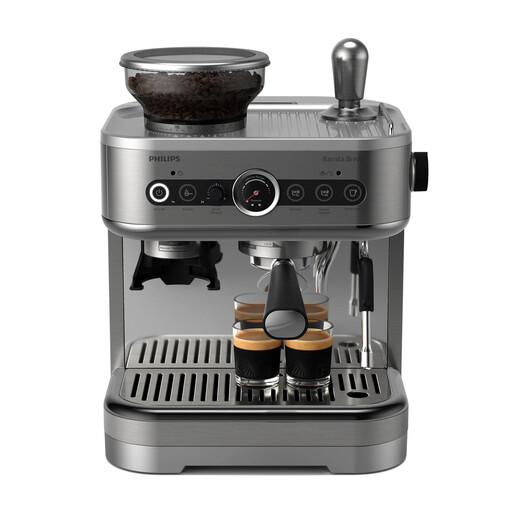
Why this product fits the profile: This model is aimed at users who want to grind beans fresh, choose different drinks and make use of more adjustment options.
The selection is not based solely on pump pressure: 15 bar, five grind settings, three temperature levels and a pressure gauge are specified.
Integrated conical burr grinder, 2.5-litre water tank, milk frother and removable parts that are reportedly dishwasher-safe.
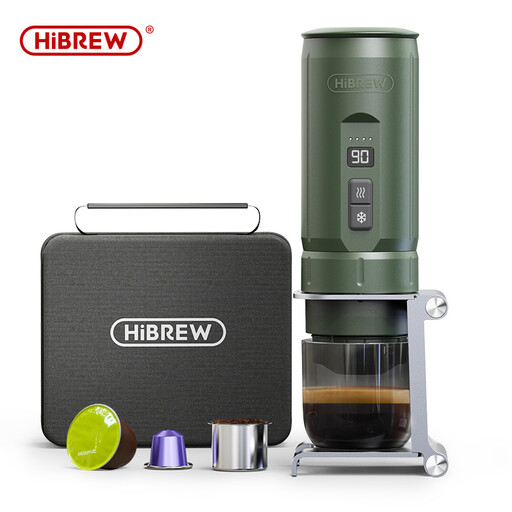
Why this product fits the profile: For camping, travel, the office or small kitchens, the handheld design with a battery is a flexible alternative to a stationary electric coffee machine.
The clearly specified water volumes of 50, 75 and 100 ml help with single servings. For longer use on the go, an additional original battery should be planned for.
20-bar pump, digital display, programmable settings, 7,500 mAh battery and 50/75/100 ml markings.
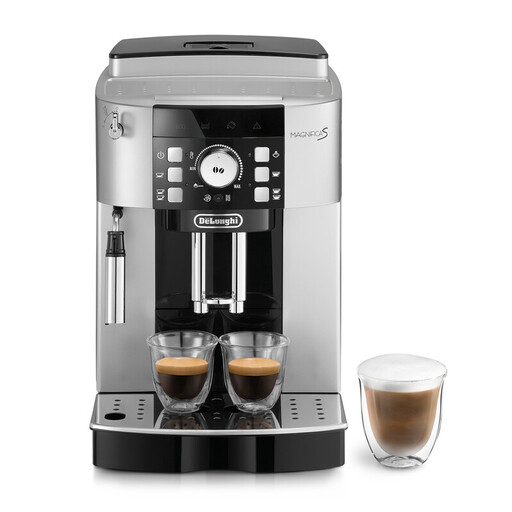
Why this product fits the profile: If you regularly make coffee and espresso but don't want to grind beans and tamp manually, you get an automated process.
The specifications mention concrete maintenance features: removable brewing unit, programmable water hardness and direct access to the drink selection.
1.8-litre water tank, 250 g bean container, 13-step grinder and integrated milk frother according to the product description.
We have put together a complete, regularly updated list of products that fully meet these strict selection criteria and the safety regulations applicable in the EU.
In addition to electricity consumption, there are costs for coffee beans, water filters, descaling agent and possibly cleaning tablets. A portafilter machine usually requires fewer automatic cleaning components, but demands more manual work. With a bean-to-cup machine, maintenance programmes and special cleaning products may be added.
For beginners, a model with clear single and double shot buttons, a removable water tank and an easily accessible drip tray makes sense. A semi-automatic espresso machine offers more control, while a bean-to-cup machine simplifies the process more. If you only drink coffee occasionally, you could also consider a moka pot or a compact filter coffee machine.
The lifespan depends on frequency of use, water hardness, descaling and proper cleaning. The water tank, seals, portafilter and steam wand are typical wear areas. Regular rinsing, emptying the drip tray and maintenance according to the manufacturer's instructions help to keep the machine functioning well in daily use.