
Lieferung heute & morgen

Qualitätsgarantie

Willkommens-Angebote freischalten: KOSTENLOSE Lieferung | Bis zu 80 % RABATT | Kostenlose 30-Tage-JoyPlus-Testphase
App herunterladen
An espresso machine for home use should prepare coffee reliably, take up little space and suit your daily routine. However, there are clear differences between capsule machines, portafilter machines, bean-to-cup coffee machines and portable espresso machines. A high bar rating alone says little about how convenient, flexible and easy to maintain a machine really is.
As a Joybuy Product Recommendation Officer, I filter the most important purchasing criteria from the product details. This makes it easier to identify which features are genuinely relevant in a British household and which marketing claims deserve closer examination.
Figures such as 15-bar espresso machine or 20-bar espresso machine generally refer to the pump’s maximum pressure. Grind size, coffee quantity, tamping pressure, water temperature and extraction time also play a role in preparing coffee. A 20-bar machine is therefore not automatically a better choice than a 15-bar model.
It is also important to check whether the bar rating refers to the pump pressure or the pressure during extraction. Buyers should therefore consider the complete specification rather than comparing just one figure.
Capsules and pods are not all the same. For example, a machine may be suitable for specific capsule types, ESE pods or ground coffee without accepting every system available on the market. If you want to keep your options open, check carefully before buying whether the format you want is supported.
A machine that is compatible with capsules and ground coffee can be practical for households with changing preferences. With multi-system machines, it is worth checking the included inserts and the manufacturer’s specifications.
An espresso machine with grinder combines the bean hopper, grinder and brewing unit in a single appliance. This is convenient and reduces the number of additional kitchen appliances needed. At the same time, the grinder, bean hopper, drip tray and brewing unit must be cleaned regularly. With a bean-to-cup coffee machine, the appliance handles many of the preparation steps, but it still requires consistent cleaning and descaling.
A portafilter machine is aimed at users who want to control the grind size, dosage and tamping pressure themselves. It offers greater control but requires some practice. A capsule machine works more quickly and involves less preparation, but ties you to compatible capsules.
With a semi-automatic machine, check whether it has a steam wand. A coffee machine with milk frother is suitable for cappuccinos or lattes, but the milk system or steam wand must be cleaned after every use.
An espresso machine with water tank should be positioned so that the tank can be removed without moving the appliance. A small tank may be sufficient for one person, while several cups a day make a larger container more practical. The capacity stated in the product details should be compared with the available space and your intended usage.
For small kitchens, offices or student flats, the external dimensions are crucial. A compact coffee machine needs not only a small width but also enough clearance for the water tank, lid and cups.
Removable drip trays and water tanks make daily cleaning easier. Automatic rinsing or cleaning programmes can be helpful with bean-to-cup machines, but they do not replace emptying the coffee-grounds container and drip tray. You should also check the mains voltage and intended place of use before buying. Appliances designed for indoor use are not intended for damp outdoor environments.
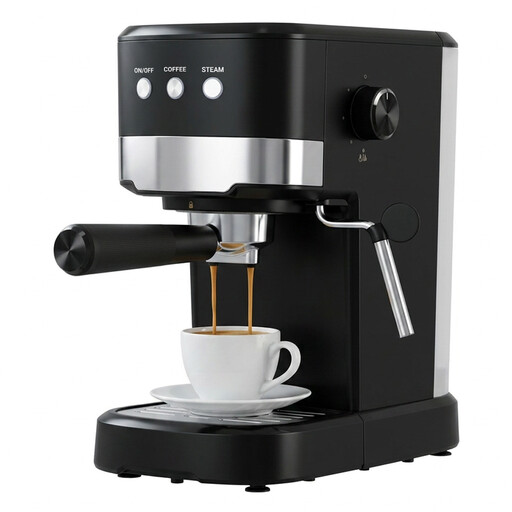
Why this product suits the profile: The semi-automatic design prepares espresso from ground coffee and includes a steam wand for milk-based drinks. According to the product details, the visible water tank holds 1.2 litres.
The choice is based not only on the bar rating, but also takes the water tank, steam function and removable drip tray into account.
15-bar pump rating, steam wand, visible 1.2-litre tank and safety features according to the product description.
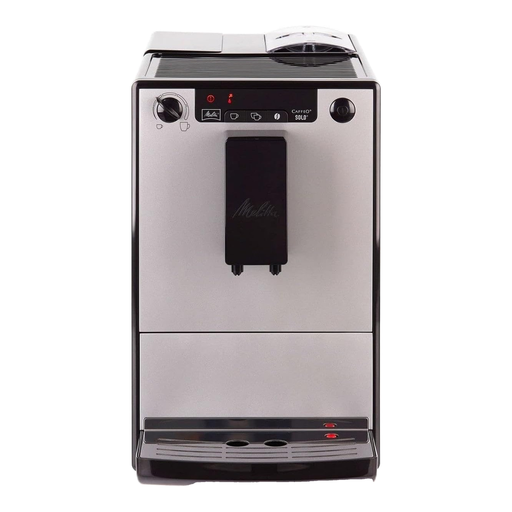
Why this product suits the profile: The bean-to-cup machine grinds beans immediately before preparation and offers three intensity levels. According to the product details, its compact design measures 19 × 25 × 34 centimetres.
The details on the grinder, water-hardness setting and automatic cleaning make it easier to assess the maintenance requirements before buying.
Integrated grinder, 1.2-litre water tank, height-adjustable outlet and programmable water hardness.
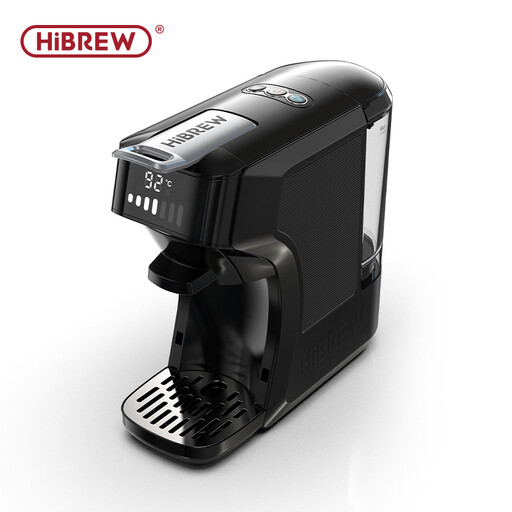
Why this product suits the profile: According to its specifications, the appliance is designed for several capsule types, ESE pods and ground coffee. With a 600-millilitre tank and dimensions of 30 × 14.3 × 28 centimetres, it is suitable for smaller worktops.
The specific list of supported systems reduces the risk of buying a supposedly universal capsule machine without the right inserts.
20-bar pump rating, hot and cold modes, several pod formats and use with ground coffee.
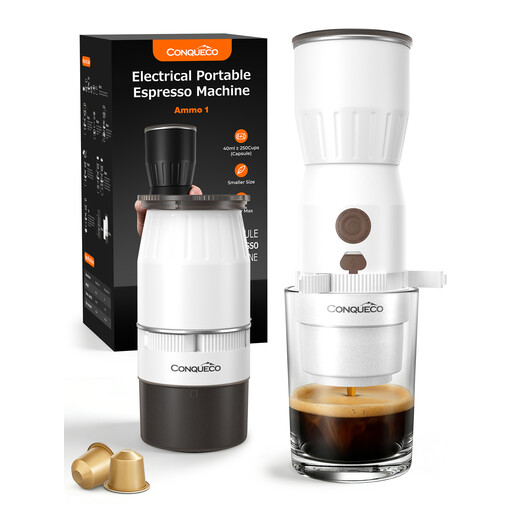
Why this product suits the profile: The portable espresso machine is designed for use on the move and, according to its product name, prepares a 160-millilitre portion. It supports ground coffee and NS capsules.
The “No Self-heating” designation indicates that the appliance should not be treated as a self-heating machine. Check the water and power supply before use.
Compact format, 2-in-1 use for ground coffee and NS capsules, plus a stated extraction time of 60 seconds.
We have put together a complete, regularly updated list of products that fully meet these strict selection criteria and the safety regulations applicable in the EU.
For limited worktop space, a compact coffee machine, capsule machine or small bean-to-cup machine may be suitable. It is not just the width that matters, but also access to the water tank and the clearance from wall cupboards. Before buying, compare the dimensions of the available space with the product dimensions.
Running costs include coffee, capsules or beans, water, descaler and, where applicable, replacement filters. Capsules simplify portioning, but the cost per cup may differ from that of ground coffee or beans. With an espresso machine with grinder, you also need to factor in cleaning and maintaining the grinder.
The lifespan depends on how often it is used, water quality, cleaning and proper operation. The water tank and drip tray should be rinsed regularly, milk residue removed immediately and descaling intervals followed according to the manufacturer’s instructions. If you notice visible damage, unusual noises or leaking water, disconnect the appliance from the mains and stop using it.