
Lieferung heute & morgen

Qualitätsgarantie

Willkommens-Angebote freischalten: KOSTENLOSE Lieferung | Bis zu 80 % RABATT | Kostenlose 30-Tage-JoyPlus-Testphase
App herunterladen
An espresso machine can be ready to use within minutes in the morning – or create more work in everyday life than expected. The issue is often not the taste of the coffee, but an unsuitable design, a lack of compatibility or unclear technical specifications. Checking a few key points before buying can help you avoid unnecessary follow-up costs and disappointing purchases.
A 20-bar espresso machine may initially sound particularly powerful. However, in many product descriptions, this figure refers to the pump’s maximum pressure. The actual extraction also depends on the grind size, amount of coffee, tamping pressure, water temperature and filter design. A higher maximum value alone therefore does not guarantee a particular flavour result.
“Capsule machine” does not refer to one standardised system. Nespresso Original, Nespresso Vertuo, Dolce Gusto, K-Cup formats and ESE pods are not freely interchangeable. For example, a Nespresso-compatible coffee machine may be designed exclusively for the Original system. Before buying, the specific capsule system should be clearly stated in the product description.
A compact coffee machine takes up less worktop space, but even small appliances have water tanks, drip trays and brewing chambers that need to be cleaned regularly. With a portafilter machine, you also need to clean the filter, portafilter and steam wand. If you want to keep manual work to a minimum, a capsule machine or automatic espresso machine is often the better choice.
A capsule machine uses pre-portioned coffee and is generally simple to operate. However, it ties you to a particular capsule system and creates ongoing costs for capsules.
A portafilter machine uses ground coffee. It gives you greater control over the dose and preparation, but requires a suitable grinder, some practice and regular cleaning. Models such as the Ariete 1380 and Ariete Vintage 1389 also accept ESE pods. This is useful if you want to switch between freshly ground coffee and pre-portioned pods.
Multi-system appliances such as the HiBREW H1C combine different capsule types, ESE pods and ground coffee. Check carefully which adapters are actually included and whether the capsules you prefer are supported.
Short heat-up times are important for the office or a quick breakfast. According to the product specifications, the Nespresso Inissia, Pixie and Essenza Mini are ready to use after around 25 seconds. The Vertuo Pop is specified as having a heat-up time of 30 seconds.
An electric espresso machine for home use generally requires a suitable 220- to 240-volt socket in Germany. Portable models, on the other hand, may run on a battery, USB-C or 12 volts. With battery-powered appliances, it is important to know whether they can heat cold water or require preheated water. A camping espresso machine without its own heater should therefore not be treated as equivalent to a self-heating model.
A larger tank means less frequent refilling, but it often makes the machine bigger. According to the specifications, the Nespresso Essenza Mini has a 0.6-litre tank, while the Inissia and Pixie each have 0.7 litres. The Ariete 1380 has a 1.1-litre tank, making it more suitable for preparing several cups in succession.
Before buying, check the width, depth and height, including the space needed to open the capsule lever. In a small kitchen, a slim machine may be more important than a large tank. For maintenance, removable parts, an easily accessible drip tray and clear descaling instructions are all useful factors to consider.
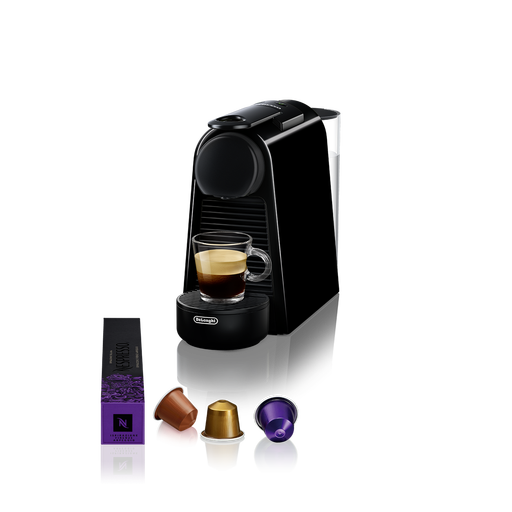
Why this product suits this profile: This compact capsule machine is designed for espresso and lungo and, according to the specifications, heats up in around 25 seconds.
The supported system is specifically stated as Nespresso Original. This allows you to check the capsule choice carefully before buying.
19-bar pump, 0.6-litre water tank, two programmable buttons and automatic switch-off.
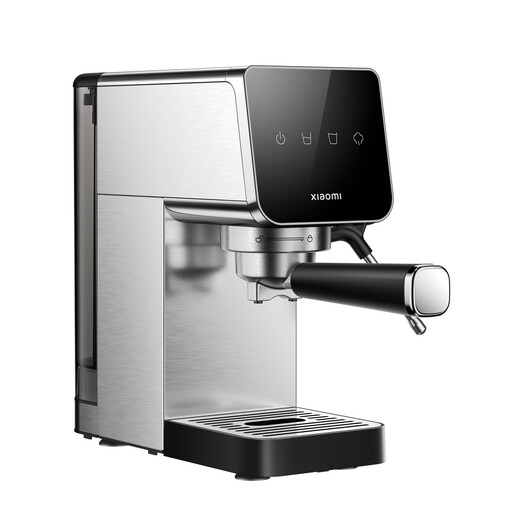
Why this product suits this profile: The semi-automatic design is aimed at users who want to control the dose, single or double shot and milk frothing themselves.
As well as the pump pressure, the product specifications list temperature control, a pre-brewing function and a steam wand. This makes it easier to assess the features objectively.
20-bar pump, 0.9-litre tank, pre-brewing function, single and double shots, plus a steam wand.
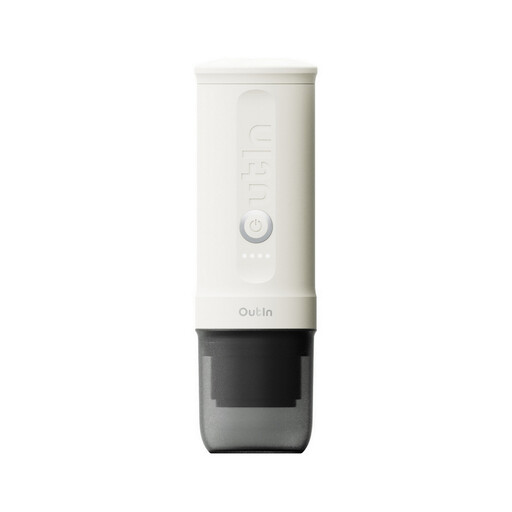
Why this product suits this profile: This portable espresso machine is designed for commuters, travelling and camping, and can be used with a battery and USB-C charging.
The specifications distinguish between cold and preheated water. With cold water, the heating time is around 200 seconds; this limitation should be factored into any plans to use it while travelling.
20-bar pump, integrated heater, battery, USB-C and compatibility with ground coffee and Nespresso Original.
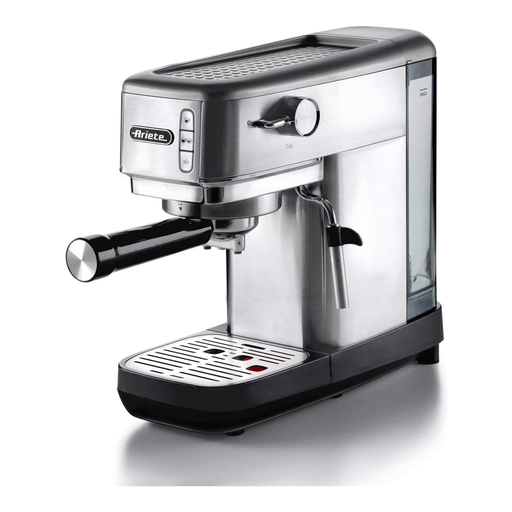
Why this product suits this profile: The appliance accepts ground coffee and ESE pods and features a Maxi-Cappuccino nozzle and a hot-water outlet.
The preparation methods are clearly specified. You therefore do not have to rely on a vague description such as “multifunctional”.
1.1-litre water tank, 1- or 2-cup filter, ESE pod support, steam wand and automatic switch-off after 25 minutes.
We have compiled a complete, regularly updated list of products that fully meet these strict selection criteria and the safety regulations applicable in the EU.
The lifespan depends on the design, water quality, frequency of use and maintenance. Regular descaling according to the manufacturer’s instructions, emptying the drip tray and cleaning the filter or capsule chamber can help reduce build-up and operational problems. Without information from the manufacturer, it is not possible to provide a reliable specific lifespan.
If worktop space is limited, particularly slim capsule machines such as the Nespresso Essenza Mini or Inissia are worth considering. If you prefer ground coffee and milk-based drinks, check the dimensions of a compact portafilter machine, including the steam wand and access to the water tank.
In addition to the purchase price, you need to factor in coffee, capsules or ESE pods, electricity, water filters and descaling products. Capsules make dosing easier, but regular use can result in higher running costs. With ground-coffee machines, ongoing costs depend more heavily on the type of coffee and the dose used.