
Lieferung heute & morgen

Qualitätsgarantie

Willkommens-Angebote freischalten: KOSTENLOSE Lieferung | Bis zu 80 % RABATT | Kostenlose 30-Tage-JoyPlus-Testphase
App herunterladen
An espresso machine should reliably prepare espresso, cappuccino or latte macchiato, depending on your household’s preferences. The choice ranges from portafilter machines and bean-to-cup coffee machines to capsule machines. In everyday use, differences in operation, coffee compatibility, water tank capacity and cleaning are more significant than eye-catching casing colours or advertising claims.
An espresso machine with 15 bar, espresso machine with 19 bar or espresso machine with 20 bar generally refers to the pump’s maximum pressure. For practical preparation, grind size, coffee quantity, tamping pressure, water temperature and extraction time also matter. A higher number alone therefore does not guarantee better results.
A semi-automatic espresso machine often works with ground coffee, while some models also accept E.S.E. pods or capsules. A bean-to-cup machine normally uses coffee beans and grinds them internally. Capsule machines, on the other hand, are tied to the relevant capsule system. Before buying, make sure you know whether you can continue using your existing coffee and what ongoing costs will be involved.
An espresso machine with a milk frother or steam wand expands your choice of drinks, but requires additional care. Milk residue must be removed after use. Automatic milk systems offer greater convenience, but may consist of several separate parts. Removable drip trays, water tanks and brewing units make regular cleaning easier.
For a small household, a tank with a capacity of 0.6 to 1.1 litres may be sufficient. In an office or when preparing several milky coffee drinks one after another, models with capacities of 1.7 to 2.5 litres are more practical. As well as the width, check the depth, the height beneath wall cabinets and the space needed to remove the water tank.
An espresso machine with a steam wand requires you to froth the milk manually. An integrated milk container takes care of more of the process, but must be rinsed thoroughly after every use. If you only drink cappuccino occasionally, a steam wand can offer greater flexibility with fewer permanently installed components.
Look for a removable drip tray, an accessible filter area and clear descaling instructions. Appliances operating at 220–240 volts should be connected to a suitable, properly earthed socket. The brewing unit, steam wand and coffee outlet may become hot during and after operation. The information in the relevant instruction manual takes precedence.
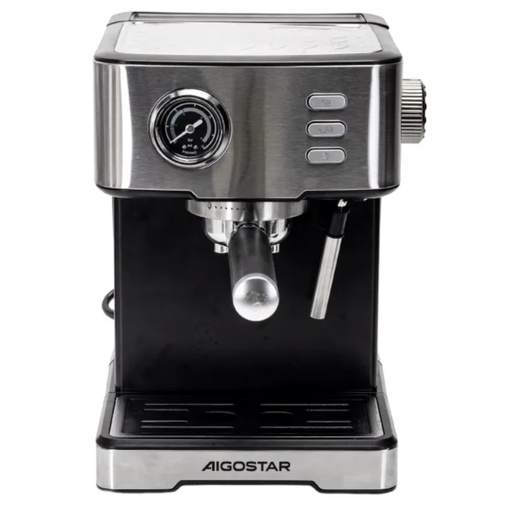
Why this product suits this profile: This model works with ground coffee and compatible capsules. Its 1.7-litre water tank and choice of single or double servings make it suitable for beginners at home or in a small office.
Coffee compatibility is clearly stated before purchase. The transparent, removable tank makes the water level easy to see.
1400 W, 1.7-litre tank, steam and hot-water function, plus a removable drip tray.
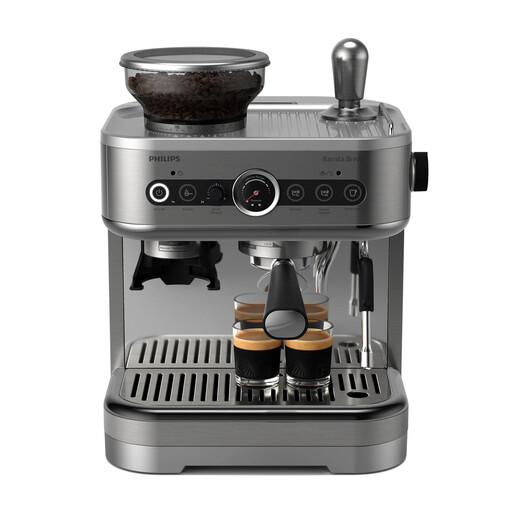
Why this product suits this profile: If you want to grind beans fresh and follow the brewing process, you get an integrated conical metal grinder with five settings, a 58 mm portafilter and a pressure gauge.
The pressure gauge helps you monitor extraction. PID temperature control and three temperature settings are specific technical details, rather than relying solely on a bar rating.
2.5-litre water tank, 250 g bean hopper, steam wand and removable dishwasher-safe parts according to the product specifications.
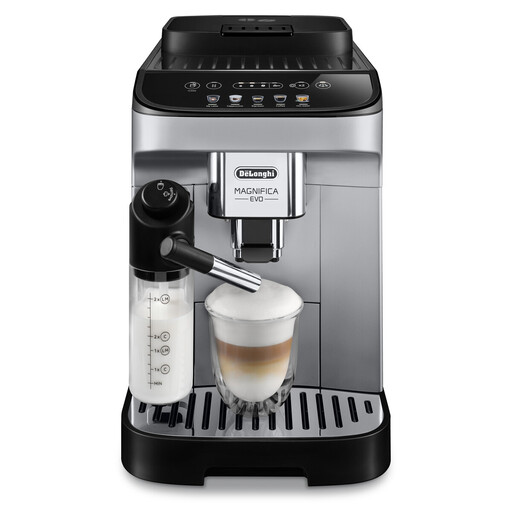
Why this product suits this profile: For households that regularly enjoy espresso and milk-based drinks, this bean-to-cup machine offers seven direct-selection recipes, a grinder and an automatic LatteCrema milk system.
The available drinks are clearly specified. Removable, dishwasher-safe parts and automatic cleaning of the milk system make maintenance easier.
1.8-litre water tank, 250 g bean hopper, two espressos at once and adjustable coffee strength.
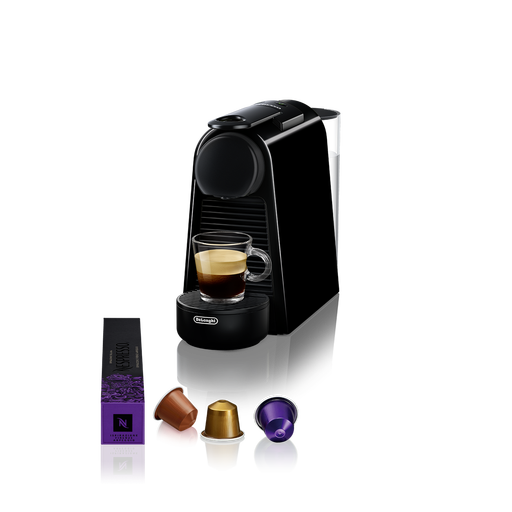
Why this product suits this profile: Its compact design, 0.6-litre tank and two programmable buttons make it ideal for individuals, small kitchens and users who want to keep preparation steps to a minimum.
The capsule system is clearly specified: it uses Nespresso Original-compatible capsules. This allows you to plan for ongoing costs and restrictions before buying.
19 bar pump pressure according to the specification, around 25 seconds’ heating time, automatic volume control and Eco shut-off.
We have put together a complete, regularly updated list of products that fully meet these strict selection criteria and the safety regulations applicable in the EU.
This usually refers to the pump’s maximum pressure. Models with 15 to 20 bar are widely available. However, grind size, dosage, temperature and extraction time also have a decisive effect on what ends up in your cup. Compare the complete brewing concept rather than focusing solely on the bar rating.
For manual preparation, a machine with a steam wand is a good choice. It allows you to froth milk yourself, although it takes some practice. A bean-to-cup machine with an integrated milk system handles more steps automatically and is designed to prepare several drink varieties at the touch of a button.
Service life depends on how intensively the machine is used, water quality, descaling intervals and cleaning. Empty the drip tray regularly, rinse the filters and milk components after use, and follow the manufacturer’s maintenance instructions. If you live in a hard-water area, following a suitable descaling schedule can be particularly important.