Class leaders offering barista practice
If participants will be making espresso and frothing milk themselves, a steam wand, easy-to-follow steps and plenty of preparation space are important. Gaggia and Sage offer models with manual steam wands.


For a weekend cookery class making cinnamon cappuccinos, choose a portafilter machine with a steam wand if participants are going to practise making espresso and frothing milk themselves. If the priority is serving several drinks with minimal manual steps, a bean-to-cup machine with a milk programme may be a better fit. Before buying, check the space available for the machine and accessories, the cleaning routine and the number of drinks you need to make in succession. Manufacturer details about programmes or filters do not prove how many people a machine can serve during a class.
If participants will be making espresso and frothing milk themselves, a steam wand, easy-to-follow steps and plenty of preparation space are important. Gaggia and Sage offer models with manual steam wands.
If you want to serve cappuccinos with as few manual steps as possible, an automatic milk programme could be a good fit. Check the drinks sequence for your particular class: having a programme alone does not prove how many people it can serve.
If space is limited, consider not only the machine’s dimensions but also the room needed for cups, milk jugs and operation. A slim machine does not automatically mean the whole cappuccino-making area takes up very little space.
A good fit if: Participants are going to practise making espresso and frothing milk themselves.
What to weigh up: Grinding, dosing, frothing and cleaning all remain separate steps. Check whether the machine has an integrated grinder or whether you’ll need to plan for a separate one.
A good fit if: Serving cappuccinos matters more than giving participants hands-on practice in manual milk frothing.
What to weigh up: The milk system still needs cleaning, and participants won’t practise manual frothing with this type of machine.
| Buying priority | What to look for when buying | Who is this especially important to? |
|---|---|---|
| Making several cappuccinos in a row | Check the number of participants, the time available for the class and the cleaning routine between milk drinks. Don’t infer how many cups a machine can make from its drinks programmes. | If I need to serve several cappuccinos in a limited amount of class time, I want to check the process for that particular group. Around 36% of consumers put serving several drinks first. |
| Practising milk frothing | Check that the specific model has a steam wand, and find out whether a grinder, filters and milk jug are available for the planned activity. | If participants are going to froth the milk themselves, I need a steam wand and time for the manual process. Around 29% of consumers have this as their main priority for the class. |
| Cleaning the milk system | Check which parts come into contact with milk, how easy they are to access and what the care instructions say for the specific model. | If there’s little time for cleaning after each session, I want to know the routine in advance. Around 21% of consumers put cleaning the milk system first. |
| Finding space for the machine and accessories | Consider the machine’s dimensions and the free space needed for jugs, cups, operation and, if required, a separate grinder. | If space on my class worktop is limited, I need room to prepare drinks as well as space for the machine. For around 14% of consumers, available worktop space comes first. |
De’Longhi gives the Dedica Style EC685.M EX:4 a width of 149 mm. This describes the machine itself, not the space needed for a grinder, milk jug and room to work.
Before buying, measure the usable worktop space, including room to operate the machine and store accessories.
Philips recommends cleaning the LatteGo milk system after every use.
Allow time for cleaning as part of the class, and check the care instructions for the specific model.
The pump and filter specifications for the Gaggia Classic E24 don’t measure how long it takes to froth milk or clean up between class sessions.
Decide how many cappuccinos you want to make and in what time, then assess the whole process rather than just one machine feature.
The Dedica Style EC685.M EX:4 is a slim manual model with a cappuccino system, suited to spaces where room for the machine is limited.
The Classic E24 is an example of a model for hands-on espresso and milk practice using a portafilter and steam wand.
The EP3347/90 bean-to-cup machine has a cappuccino programme with LatteGo. It’s an option when preparing drinks, rather than practising manual frothing, is the focus of the class.
The Barista Express SES870BSS4EEU1 combines an integrated grinder with a manual steam wand for practising espresso-making and milk frothing.
The MaraX PL62X is a manual option for classes where milk drinks are made regularly and there is enough space for a portafilter machine.
Joybuy options for making espresso and cappuccinos in a cookery class, with both manual and automatic approaches.
 No image available
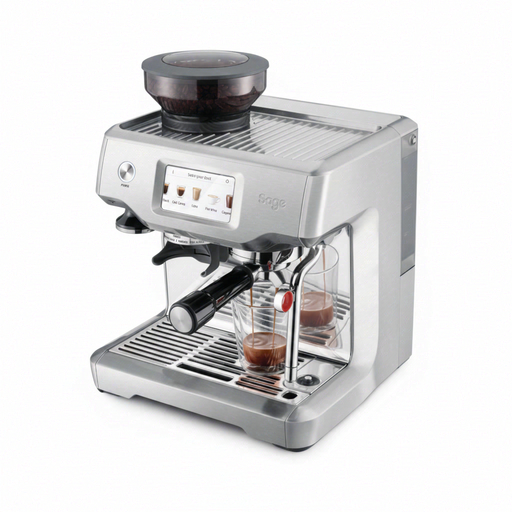
Automatic milk frothing could be a good fit if you want to keep manual frothing steps to a minimum during the class.
Integrated conical burr grinder; touchscreen; automatic microfoam function; 3-second heat-up time according to the product name.
 No image available
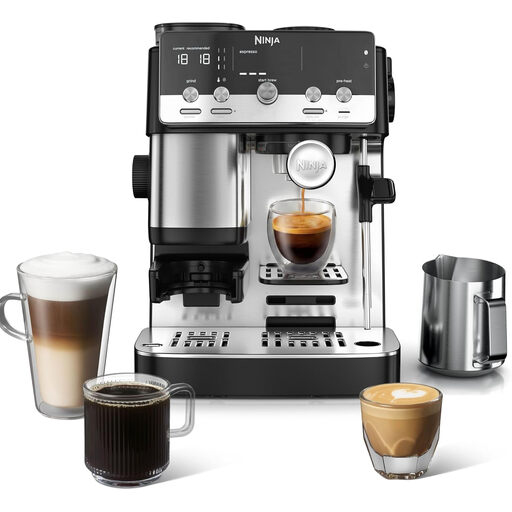
The manual milk frother adds a hands-on step to milk preparation.
Espresso and filter coffee machine; integrated grinder; manual milk frother.
 No image available
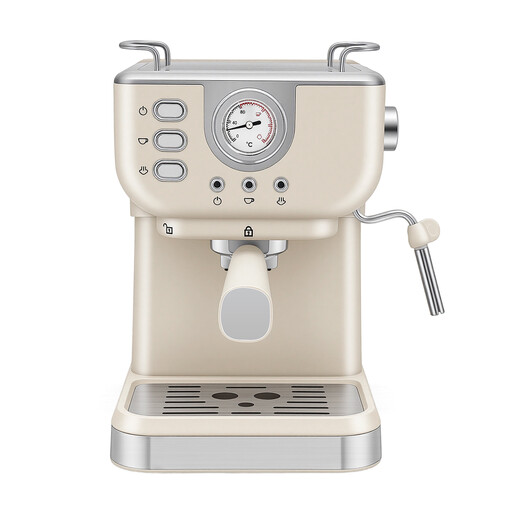
The stated milk-frothing function is relevant for making cappuccinos; check how it fits into the process for your planned class.
1,5-l water tank; temperature-controlled extraction at 197.6°F according to the product name; cup warmer; semi-automatic operation.
 No image available
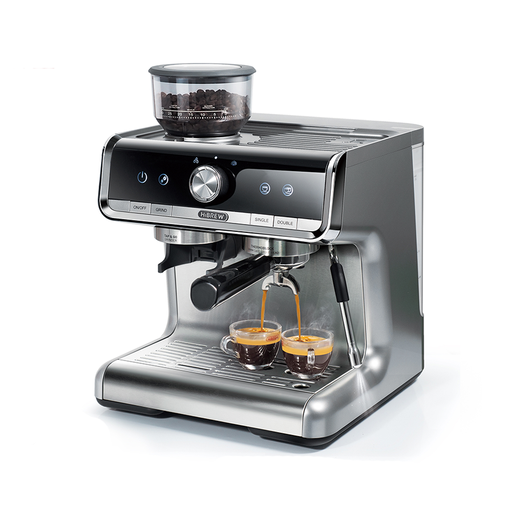
The steam wand provides a manual step for participants to practise frothing milk.
58-mm portafilter; 30 grind settings; steam wand; 19 bar according to the product name.
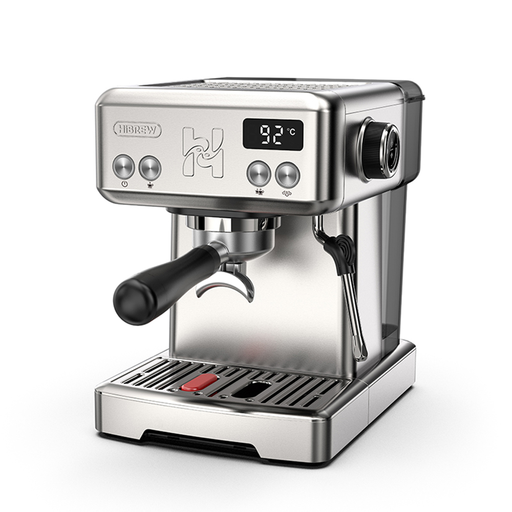 No image available
The steam wand could be useful for hands-on practice in manual milk frothing.
Adjustable brewing time and temperature; steam wand; automatic pressure release according to the product description.
Cinnamon is an ingredient in the drink, not a machine function specified here. For regular consumption of larger quantities, Germany’s Federal Institute for Risk Assessment recommends Ceylon cinnamon, which is low in coumarin, rather than cassia cinnamon. This is not a recommendation for any one cappuccino.
Follow the instructions for your specific machine. Philips recommends rinsing LatteGo after every use; Sage provides instructions for cleaning and flushing the steam wand on the Barista Express Impress. These methods do not automatically apply to other models.
No. For a consumer purchase in Germany, statutory warranty rights are a claim against the seller; a guarantee is an additional voluntary promise subject to its own terms. If you’re buying on behalf of a business, check the specific contract terms separately.
For mains-powered espresso machines whose rated voltage falls within its scope, the requirements of the EU Low Voltage Directive are relevant. For products covered by an EU rule requiring CE marking, the manufacturer declares conformity by applying the CE mark; it is not an independent quality mark. This does not prove that a particular product listing is compliant.