Convenience for one cup
You want to make your caramel latte in as few steps as possible, so you’re comparing machines with clearly listed milk programmes and checking how they’re cleaned afterwards.


A portafilter machine is a good fit if you want to make the espresso and milk yourself; a bean-to-cup or capsule machine with a suitable milk system takes more of the work off your hands. Check the drinks menu, how the milk system is cleaned and how much space the specific model needs. Stir caramel syrup into your cup after making the drink – you don’t need a dedicated caramel programme, as a recipe from Starbucks at Home also shows.
You want to make your caramel latte in as few steps as possible, so you’re comparing machines with clearly listed milk programmes and checking how they’re cleaned afterwards.
You want to prepare the espresso and milk for your cup yourself, and are happy to put in a few extra steps for more control.
You need a machine for a small kitchen, so you’re checking its dimensions and allowing space for the accessories you’ll need.
A good fit if: you want to prepare and control the espresso and milk for your cup yourself.
Bear in mind: Making the coffee is still a hands-on process; an automatic steam wand doesn’t turn a portafilter machine into a bean-to-cup machine.
A good fit if: you want to use beans and make a milk drink in just a few steps.
Bear in mind: Drinks menus vary: the De’Longhi Magnifica Start ECAM220.61.W EX:1 lists Latte Macchiato, while the Philips EP2331/10 lists Espresso and Cappuccino but doesn’t have a separate Latte Macchiato option.
A good fit if: you’d rather not grind and measure coffee, and you’re happy to use capsules.
Bear in mind: Capsules are an ongoing consumable, and the milk tank needs to be maintained. According to Nespresso Germany, the Nespresso Lattissima One has a 0.12 l capacity.
For a single cup, weigh up the preparation method, milk recipe, space needed and maintenance together.
| What you’re looking for | What to check before buying | Who it matters to |
|---|---|---|
| Fewer steps | Check the full model’s drinks menu and how milk is supplied. | If I’m only making one cup, I don’t want unnecessary steps for the coffee or milk. Around 33% of consumers put ease of use first. |
| Control over the espresso and milk | Check whether the steam wand is manual or automatic, and how the coffee is made. | If I want to adjust the espresso and milk myself, I’m happy to put in a few extra steps. Around 27% of consumers prioritise making their drink themselves. |
| Space for the machine and accessories | Compare the full dimensions and allow room for filling and cleaning. | In a small kitchen, I also need to consider accessories and space to use the machine. Around 20% of consumers say available space is their main concern. |
| Maintenance and consumables | Check the milk system’s care instructions and the capsules or beans you’ll need. | After making a cup, I want to keep cleaning and ongoing consumables in mind. Around 20% of consumers focus mainly on maintenance and ongoing effort. |
The Philips EP2331/10 lists Cappuccino, while the De’Longhi ECAM220.61.W EX:1 specifically lists Latte Macchiato. The drinks menus aren’t the same.
Check the drinks menu for the full model number and look for the programme you want, rather than relying on the “milk drinks” category alone.
De’Longhi says the Magnifica Start needs to be cleaned after every milk drink.
As well as checking the drink buttons, compare the care instructions for the specific milk system.
The full model name ECAM220.61.W EX:1 differs from ECAM220.61.W. The absence of a version suffix doesn’t prove that the two models are identical.
Check the full model number and the features that matter to you before applying details from another version.
The models mentioned range from a slim portafilter machine with a manual milk system to a bean-to-cup machine with a dedicated Latte Macchiato programme.
The Bambino Plus SES500BSS4EEU1 combines a portafilter machine with an automatic steam wand.
The LatteGo 2300 EP2331/10 bean-to-cup machine has a built-in grinder and an automatic LatteGo milk system.
The Lattissima One Silky White combines capsule brewing with a fresh milk system and a dedicated Latte Macchiato drink.
This selection includes bean-to-cup and portafilter machines with milk functions for making espresso and milk drinks.
 No image available
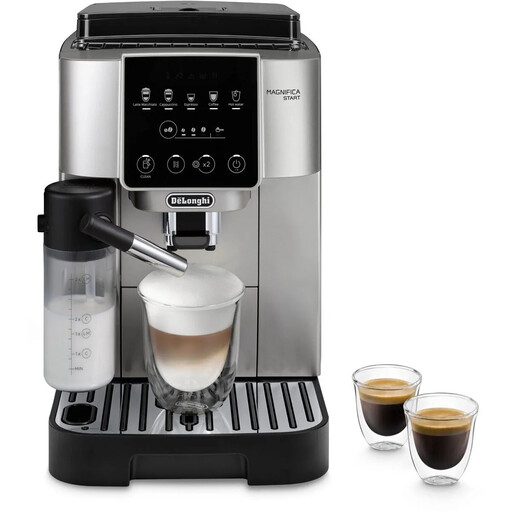
An option if you want to make Espresso and Latte Macchiato using the drinks menu.
LatteCrema Hot Milk System; 13-Level Conical Grinder; 1,8-l water tank; 250-g bean hopper; 5 One-Touch drinks; 1450 W; 15 Bar.
 No image available
For anyone who wants to make espresso with ground coffee and froth milk themselves using a steam wand.
20Bar; pressure gauge; steam wand; single or double shot; removable 1.1-litre water tank.
 No image available
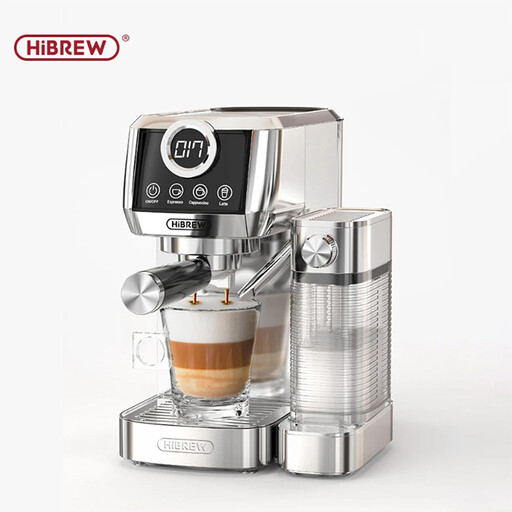
An option if you want to use ground coffee and also have an automatic milk-frothing function.
Semi-automatic espresso machine; automatic milk frothing; for ground coffee; 20Bar.
 No image available
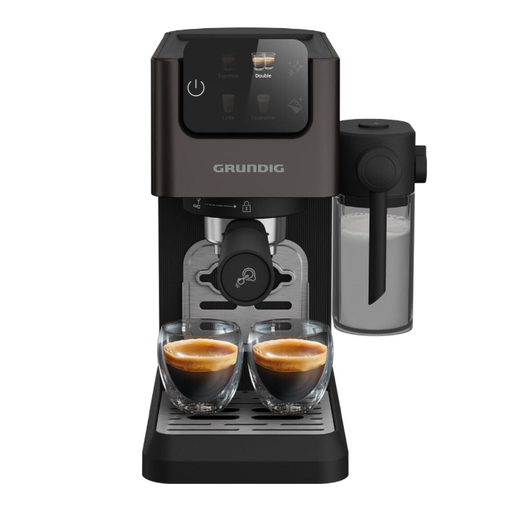
For anyone considering a portafilter machine with an integrated milk container and automatic frothing.
Integrated milk container; semi-automatic espresso machine; 1628 W; 20 Bar; double spout; touchscreen; Dark Inox/Black.
You fill the portafilter with ground coffee; the instructions say to rinse the milk container parts after brewing.
 No image available
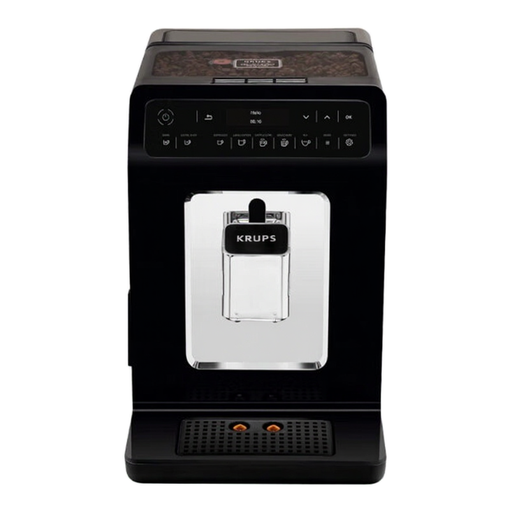
An option if you want to make Espresso and a milk drink using a bean-to-cup machine.
One-Touch Cappuccino; 11 Specialty Drinks.
According to the product listing, glasses taller than 110 mm won’t fit under the spout.
No, you don’t need a caramel programme for this drink. Make the espresso and milk, then stir caramel syrup into the cup; a recipe from Starbucks at Home suggests adding the syrup to the espresso in the cup. Don’t put syrup in the water tank or milk system.
Follow the instructions for your specific model. For the Magnifica Start, De’Longhi describes using the CLEAN function after every milk drink, as well as giving the milk carafe a thorough clean regularly. These instructions apply to the system mentioned, not necessarily to all machines.
When you buy from a business seller in the EU, you’re generally entitled to a legal guarantee of at least two years from the date you receive the goods, provided by the seller. Your Europe distinguishes this legal guarantee from a voluntary manufacturer’s warranty.
The Bundesnetzagentur lists several checks carried out when monitoring electrical household products on the market, including the CE mark, identifiable product and manufacturer details, and German instructions with the required warnings. These checks don’t prove that an individual product listing has already been assessed.