Cappuccino at the touch of a button
You want to make espresso and milk froth regularly with the same machine, without having to froth the milk yourself.


For a cinnamon cappuccino from a single coffee station, a bean-to-cup machine with a cappuccino programme is a good choice if you want to make espresso and milk drinks conveniently at the touch of a button. A portafilter machine with a steam wand gives you more steps to do yourself, while a capsule machine with a built-in frother is only suitable if you’re happy with its capsule system. Philips lists a cappuccino drink for the EP3347/90, while De’Longhi describes a manual steam wand for the EC890.M, so operation varies by model. Cinnamon is added to the drink as an ingredient; you don’t need a dedicated machine programme to choose the right one. Also consider cleaning the parts that come into contact with milk and the space you’ll need for the machine.
You want to make espresso and milk froth regularly with the same machine, without having to froth the milk yourself.
You want to control the texture of the milk and are happy to manage separate steps with a portafilter machine.
You have limited worktop space or only make cappuccino occasionally, so you’re comparing slim portafilter machines with a capsule machine that has a built-in milk function.
A good choice if: You make cappuccino often and want espresso and milk froth at the touch of a button. Philips lists a cappuccino drink for the EP3347/90; Siemens also lists one-touch cappuccino for the TE657F03DE.
Bear in mind: A milk programme doesn’t remove the need for cleaning. Philips says LatteGo consists of two detachable parts; Siemens lists the TE657F03DE dimensions as 385 × 281 × 468 mm (H × W × D).
A good choice if: You want to control how you make your espresso and milk. De’Longhi describes a manual steam wand for the EC890.M; Sage lists automatic milk temperature and texture settings for the Bambino Plus.
Bear in mind: Even an automatic steam wand doesn’t make espresso for you automatically: the Bambino Plus is still a portafilter machine, and preparing the milk is a separate step.
A good choice if: You want to use a capsule system and froth the milk directly in your cup. Krups describes this feature for the Nespresso Atelier XN8908.
Bear in mind: Check that the capsule system suits the way you make coffee; a built-in frother still needs cleaning.
| Priority | What to check before buying | Who it matters most to |
|---|---|---|
| Espresso and milk from one coffee station | Check the exact model to see whether it has a cappuccino programme with an integrated milk system or a steam wand. | I want to make cappuccino regularly with the same machine and don’t want a separate frothing station. Around 36% of consumers prioritise this all-in-one setup. |
| Controlling the texture of the milk | Compare manual and automatic steam wands, along with the settings listed for the specific model. | If I want to control the texture of the milk myself, I’m happy to prepare the espresso and milk in separate steps. Around 29% of consumers have this as their main priority. |
| Space needed for the coffee station | Check the machine’s dimensions and allow space for filling, frothing and cleaning. | When space is limited, the machine needs to fit alongside your cup and room to work; I may be willing to do a few extra steps to make that work. Around 21% of consumers prioritise a space-saving setup. |
| Cleaning and consumables | Check how to clean the detachable milk parts and which consumables are compatible with the system. | I want to know in advance which parts need cleaning after a milk drink and what I’ll need to buy regularly. Around 14% of consumers prioritise care and consumables. |
Even detachable milk systems have parts that need cleaning after use.
Check the cleaning steps for the exact model and which parts can be removed.
The De’Longhi EC890.M has a manual steam wand and espresso buttons; you’ll need to froth the milk separately.
Check which steps you’ll need to do yourself and what accessories are included with the specific offer.
Depending on your preferred routine, you may also need a milk jug or coffee grinder. Check what you already have.
Capsule machines and bean-to-cup or portafilter machines use different consumables. With all of them, parts that come into contact with milk may need an extra cleaning routine.
Compare consumption and care requirements based on how you plan to use the machine and the specific model.
Depending on the system, you’ll need capsules or beans, as well as any model-specific cleaning products.
LatteGo bean-to-cup machines are an option if you’re looking for a model that makes cappuccino automatically.
The Dedica Duo EC890.M is an example of a slim portafilter machine with a manual steam wand.
The Bambino Plus combines a portafilter machine with support for frothing milk.
The Nespresso Atelier XN8908 is a capsule option with a frother that works directly in the cup.
The TE657F03DE bean-to-cup machine is an option if you want cappuccino at the touch of a button and a milk system.
The following Joybuy products include bean-to-cup machines, a capsule machine and portafilter machines with an integrated milk function. When choosing, consider whether you want to froth milk using a programme, directly in the cup or with a few extra steps.
 No image available
For people who want to make cappuccino with minimal manual effort, all on one machine.
The product description lists cappuccino at the touch of a button, an automatic LatteCrema milk system and automatic cleaning. The detachable parts are described as dishwasher-safe.
 No image available
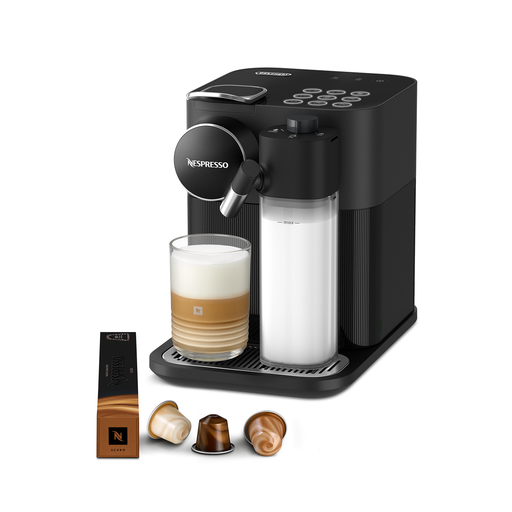
A capsule option for people who want to make espresso and cappuccino at one station with an integrated milk system.
The product description lists espresso and cappuccino at the touch of a button, as well as a detachable milk container. It’s designed for Nespresso Original capsules; an automatic rinsing cycle is described for after milk drinks.
 No image available
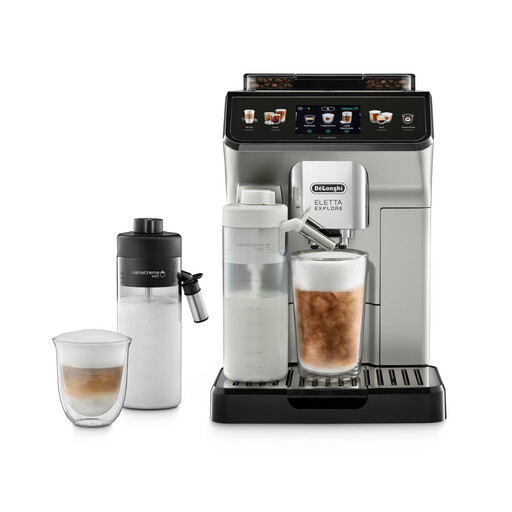
For people looking for a bean-to-cup machine with an integrated milk system for their coffee station.
The product description lists a touchscreen, LatteCrema Hot & Cool for hot and cold milk drinks, and automatic cleaning, descaling and rinsing programmes.
 No image available
An option for people who want to control milk temperature and texture and are happy to do a few extra steps with a portafilter machine.
The product description lists an integrated conical burr grinder and an automatic milk frother with adjustable temperature and texture. Making espresso requires you to tamp the coffee manually and insert the portafilter.
 No image available
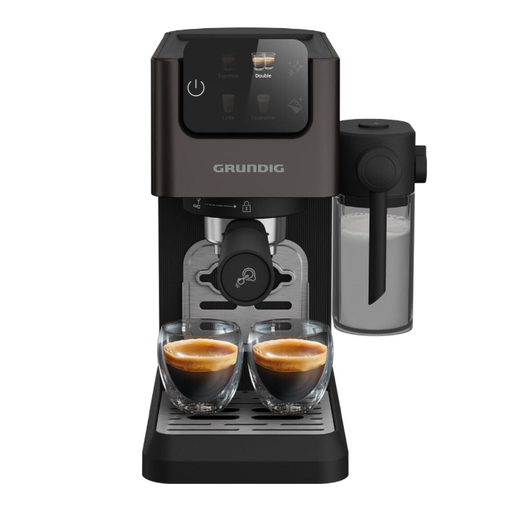
For people who want espresso and automatically frothed milk from one station and are happy to prepare the portafilter themselves.
The product description lists automatic cappuccino milk preparation and a colour touchscreen. You add ground coffee to the portafilter manually; after brewing, the portafilter and milk container parts should be rinsed.
No. Espresso and frothed milk are the key factors when choosing a machine. De’Longhi describes cinnamon as a possible flavour variation for cappuccino; this doesn’t mean the machine has a cinnamon programme. Check the instructions for your specific machine before adding other ingredients.
Yes, if the specific machine has a milk system or steam wand. With the De’Longhi EC890.M, you froth the milk by hand; Krups describes a frother for the Atelier XN8908 that works directly in the cup. The process varies depending on the machine.
Follow the instructions for the exact model and clean the parts that come into contact with milk. Philips describes LatteGo as having detachable parts; Krups says the Atelier’s frother can be cleaned under running water or in the dishwasher. A drink button doesn’t remove the need for cleaning.
Your statutory rights for faulty goods apply to the seller and are separate from any voluntary guarantee. The German Federal Government says the statutory guarantee period is generally two years. Whether additional repair rules apply to a specific espresso machine depends on the product category and the legal requirements.
According to the European Union, electrical appliances may need to carry the CE marking. This is the manufacturer’s declaration of conformity, not an independent quality mark. EU rules also apply to materials that come into contact with food. Check the documentation for the specific offer rather than assuming a general product description confirms that all the required documents are available.