If participants are going to make espresso and froth milk themselves, a portafilter machine with a steam wand is a good fit for a practical learning objective. If you need to serve drinks repeatedly with fewer steps, consider a fully automatic machine with a cappuccino function. A capsule machine makes portioning espresso simpler, but you’ll need the right capsule system, and it won’t teach participants to grind and tamp coffee. To add a chocolate flavour, combine chocolate separately with espresso and milk. Before you buy, also check the exact model variant and the required conformity information.
Which machine suits whom
Instructors teaching barista skills
If you want to teach participants how to make espresso and froth milk, they should be able to practise the necessary steps on the machine themselves. De’Longhi and Sage describe manual portafilter models with milk-frothing capabilities in their product information.
Instructors serving drinks
If the main aim of the class is to serve several cappuccinos, a straightforward drink selection may matter more than letting participants control every stage of extraction themselves. Philips lists a cappuccino option for the LatteGo 5500.
Small teaching kitchens
When worktop space is limited, you’ll need to consider room for milk jugs, ingredients and accessories, as well as time for cleaning and maintenance. De’Longhi lists the Dedica EC685.M EX:4 as 15 cm wide; Nespresso and Philips describe different milk systems and care requirements.
What to consider when choosing
First decide whether the class will focus on making drinks or serving them quickly. Then consider cleaning, available space and any extra equipment you’ll need.
Portafilter machine with steam wand
A good fit if: participants will be learning how to grind or dose coffee, extract espresso and froth milk through hands-on practice.
The trade-off: Making drinks involves more manual work; depending on the model, you may also need a separate grinder.
Fully automatic machine with milk system
A good fit if: consistently serving cappuccinos matters more than practising espresso extraction independently.
The trade-off: Learners have less control over individual steps, and the milk system still needs cleaning and maintenance.
Capsule machine with milk function
A good fit if: you want to make espresso without grinding and tamping coffee.
The trade-off: Espresso preparation depends on the compatible capsule system; preparing the milk is still a separate step.
| Purchasing priority |
What to check before buying |
Who it matters most to |
| Espresso and milk-frothing practice |
Check whether the machine has a steam wand and whether you can operate the extraction steps manually; find out whether a grinder is built in. |
If I want to show participants how to grind coffee, extract espresso and froth milk, I need these steps to be accessible. Around 36 % of consumers rank practical barista training as their top purchasing priority. |
| Serving several drinks |
Check the cappuccino function on the exact model and plan how you’ll serve drinks to your group. |
If several cappuccinos are needed in a row, a repeatable process matters more to me than practising individual extraction steps. Around 29 % of consumers prioritise serving drinks. |
| Milk preparation and cleaning |
Check that the milk-carrying parts are accessible and read the care instructions for the specific model; plan how to keep perishable ingredients chilled. |
When preparing milk repeatedly, I want to build cleaning and safe storage into the class routine. Around 21 % of consumers put milk hygiene and maintenance first. |
| Space and ongoing effort |
Measure the space available, including room for milk jugs and ingredients; check whether you’ll need a separate grinder, accessories or consumables. |
When worktop space is limited, I want to leave room for ingredients and preparation as well as the machine. Around 14 % of consumers prioritise space and ongoing effort. |
Common buying misconceptions
-
A cappuccino button doesn’t automatically mean there’s a chocolate cappuccino programme.
The recipe described by Nespresso combines chocolate syrup, espresso and milk in a glass. A cappuccino function, then, doesn’t mean the machine can process chocolate.
Choose a machine for its espresso and milk functions, and treat the chocolate as a separate step in the recipe.
-
A fully automatic machine isn’t maintenance-free.
Even when drinks are made automatically, the milk system needs cleaning and care. Descaling and cleaning routines also vary by model.
Before buying, compare the care instructions for the exact model with your class routine.
Cleaning and descaling take time, so make sure you allow for them in your preparation.
-
A similar model name doesn’t confirm the exact machine variant.
The product name alone won’t tell you whether the version on offer is suitable for your power supply, or which conformity information applies to that specific machine.
Before buying, check the exact model variant, the information on the machine and the required conformity details. The European Union states that CE marking is a declaration made by the manufacturer, not an independent quality mark.
Relevant brands and model ranges
De’Longhi
The Dedica EC685.M EX:4 is a manual portafilter machine, while the Magnifica Evo range also includes fully automatic machines with milk functions.
- De’Longhi lists the Dedica EC685.M EX:4 as 15 cm wide and says it has an adjustable manual cappuccino system.
- The Dedica doesn’t prepare milk automatically; features available on other model ranges don’t necessarily apply to this model.
Sage
The Barista Express SES875BSS2EEU1A combines a grinder with a manual portafilter and steam wand.
- Sage lists 16 grind settings and manual milk preparation.
- Grinding, extraction and milk frothing still take practice and time for each drink.
Philips
The LatteGo 5500 EP5547/90 is a fully automatic coffee machine with programme-controlled espresso and cappuccino options.
- Philips lists 20 hot and cold recipes, including cappuccino.
- The milk system needs care; the recipe information doesn’t tell you how many drinks the machine can serve for a particular group size.
Gaggia
The Classic E24 is a manual option for classes where using a portafilter and steam wand is part of the lesson.
- Gaggia lists a steam wand and a water tank with a capacity of 2,1 l.
- These technical details aren’t an independent comparison of drink quality.
Nespresso
The ORIGINAL Creatista Plus combines portioned capsule espresso with an integrated steam wand.
- According to the manufacturer, you can adjust the milk temperature and texture.
- The machine uses ORIGINAL capsules, so grinding and tamping aren’t part of the class.
Joybuy products for your cookery class
The Joybuy products below include fully automatic machines, a capsule machine and portafilter models to suit different class formats. Before buying, check the exact machine variant and the required conformity information.
 No image available
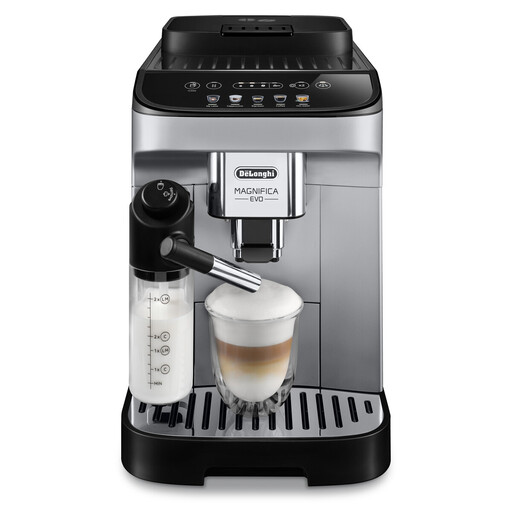
De’Longhi Magnifica Evo ECAM290.61.SB
For serving cappuccinos repeatedly with just a few button presses; less suited to manual extraction practice.
The product description lists a built-in grinder, a LatteCrema milk system and the ability to make two espressos at once.
View at Joybuy
 No image available
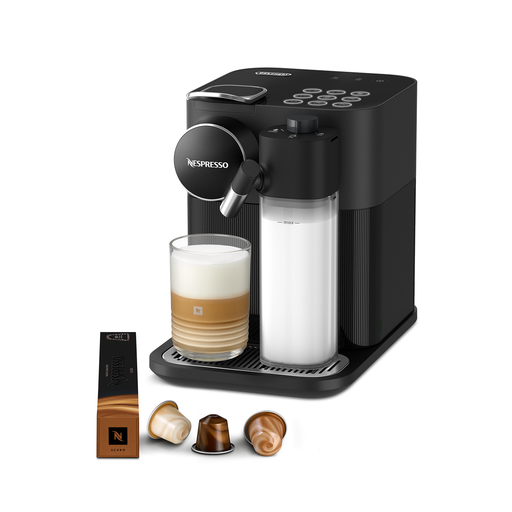
Nespresso De’Longhi Gran Lattissima Black Original
For cappuccinos with automated milk preparation when grinding and tamping aren’t part of the class.
The product description lists a one-touch milk system, a cappuccino programme and an automatic rinse function for the milk system. Nespresso Original capsules are used to make espresso.
View at Joybuy
 No image available
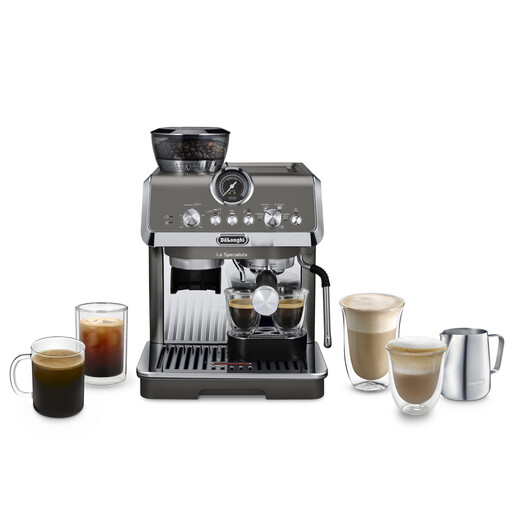
De’Longhi La Specialista Arte Evo EC9255.T
For hands-on practice with a portafilter, grinder and milk preparation.
The product description lists a built-in grinder with eight settings and a barista kit containing a tamper, dosing guide and milk jug. The milk system is called My LatteArt.
View at Joybuy
 No image available
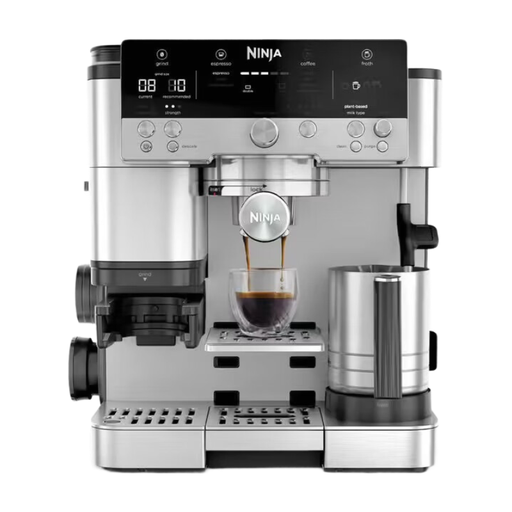
Ninja Luxe Premier ES601EU
For a class that includes grinding beans and making espresso with a portafilter.
The product description lists 25 grind settings and four settings for the milk frother.
View at Joybuy
 No image available
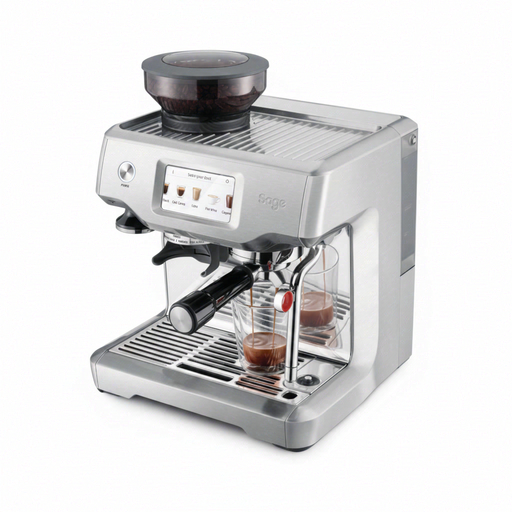
Sage Barista Touch
For portafilter practice covering grinding, dosing, tamping and extraction; milk is frothed automatically.
The product description lists a built-in conical burr grinder, with adjustable milk temperature and texture.
View at Joybuy
Frequently asked questions
Does the machine need to process chocolate itself?
No. In the recipe described by Nespresso, chocolate syrup, espresso and frothed milk are combined in a glass. This doesn’t show that the machine has a chocolate function or that syrup should go into the machine.
What should I prepare before the first class?
Plan your routine around the type of machine and read the care instructions for the specific model. For perishable ingredients, the German Federal Institute for Risk Assessment recommends a fridge temperature of 2 °C to no more than 7 °C; follow the relevant manufacturer instructions for the milk system and descaling as well.
Who is responsible if there’s a fault?
For a consumer purchase in Germany, the seller is generally responsible for the statutory warranty. The consumer advice centre gives a period of two years; for sales contracts dated 31 July 2026 or later, it also describes a one-off 12-month extension if repair is chosen to remedy a fault within the warranty period. A voluntary manufacturer’s guarantee is separate; different conditions may apply to business purchases.
Is the CE mark an independent quality mark?
No. According to the European Union, the manufacturer uses CE marking to declare that the product meets the applicable EU requirements; it isn’t an independent assessment of espresso quality. Check the exact machine variant and the conformity information required for it.


